
Downstreaming and the Promise of Equitable Distribution That Must Be Upheld
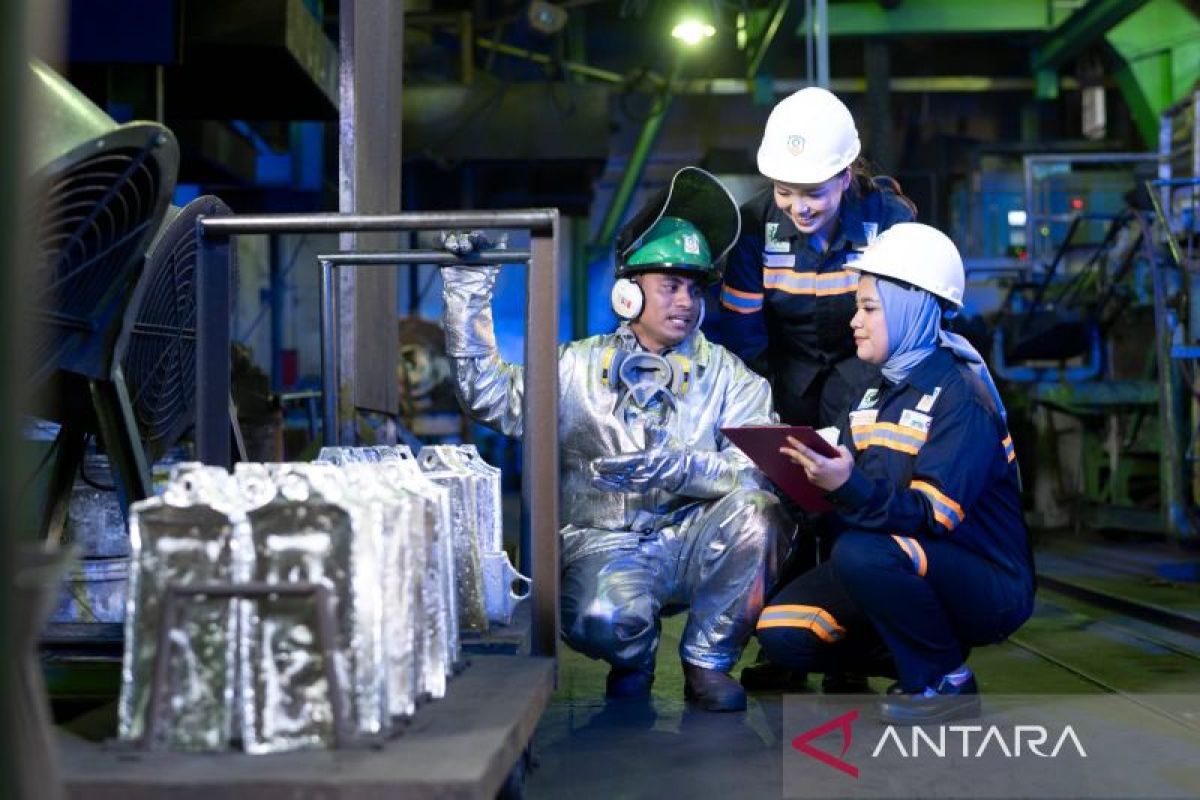
When regions develop without losing their social identity, that is where downstreaming can work as expected. Jakarta (ANTARA) - There is one fundamental question that is often overlooked when discussing downstreaming, namely, for whom is that added value actually created. When various large-scale industrial projects are driven forward, success is often measured only by production capacity, investment value, or export figures. However, the most honest measure lies in how far those changes touch people’s lives in a tangible way. This is what makes the development of the integrated copper and gold downstreaming ecosystem, for example in the JIIPE Gresik Special Economic Zone, worth discussing further. Testing it not merely as an industrial project, but as an economic laboratory that examines whether growth can truly walk hand in hand with equitable distribution. The project, initiated through the national downstreaming phase II groundbreaking ceremony by Danantara, brings synergy across state-owned enterprises, from MIND ID, DEFEND ID, ANTAM, Freeport Indonesia, PINDAD, to PELINDO. This collaboration not only demonstrates the consolidation of national industrial strength but also illustrates a shift in the development approach that is increasingly integrated from upstream to downstream. Within it, there is the construction of brass mill and brass cups production lines with a capacity of 10,000 tonnes per year, as well as a precious metal gold manufacturing plant with a capacity of 30 tonnes per year. These figures are certainly important, but what is more interesting is the projected workforce absorption of up to 7,500 people. This number is not merely a labour statistic. Rather, it becomes a reflection of the opportunities for social mobility that are opened up, especially for communities around Gresik and East Java. East Java Deputy Governor Emil Elestianto Dardak emphasised that the success of industrial investment greatly depends on its tangible impact on society, particularly in terms of workforce absorption and social stability. He underlined one important point: downstreaming must not stop at the industrialisation process but must continue as a social process that strengthens cohesion and welfare. Derivative Products Interestingly, the downstreaming in Gresik is no longer at the basic stage but has moved to advanced derivative products. This means the emerging workforce needs are also more diverse and demand higher competencies. From processing copper cathodes into pipes and wires, to developing ammunition raw materials under DEFEND ID, and gold processing by ANTAM, the entire production chain opens up a wide spectrum of jobs. In other words, this project not only creates a large number of jobs but also drives improvements in the quality of that workforce itself.