
Downstreaming and the Energy Transition Are Key
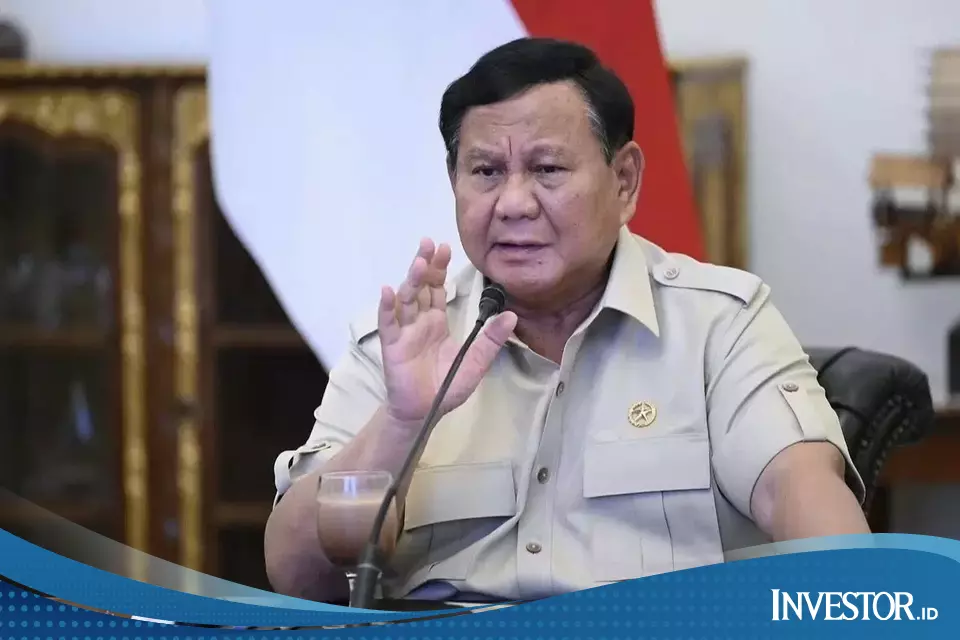
JAKARTA, investor.id – As President Prabowo Subianto celebrated his 75th birthday on 17 October 2026, Indonesia also marked two years of the administration of President Prabowo and Vice-President Gibran Rakabuming Raka.
The historic occasion provided an opportunity to reflect on the country’s strategic initiatives, as downstream processing, industrialisation and energy self-sufficiency continue to be prioritised to advance the national economy and improve public welfare.
Deputy Minister of Investment and Downstreaming and Deputy Head of the Investment Coordinating Board (BKPM) Todotua Pasaribu said one way to reflect on the two years of the Prabowo administration, coinciding with the President’s birthday, was to highlight significant achievements in national strategic programmes—particularly downstreaming and its two related agendas, energy self-sufficiency and industrialisation.
“Entering the second year of President Prabowo Subianto’s administration, the downstreaming programme has shown significant growth and is making an increasingly large contribution to national investment,” Todotua said, as quoted on Saturday (17 October 2026).
Investment performance under Investment Minister Rosan Roeslani has maintained a solid growth trend. In the first half of 2026, realised investment in Indonesia reached Rp1,010.6 trillion, up 7.2 per cent on the same period a year earlier, and supported more than 1.4 million jobs nationwide.
The tangible impact of the downstreaming policy overseen by the Investment Ministry is evident in North Maluku, which has rapidly developed into one of the country’s processing-industry hubs. The region’s exports have become more diverse, ranging from ferronickel, nickel matte, mixed hydroxide precipitate (MHP) and nickel sulphate to cobalt, continuing a transformation already seen in Morowali, Central Sulawesi.
Todotua said that, in line with directions from Minister Rosan Roeslani and President Prabowo, the success of downstreaming should not be measured solely by the value of investment or production capacity. The programme must deliver a multiplier effect by strengthening the local workforce, creating opportunities for regional businesses and ensuring environmental sustainability.
Todotua also highlighted the relevance of economist Soemitro Djojohadikusumo’s thinking on industrialisation and the strengthening of the national financial system initiated by Margono Djojohadikusumo. The drive to build domestic industry and strengthen local investment, he said, remains highly relevant to accelerating Indonesia’s economic transformation under the current Prabowo-Gibran administration.
Downstreaming and the Energy Transition Reinforce Each Other
Alongside industrialisation, a reliable and competitive energy supply is vital to the sustainability of the processing industry. The acceleration of downstreaming is therefore being aligned with efforts to strengthen energy security and transition to clean energy.
A major initiative during the first two years of the Prabowo-Gibran administration was the launch of the B50 biodiesel programme by President Prabowo in July 2026, demonstrating the use of domestic resources to achieve national energy self-sufficiency.
Under the coordination of the Investment Ministry, led by Rosan Roeslani, Indonesia is actively inviting global and domestic investors to develop renewable energy sources, including solar, hydropower and geothermal, and to optimise critical mineral resources that support green technology.
Todotua stressed that legal certainty, simpler regulations, infrastructure development and close cooperation with the private sector are essential to attracting renewable energy investment. These strategic measures are expected to improve industrial efficiency, create millions of new jobs and strengthen the competitiveness of Indonesian products in international markets.
As President Prabowo Subianto turns 75 and the Prabowo-Gibran administration marks two years in office, the Investment and Downstreaming Ministry is committed to making downstreaming and the energy transition drivers of national development.
“The energy transition should not be a burden on development. Instead, it should be a gateway to energy security, greater industrial competitiveness and national prosperity,” Todotua concluded.