
Downstream Transformation Strengthens Indonesia's Value-Added Industrial Ecosystem
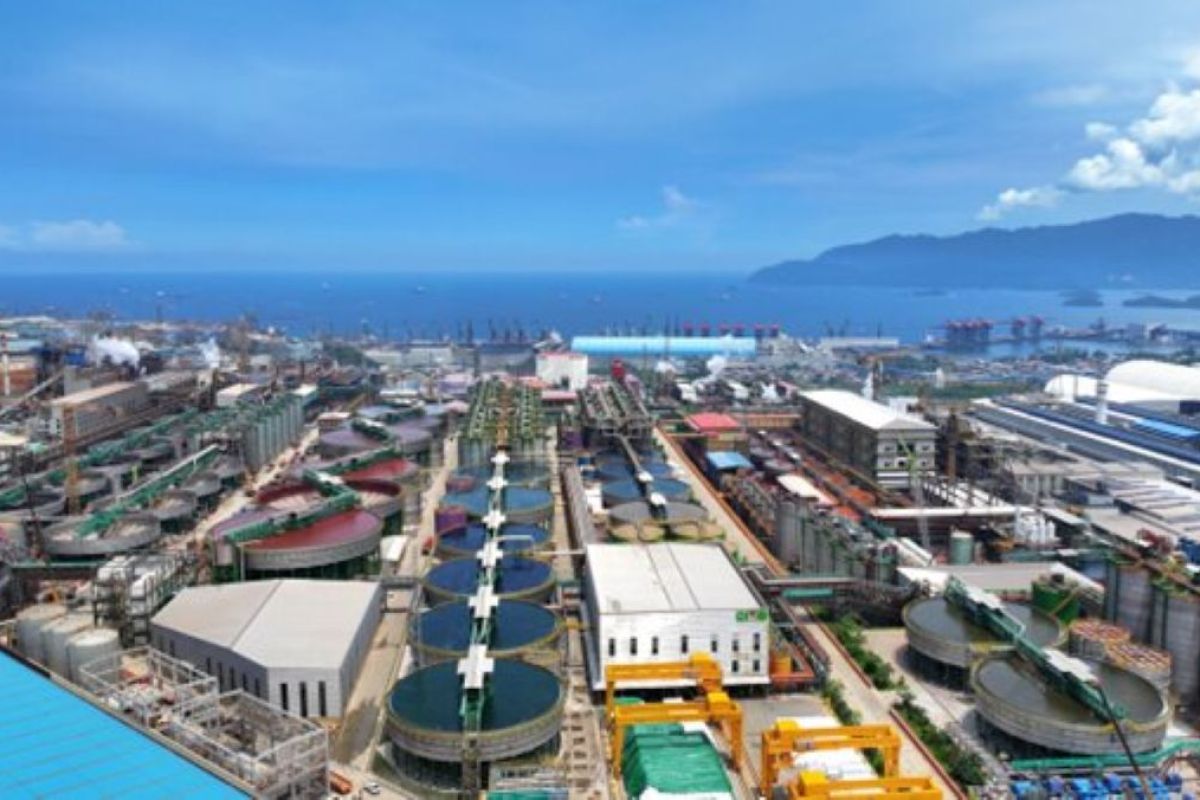
The transformation of downstream processing continues to be one of the government’s main strategies in strengthening the nation’s industrial foundation. This policy is directed at optimising the use of natural resources by increasing domestic processing capacity so that commodities no longer depend on raw material exports. This approach simultaneously opens up space for investment growth, the development of advanced industries, and wider job creation.
Recent developments show that the direction of national downstreaming is becoming increasingly diverse. According to data from the Ministry of Investment and Downstreaming/Investment Coordinating Board (BKPM), bauxite downstreaming investment became the largest in Indonesia for the first time in the second quarter of 2026. Investment realisation for this commodity reached Rp40.1 trillion, an increase of approximately 193 percent compared to Rp13.7 trillion in the first quarter of 2026.
Minister of Investment and Downstreaming/Head of BKPM and concurrently Chief Executive Officer of Danantara Indonesia, Rosan Roeslani, explained that downstream projects are capable of strengthening Indonesia’s position in the global supply chain. He stated that the development of natural resource-based industries generates higher added value while expanding economic benefits for the community.
Rosan assessed that the downstream project developed by PT Vale Indonesia is an example of how investment collaboration can support national interests. Industrial development is not only oriented towards increasing production but is also directed at strengthening sovereignty in natural resource management, creating jobs, and supporting the transition agenda towards a low-carbon economy through the development of value-added industries.
The development of downstream-based industrial estates is also seen as part of the strategy to build a national electric vehicle ecosystem. Rosan explained that the development of industrial estates will strengthen manufacturing independence while accelerating the formation of a more complete domestic supply chain.
Nickel-producing regions such as Central Sulawesi are expected to experience greater economic impact through increased job opportunities, rising demand for supporting services, and the growth of micro, small, and medium enterprises around industrial estates.
Strengthening the electric vehicle ecosystem is one of the main objectives of accelerating mineral downstreaming. The increasing demand for battery raw materials is driving the construction of processing facilities with increasingly advanced technology. This process is expected to enhance Indonesia’s competitiveness in meeting the needs of the global electric vehicle industry.
The progress of the Sambalagi High Pressure Acid Leaching (HPAL) facility construction owned by PT Vale Indonesia in Morowali, Central Sulawesi, is one indicator of this acceleration. The facility, which is part of the Indonesia Growth Project Morowali, has an investment value of approximately US$2 billion and has entered an important stage following the arrival of the main autoclave components. The construction of three production lines in the project is targeted to reach the first mechanical completion stage by the end of 2026.
Mining and energy observer Ferdy Hasiman assessed that the construction of HPAL facilities has now become a strategic necessity for the nickel industry. According to him, companies capable of developing mineral processing technology will have higher competitiveness compared to companies that still rely on raw material exports or products with low processing levels.
Ferdy explained that mining companies’ capital expenditure is currently largely directed at building HPAL facilities because this technology is an important part of forming the electric vehicle ecosystem. He assessed that MIND ID’s move through PT Vale Indonesia demonstrates a strong commitment to accelerating the development of large-scale downstream projects.
Government support together with Danantara Indonesia is also considered to strengthen the sustainability of the national downstreaming agenda. Ferdy is of the view that consistent investment in strategic projects is an important factor in maintaining Indonesia’s competitiveness amidst increasing global competition in the battery and electric vehicle industry. The sustainability of processing facility development is considered capable of maintaining investment momentum while expanding opportunities for national industrial growth.
The economic impact of downstreaming is also expected to be broader because industrial activity will create demand for various supporting sectors. The growth of logistics, construction, transportation, trade, and the provision of local goods and services will develop in line with the increasing production activities in industrial estates. This condition strengthens the involvement of domestic business actors in the national supply chain.
The success of the downstream transformation still requires the completion of various ongoing projects. The Director General of Mineral and Coal at the Ministry of Energy and Mineral Resources, Tri Winarno, previously revealed that there are seven bauxite smelter projects whose construction progress is below 60 percent. This condition indicates that accelerating project completion remains an important task to strengthen the national mineral processing capacity.
The facilities still under construction are spread across several regions, mainly in West Kalimantan and Central Kalimantan. These projects include smelters owned by PT Dinamika Sejahtera Mandiri, PT Laman Mining, PT Kalbar Bumi Perkasa, PT Persada Pratama Cemerlang, PT Quality Sukses Sejahtera, PT Sumber Bumi Marau, and PT Parenggean Makmur Sejahtera. The completion of these projects will increase domestic bauxite processing capacity while strengthening the national aluminium industry chain.
The ongoing downstream transformation shows that Indonesia is increasingly serious about building a value-added industry. The shift in investment from the dominance of nickel to bauxite indicates that the downstream strategy is beginning to show diversification.