
Downstream Processing as a Catalyst for People’s Welfare and Prosperity
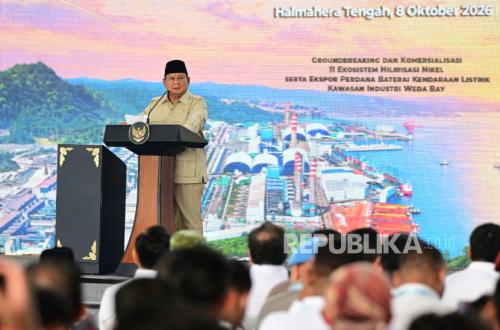
Today, 17 October 2026, marks the 75th birthday of the President of the Republic of Indonesia, coinciding with the second anniversary of his administration. One way to mark President Prabowo Subianto’s birthday is to highlight the significant achievements of a national strategic programme—in this case, downstream processing and its two subsequent priorities: energy self-sufficiency and industrialisation.
President Prabowo has championed downstream processing and energy self-sufficiency since the beginning of his administration. As his government enters its third year, the programme has made significant progress and is contributing an increasingly large share of national investment.
Indonesia’s investment realisation in the first half of 2026 reached Rp 1,010.6 trillion, up 7.2 per cent on the same period a year earlier. It also generated more than 1.4 million jobs.
As Investment and Downstreaming Minister and Danantara chief executive Rosan Perkasa Roeslani said earlier this month at the groundbreaking and commercialisation of 11 nickel-processing ecosystems, and the first export of electric-vehicle batteries from the Weda Bay Industrial Park (IWIP) in Central Halmahera, North Maluku, the effects of downstream processing can be seen directly in the province.
An area once known primarily for mining is now developing into one of the country’s processing-industry centres. North Maluku’s downstream products have also become more diverse. Exports no longer rely on raw mineral ore, but increasingly include processed products such as ferronickel, nickel matte, mixed hydroxide precipitate (MHP), nickel sulphate and cobalt.
North Maluku is following the earlier success of Morowali in Central Sulawesi, illustrating how mineral downstreaming is directly linked to industry. At the same time, mineral processing requires large quantities of energy and a highly reliable supply.
When he launched the mandatory 50 per cent biodiesel blend (B50) in mid-July, President Prabowo said the programme was not merely a technological achievement, but tangible proof of national sovereignty in the energy sector. He added that B50 demonstrated Indonesia’s ability to use its natural wealth for the benefit of its people.
Downstream processing is a constitutional mandate. Article 33, paragraph 3, of the 1945 Constitution stipulates that the state controls the natural resources contained within the country and that they must be used to the greatest possible extent for the people’s prosperity. Those resources are then processed through downstreaming programmes.
The Constitution clearly establishes the state’s full sovereignty to regulate and use mineral resources without intervention by other countries or international organisations. This is also reflected in United Nations Resolution 1803 (XVII), which affirms the principle of permanent sovereignty over natural resources (PSNR).
Inspired by Mr Cum and Mr Margono
As the old saying goes, the fruit does not fall far from the tree. This is perhaps true of President Prabowo: the roots of his major programmes on mineral downstreaming, industry and investment can be traced to ideas put forward by his father, Sumitro Djojohadikusumo, and grandfather, Margono Djojohadikusumo.
Sumitro Djojohadikusumo, known as Pak Cum, was a key figure in the country’s economic planning during the early years of the republic. An intellectual proponent of Keynesian development economics, Sumitro was also influenced by his father, RM Margono Djojohadikusumo, who was known as a pioneer of the co-operative movement.
When he served in the Cabinet as Finance Minister and Trade Minister in the early 1950s, Pak Cum was strongly influenced by the development and modernisation theories of William Arthur Lewis and W. W. Rostow, which supported industrialisation as a stimulus for social transformation.
As a minister, Pak Cum launched the Economic Urgency Plan (the Sumitro Plan) and the Benteng Programme in April 1951. They focused on industry as a foundation for strengthening indigenous entrepreneurship and encouraging the growth of domestic capital.
An industrialisation committee was also established, setting three main goals for industrial development: a balanced economic structure, the absorption of a growing population into productive sectors, and an increase in national income. Another source of inspiration was Margono Djojohadikusumo, who founded Bank Negara Indonesia (BNI) in 1946.
That is why BNI was once known as BNI 46. Margono founded the bank as a way to contribute to the economic development of Indonesia, a country newly emerged from colonial rule. He believed that this development required infrastructure, including a national banking institution that could support domestic interests.
The legacy of Pak Cum’s ideas on industrialisation and Pak Margono’s ideas on investment can still be seen in the economic development policies of the Prabowo administration. Ultimately, these policies aim to improve people’s welfare, as Pak Cum had hoped, and their effects can be seen on the ground.
The economic restructuring envisioned by Pak Cum is evident in Morowali, Central Sulawesi, and Central Halmahera, North Maluku, both mentioned earlier. These areas could serve as models for other regions preparing to develop industries based on downstream processing.
This structural change shows how processing industries can broaden economic activity in areas that previously depended more heavily on primary sectors such as agriculture. The benefits of downstreaming depend not only on increased production capacity, but also on its links with local economies, workforce development and sustainable industrial governance.
For mineral-producing regions, the next challenge is to ensure that industrial expansion generates broader economic benefits. Increased value should go hand in hand with the development of local workers’ skills, participation by regional businesses, environmental impact management and the creation of economic activity that can endure over the long term.
The sustainability of this transformation will depend not only on the scale of investment and production, but also on the extent to which industrialisation generates added value connected to regional economic development and community welfare.