
Downstream Palm Oil Industry Opens Business Opportunities for Young Entrepreneurs and MSMEs
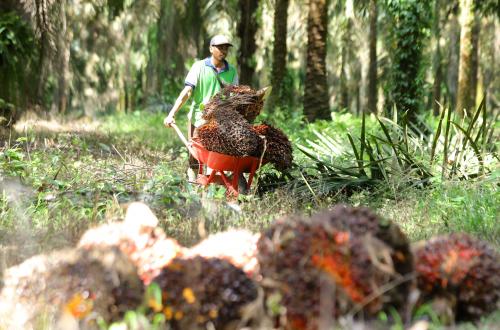
The development of the downstream palm oil industry is considered capable of opening new business opportunities for micro, small, and medium enterprise (MSME) players. Downstreaming is also seen as having the potential to increase the added value of the palm oil commodity, ensuring that economic benefits are not confined solely to the upstream sector.
The General Chairman of the Indonesian Oil Palm Farmers Union (SPKS), Sabarudin, stated that downstream development needs to be strengthened so that farmers do not merely act as raw material suppliers, but also reap the benefits of the palm oil industry’s value chain.
“It is time to change our perspective on plantation commodities. Palm oil is not just about plantations and harvests, but about innovation, entrepreneurship, technology, and the economic future of the community. Farmers must become key players in the palm oil industry value chain, not just suppliers of raw materials,” said Sabarudin during the Palm Oil MSME Workshop at the University of Southeast Sulawesi (Unsultra), Kendari, as reported on Tuesday (7/7/2026).
According to Sabarudin, the development of the downstream palm oil industry can unlock business opportunities across various sectors, ranging from food and cosmetics to renewable energy and creative industries. Consequently, SPKS is collaborating with universities to introduce the business potential of palm oil derivative products to the younger generation.
“Students are agents of change. They possess creativity, research capabilities, and mastery of digital technology. If that potential is combined with the richness of Indonesia’s plantation resources, it will give rise to young entrepreneurs capable of creating innovative products while simultaneously strengthening the farmers’ economy,” he added.
The Head of the Community Cooperation and MSME Division of BPDP, Helmi Muhansyah, stated that human resource development is a crucial factor in maintaining the sustainability of the national palm oil industry. According to him, students and the younger generation need to be encouraged to become innovators capable of developing palm oil derivatives that meet market demands.
“We are not only building productive palm oil plantations, but we are also building the people. Students and the younger generation must be prepared to become innovators who can develop palm oil derivatives by utilising technology, creativity, and evolving market needs,” said Helmi.
The Head of the Plantation Division of the Southeast Sulawesi Plantation Office, Ihlas Landu, noted that downstream processing has the potential to provide greater economic value compared to relying solely on the sale of fresh fruit bunches. He believes that the involvement of farmers, cooperatives, MSMEs, and universities is essential to ensuring the economic benefits of the palm oil industry are more widely distributed.
“Palm oil plantations have made a real contribution to regional economic growth and job creation. The next challenge is how to build a downstream industry that involves farmers, cooperatives, MSMEs, and universities so that the economic benefits are felt more broadly by the community,” said Ihlas.
The workshop was held as part of the ‘Sawit Goes to Campus’ programme, initiated by SPKS in collaboration with BPDP to expand understanding of palm oil downstreaming and to encourage the emergence of new MSMEs and entrepreneurs based on palm oil derivative products.
Source: jawawa.id (https://jawawa.id/newsitem/downstream-palm-oil-industry-opens-business-opportunities-for-young-entrepreneurs-and-msmes-1783432474)
Originally published by Republika (https://ekonomi.republika.co.id/berita/tht410416/produk-turunan-sawit-jadi-peluang-baru-bagi-umkm), translated from Indonesian