
Downstream Investment in Indonesia Reaches Rp300 Trillion in First Half of 2026
Investment in the downstream sector continues to show a positive trend and has become one of the main drivers of national investment growth. The Ministry of Investment and Downstreaming/BKPM recorded downstream investment realisation of Rp300.1 trillion during the first half of 2026, a 6.9% increase compared to the same period last year.
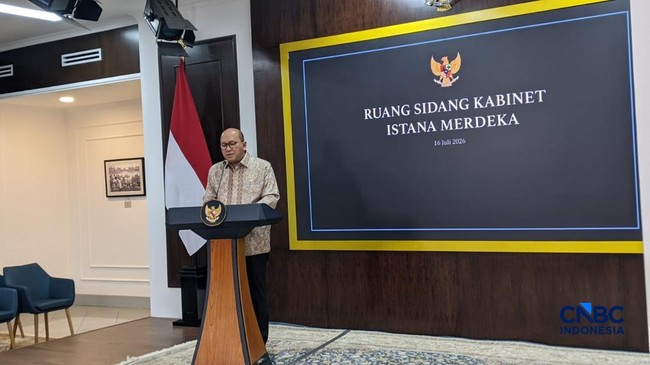
Minister of Investment and Downstreaming Rosan Roeslani stated that the contribution of downstream investment to total national investment realisation is now approaching one-third. "The contribution of downstream investment reached almost 30%, or 29.7%. An increase of 6.9% compared to last year," Rosan said at a press conference at the Presidential Palace complex in Central Jakarta.
In the second quarter of 2026 alone, downstream investment was recorded at Rp152.7 trillion, up 5.7% year-on-year. This value is equivalent to 29.8% of total national investment realisation in the same period.
The mineral sector remains the backbone of downstream investment, with a value of Rp206.5 trillion during the first half of 2026. This investment came from nickel downstreaming at Rp71 trillion, bauxite at Rp53.8 trillion, copper at Rp37.4 trillion, iron and steel at Rp30.2 trillion, silica sand at Rp5.9 trillion, and various other mineral commodities at Rp8.2 trillion.
However, the investment landscape shifted in the second quarter of 2026. For the first time, bauxite displaced nickel’s dominance as the largest commodity for downstream investment. Of the total mineral downstream investment of Rp108.2 trillion in the second quarter, bauxite investment reached Rp40.1 trillion, surpassing nickel which had consistently held the top position. "Usually nickel is always number one, but now there is a shift to bauxite. This is due to several bauxite developments carried out by both domestic and foreign parties, so bauxite has taken the top spot for the first time after nickel," he explained.
Beyond the mineral sector, downstream investment also flowed into the plantation and forestry sector with a value of Rp54.4 trillion. This comprised palm oil downstreaming at Rp29.5 trillion, timber at Rp16.3 trillion, rubber at Rp5 trillion, and other plantation and forestry products at Rp3.6 trillion. Meanwhile, downstream investment in the oil and gas sector was recorded at Rp35.4 trillion, while the fisheries and marine sector reached Rp3.8 trillion. "We will also continue to encourage downstreaming in the plantation and forestry sectors, as well as oil and gas, including fisheries and marine," he added.
In terms of regional distribution, downstream investment remains dominated by areas outside Java. The value reached Rp227.3 trillion, or 75.7% of total downstream investment. Meanwhile, downstream investment in Java was recorded at Rp72.8 trillion, or around 24.3%. According to Rosan, the dominance of investment outside Java shows that the downstreaming programme has successfully spurred economic growth in natural resource-producing regions. "Domestic investment was Rp87.3 trillion, while foreign direct investment was Rp212.8 trillion. So we know this is mostly in North Maluku, Sulawesi, NTB, and others," he concluded.
Source: jawawa.id (https://jawawa.id/newsitem/downstream-investment-in-indonesia-reaches-rp300-trillion-in-first-half-of-2026-1784256635)
Originally published by CNBC Indonesia (https://www.cnbcindonesia.com/news/20260717081215-4-751490/investasi-hilirisasi-di-ri-tembus-rp300-t-di-semester-i-2026), translated from Indonesian