
Downstream Industry and Re-industrialisation Seen as Key to Reducing National Logistics Costs
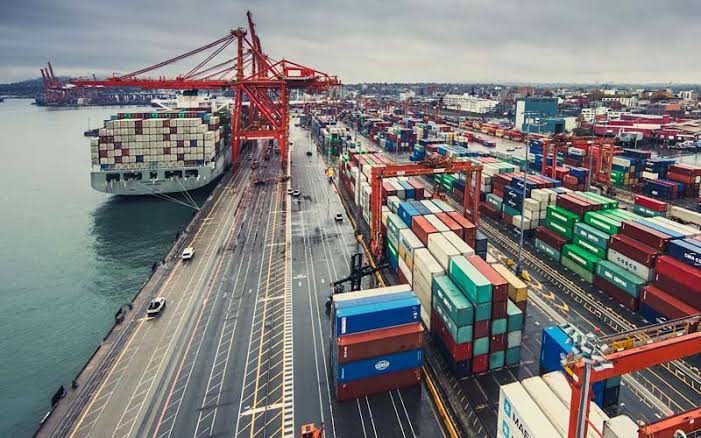
High national logistics costs have once again come under scrutiny amidst the pressures of global economic uncertainty. This issue is believed to not only increase the operational burden on businesses but also suppress the competitiveness of Indonesian export products and hinder national economic growth.
Yukki Nugrahawan Hanafi, Senior Vice President of the International Federation of Freight Forwarders Associations and Chairman of the Advisory Board of the Indonesian Logistics and Forwarder Association, believes that high logistics costs cannot be solely blamed on the transport and logistics sectors. According to him, the issue is a consequence of broader structural problems, ranging from economic development inequality and regional connectivity to regulatory governance that is not yet fully efficient.
“High logistics costs are actually an impact of structural issues. The key is to build a more balanced economic structure through industrialisation, downstreaming, and the even distribution of national economic growth centres, rather than being limited solely to building physical infrastructure,” Yukキ said in a statement on Monday.
He explained that current national economic activities are still concentrated in certain regions, particularly Java, whereas various potential sectors such as mining, fisheries, and plantations are largely located outside of Java. This condition triggers an imbalance in trade flows and goods distribution, leading to increased logistics costs. Many transport fleets, such as trucks, ships, and containers, often return without cargo (empty backhaul), making distribution costs inefficient.
Furthermore, Yukki highlighted that Indonesia’s trade structure is still dominated by imports under the Cost, Insurance & Freight (CIF) scheme and exports under the Free on Board (FOB) scheme. These schemes cause a significant portion of the value-add in the logistics, shipping, and insurance sectors to be enjoyed by foreign parties. “Indonesia often only serves as a supplier of commodities and manufactured products without controlling the logistics and international trade value chain,” he said.
Therefore, strengthening the national logistics ecosystem is deemed necessary through the acceleration of re-industrialisation and downstreaming in various leading sectors. Yukki believes that downstreaming in the mineral and energy, agriculture, fisheries, and plantation sectors can create new economic growth centres outside of Java. By increasing industrial activity in commodity-producing regions, a more natural balance in goods flow can be achieved. “When commodity-producing regions begin producing value-added goods, a more balanced two-way trade flow will be created. This condition increases the utilisation of ships, trucks, and containers,” he explained. He emphasised that without accelerating re-industrialisation and downstreaming, Indonesia will continue to face logistics inequality due to the concentration of value-added manufacturing in specific regions.
Source: jawawa.id (https://jawawa.id/newsitem/downstream-industry-and-re-industrialisation-seen-as-key-to-reducing-national-logistics-costs-1780897161)
Originally published by Media Indonesia (https://mediaindonesia.com/ekonomi/891483/industrialisasi-hilirisasi-dinilai-jadi-kunci-pangkas-biaya-logistik-nasional), translated from Indonesian