
Doomsday Glacier Keeps Melting Despite Cooler Seas, and It Cannot Be Stopped
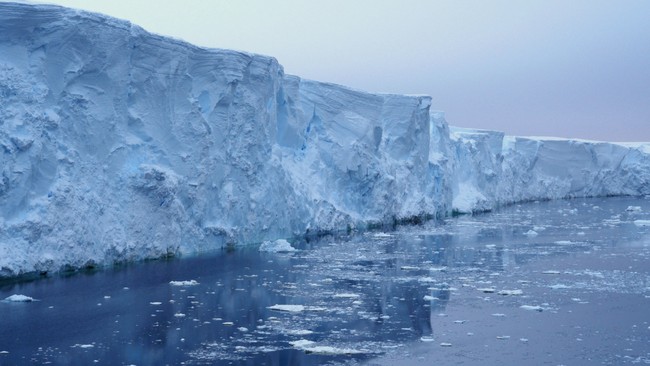
Thwaites Glacier in Antarctica, dubbed the “Doomsday Glacier”, is expected to keep melting even if the surrounding ocean cools. A new study found that the melt is so well under way that it cannot be stopped for at least the next 150 years, even under the most unlikely scenario, according to a report on Monday (19 October 2026).
Researchers from the British Antarctic Survey ran computer simulations under conditions that could not occur in the real world. They switched off ocean warming around the glacier entirely to find out whether Thwaites could thicken again and stabilise if its source of heat disappeared.
The results were surprising. Its neighbouring Pine Island Glacier began to thicken and advance again, but Thwaites continued melting throughout the 150-year simulation, albeit at a slower rate.
“We had hoped that if ocean warming stopped, the ice would thicken and advance again. That is not what happens with Thwaites. This is really unexpected,” said lead researcher Rosie Williams.
Why is Thwaites different? Scientists suspect the enormous glacier is still responding to climate changes that took place decades ago. An extreme El Niño in the 1940s disrupted its balance, and the very slow movement of ice means the effects are still being felt today. In addition, human-caused warming over the past four decades has pushed the glacier towards an instability that is difficult to reverse.
Thwaites Glacier is roughly the size of Great Britain. If it collapsed completely, it could trigger the collapse of the entire West Antarctic Ice Sheet and raise global sea levels by up to five metres. Coastal cities around the world, including many areas of Indonesia, would be at risk of being submerged.
Although the melting cannot be stopped completely, the researchers stressed that efforts to cut emissions remain crucial. The slower the pace of warming, the slower the glacier will melt. This would give the world more time to adapt and strengthen coastal defences before sea levels rise.
“We have not entirely passed the point of no return. If warming can be curbed, a sudden collapse that triggers an extreme rise in sea levels can still be prevented,” said Mathieu Morlighem of Dartmouth College.
However, another study published this week brought less encouraging news. New models indicate that the glacier could retreat faster than previously expected, potentially resulting in sea-level rise more than twice as great as earlier estimates.