
'Doomsday' for Marine Fuel Sends Prices Soaring, Asia Hit Hardest
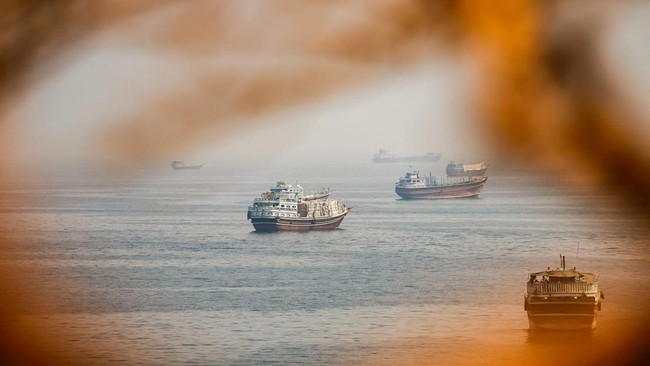
Jakarta, CNBC Indonesia — A threat of fuel oil scarcity for ships and power plants is looming in the third quarter of this year. This comes as refineries worldwide come under increasing pressure from wars disrupting crude processing and tanker traffic, forcing them to prioritise diesel production and other products.
Citing Reuters, Monday (7/9/2026), although crude oil prices have avoided any major surge in recent months, refined product prices have skyrocketed after a series of attacks damaged refinery facilities in Russia and the Middle East. In addition, China has cut refining capacity and exports to avoid burning through its strategic reserves.
This supply squeeze threatens to further inflate cost burdens for shipowners and power plants already grappling with war-induced logistical disruptions.
The high cost of bunker fuel is projected to directly push up global shipping rates. Asia is certain to be the worst-hit region, as it is highly dependent on Gulf oil flows now disrupted by the Iran war.
Singapore, as the world’s largest bunkering hub, must import more than half of its total requirement of nearly 1 million barrels per day. Consultant Energy Aspects projects the global supply deficit will reach 218,000 barrels per day in the third quarter, the deepest shortfall since the third quarter of 2025.
“Because of the prolonged supply disruption in the Middle East, we expect fuel oil supply to remain extremely tight in the third quarter,” said Rystad analyst Valerie Panopio.
This crisis means marine fuel is following the fate of petrol, diesel, and jet fuel, which are likewise struggling to meet global demand. US diesel prices even hit a record high on Friday, as renewed US–Iran hostilities and Ukrainian strikes on Russian refineries further tightened supply.
Global refineries, such as the giant Dangote facility in Nigeria, are now opting to maximise petrol and diesel exports to reap fatter profits, deliberately sacrificing marine fuel export supplies.
“Very low petrol and diesel inventories will push refiners globally to maximise secondary unit operations with more fuel oil barrels as feedstock, which in turn tightens the fuel oil balance,” said Energy Aspects analyst Royston Huan.
The pressure of this crisis is already clearly reflected in storage levels and commodity prices. Data shows fuel stocks currently sit around 30% below the three-year seasonal average at major hubs such as Singapore, Amsterdam-Rotterdam-Antwerp, and Fujairah.
Longer shipping routes, as vessels manoeuvre to avoid Houthi militant threats in the Red Sea, have also driven fuel consumption up dramatically.
The price of the main shipping fuel — very low sulphur fuel oil (VLSFO) — has leapt 76% since the Iran war began, to just under US$825 (Rp14,602,500) per metric ton, or US$130 (Rp2,301,000) per barrel in Singapore as of 1 September. This wild surge far exceeds the 40% rise in benchmark Brent crude over the same period.
Meanwhile, Russian fuel oil exports in August collapsed to a record low of 591,000 barrels per day, down sharply from an average of 860,000 barrels per day in 2025, due to Ukrainian drone strikes.
In the Middle East, fuel oil exports also plunged 45% year-on-year to an average of 447,000 barrels per day between March and August, exacerbated by the shutdown of Kuwait’s giant Al-Zour refinery, previously a major exporter.