
Dony Oskaria's Breakthrough: Business, Organisation and Finance of SOEs Reformed
The Daya Anagata Nusantara Investment Management Agency (BPI Danantara) is carrying out a major transformation of state-owned enterprises. Established in February 2025, Danantara is now undertaking extensive reforms that target not only corporate structure but also business models, organisation, investment, governance and the quality of financial reporting of state-owned enterprises (SOEs).
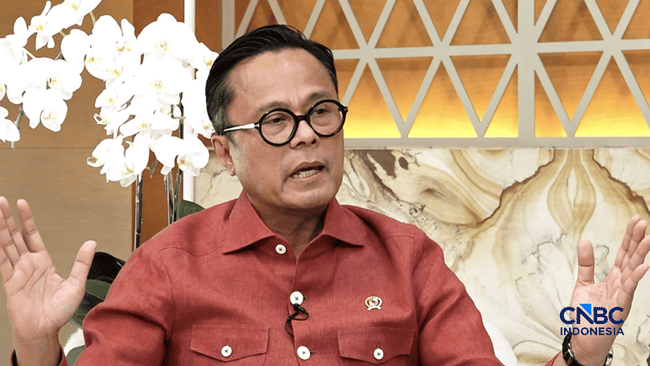
Head of the SOE Regulatory Body and Chief Operating Officer of BPI Danantara Dony Oskaria said Danantara has a mandate to become one of the engines of the Indonesian economy. Unlike sovereign wealth funds in several countries that invest fiscal surpluses, Danantara’s investment funds come from the management of SOEs. Therefore, the health of state-owned companies is a critical factor determining Danantara’s sustainability.
“SOE management is the core that will determine Danantara’s sustainability,” Dony said in the Danantara BUMN Progress Update 2026 programme with CNBC Indonesia.
Dony explained that before the establishment of Danantara, SOEs were not managed as a single consolidated entity. Each company built its own business groups and subsidiaries, including in business areas not directly related to its core competencies. This meant one SOE had no mechanism to assist another SOE facing difficulties. After state-owned companies were placed within a single Danantara ecosystem, comprehensive mapping began.
Initial data collection found 1,074 entities within the SOE ecosystem. Of these, around 52% were loss-making. Total direct losses from these companies reached around Rp20 trillion.
Another problem was found in the revenue sources of subsidiaries. Dony said around 80% of companies still conducted business with their own parent company. In several cases, the parent company awarded work to a subsidiary, but the work was then handed back to third parties. Each layer of the company took a margin even though the revenue did not come from the external market.
Danantara estimates that intercompany transaction inefficiencies reach around Rp30 trillion per year. Combined with direct losses of Rp20 trillion, there is potential for improvement of at least Rp50 trillion. The efficiency value from the entire streamlining process, including the reduced number of company officers and other cost components, is estimated to approach Rp70 trillion by the end of the year.
After the mapping was completed, Danantara conducted a fundamental business review of all companies one by one. Each company was compared with global benchmarks in its respective industry. The assessment covered business models, revenue sources and composition, cost structure, market size and growth, market share, financial condition, organisation and human resource quality.
Based on the assessment results, companies were divided into four handling groups. The first group consists of companies that must be liquidated. This category includes companies with debts greater than assets, small size and market share, and inadequate financial and non-financial capabilities. The second group consists of non-core companies that still have economic value and can be divested. The third group consists of companies with similar business lines that will be consolidated. Mergers are carried out to form companies with larger business scale and more competitive positions in their industries. The fourth group consists of companies requiring financial or business restructuring.
Financial restructuring can be carried out through equity injections, credit restructuring, haircuts and other corporate actions. Meanwhile, business restructuring includes changes to business models, organisation and business focus. Dony said around 290 companies have been handled, through closure, divestment, consolidation or restructuring.
The results of the transformation are beginning to be visible at several companies. One is PT Semen Indonesia Tbk (SIG). Previously, the sales function was centralised through large distributors. This caused plants such as PT Semen Padang and PT Semen Tonasa to lose direct access to the market while creating an additional margin layer. Danantara then returned the sales function to each company with oversight remaining at the holding level. The company also built a shop database, improved the incentive system, reduced production costs and closed subsidiaries that made negative contributions. Dony is optimistic that PT Semen Indonesia can return to a profit of around Rp1 trillion in 2026.
Transformation is also underway at Pegadaian through digitalisation, new market penetration and strengthening of the gold business. Dony estimates Pegadaian’s profit could reach Rp12 trillion this year. Meanwhile, Pupuk Indonesia changed its business model from a cost-plus scheme to market prices. Production was increased, costs reduced and export markets expanded. Dony said the company’s profit increased by more than 200%.
Krakatau Steel is also said to have returned to profitability after undergoing debt restructuring, obtaining haircuts from several creditors and receiving equity injections to reactivate its production facilities. At Kimia Farma, transformation was carried out through financial restructuring, equity injections and inventory digitalisation at more than 1,000 pharmacy outlets. Dony said the company has returned to positive performance.
Source: jawawa.id (https://jawawa.id/newsitem/dony-oskarias-breakthrough-business-organisation-and-finance-of-soes-reformed-1787817084)
Originally published by CNBC Indonesia (https://www.cnbcindonesia.com/research/20260824110118-128-761816/gebrakan-dony-oskaria-bisnis-organisasi--keuangan-bumn-direformasi), translated from Indonesian