
Dony Oskaria's Big Targets at Danantara: Resolving SOE Debt, Boosting Profits
More than a year after its establishment, the Daya Anagata Nusantara Investment Management Agency (BPI Danantara) has carried out numerous reforms. However, Danantara still has a number of major tasks ahead in continuing the transformation of state-owned companies.
After handling around 290 companies in its first year and a half, Danantara is targeting a reduction in the number of companies within the SOE ecosystem from 1,074 to 254 entities by the end of 2026. The remaining companies are expected to have strong business models, adequate business scale, and the ability to generate profits sustainably.
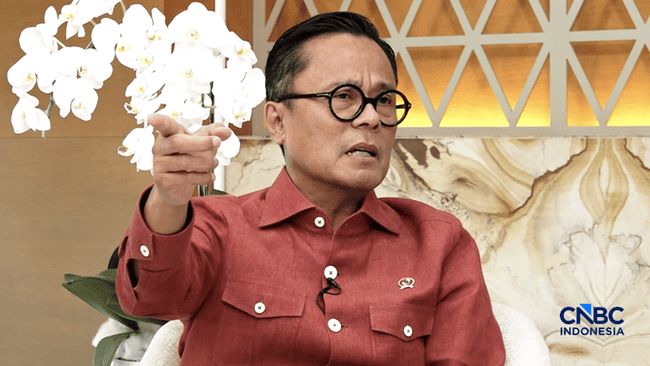
“We hope that by the end of this year, the number of companies will be reduced from 1,074 to 254 solid, strong companies, all of which are profitable,” said BPI Danantara Chief Operating Officer Dony Oskaria in the Danantara BUMN Progress Update 2026 programme with CNBC Indonesia.
Consolidation of Similar Companies
Consolidation is one of the main instruments for achieving this target. Danantara found that many SOE subsidiaries operate in the same business sector but operate separately on a relatively small scale.
In the initial mapping, there were 16 logistics companies, 15 insurance companies, five asset management companies, 60 hospitals, more than 100 hotels, and 23 industrial estate companies. These companies will be consolidated to achieve greater economies of scale and become stronger players in their respective industries.
Reviving Danareksa
In the asset management sector, five companies will be merged into a single entity. The merged company will be strengthened in terms of product development and will utilise the networks of state-owned banks as distribution channels.
Danantara will also restore Danareksa to its original function. Dony said the result of the asset management company merger is planned to use the name Danareksa Investment.
Danareksa previously had more than 50 subsidiaries with diverse business activities. These business activities are being reorganised one by one so that Danareksa can refocus on the investment and asset management industry.
Changing the Industrial Estate Business Model
Consolidation is also being carried out on 23 industrial estate companies with total managed land of around 35,000 hectares.
The industrial estate business model will be changed. Company revenue will no longer rely solely on land leases, but will be directed towards recurring income from the provision of electricity, water, fibre optic networks, and property management.
Under certain schemes, land can be leased without fees to attract more investors. The land is not granted as freehold property. Industrial estate companies will subsequently earn revenue from utility services as the number of tenants grows. This model is expected to make SOE industrial estates one of the instruments for attracting investment to Indonesia.
Rp180 Trillion in Construction SOE Debt
One of Danantara’s most challenging tasks is resolving problems at construction companies.
The state currently has seven construction SOEs. Of these, Dony said only three companies are in relatively healthy condition, namely Nindya Karya, Brantas Abipraya, and Hutama Karya.
The total consolidated debt of the construction companies reaches around Rp180 trillion. At some companies, the available assets are not even sufficient to cover all of the debt.
The resolution is becoming increasingly complex because the problems are not only at the parent companies but also at their subsidiaries.
Danantara must consider the impact of restructuring on vendors, subcontractors, creditors, and workers. Therefore, handling the construction SOEs requires different processes and resolution schemes for each company.
Danantara is targeting to ultimately have only three construction SOEs. These three companies will be returned to their core business as contractors.
To date, a number of construction companies have business activities outside their core competencies, ranging from property, hotels, fibre optic networks, water management, to toll roads. These businesses will be divested or consolidated into more suitable companies.
For the toll road business, Danantara is preparing two operator groups. The first group is Jasa Marga, while the second group will consolidate toll road assets outside Jasa Marga.
No Layoffs
Although the number of companies will be reduced significantly, Dony assured that the transformation is not directed towards layoffs.
According to him, the labour costs of the companies being merged do not reach Rp3 trillion. This figure is far smaller than the potential savings from closing loss-making companies, eliminating internal transactions, and reducing the number of directors and commissioners.
“The labour costs of the companies we are merging do not reach Rp3 trillion. I can still save around Rp60 trillion. Why should I carry out layoffs?” he asserted.
Dony said the transformation is being carried out precisely to strengthen companies and provide a better future for employees. Healthy and growing companies are considered able to provide greater benefits to their workers.
PT Pos Needs a Rp9.5 Trillion Correction
In addition to the construction SOEs, another major task is the transformation of PT Pos Indonesia. Dony said the company requires an accounting correction of around Rp9.5 trillion.
PT Pos is also facing a pension programme funding shortfall of almost Rp4 trillion. This shortfall must be covered because the company, as the founder, has obligations towards the defined benefit pension programme.
More broadly, the SOE pension fund problems arise from inadequate investment management. If investment returns are insufficient to cover the benefits promised to pensioners, the founding company must provide additional funds.