
Dony Oskaria: Genuine Food Self-Sufficiency, Bulog Lacks Rice Warehouses
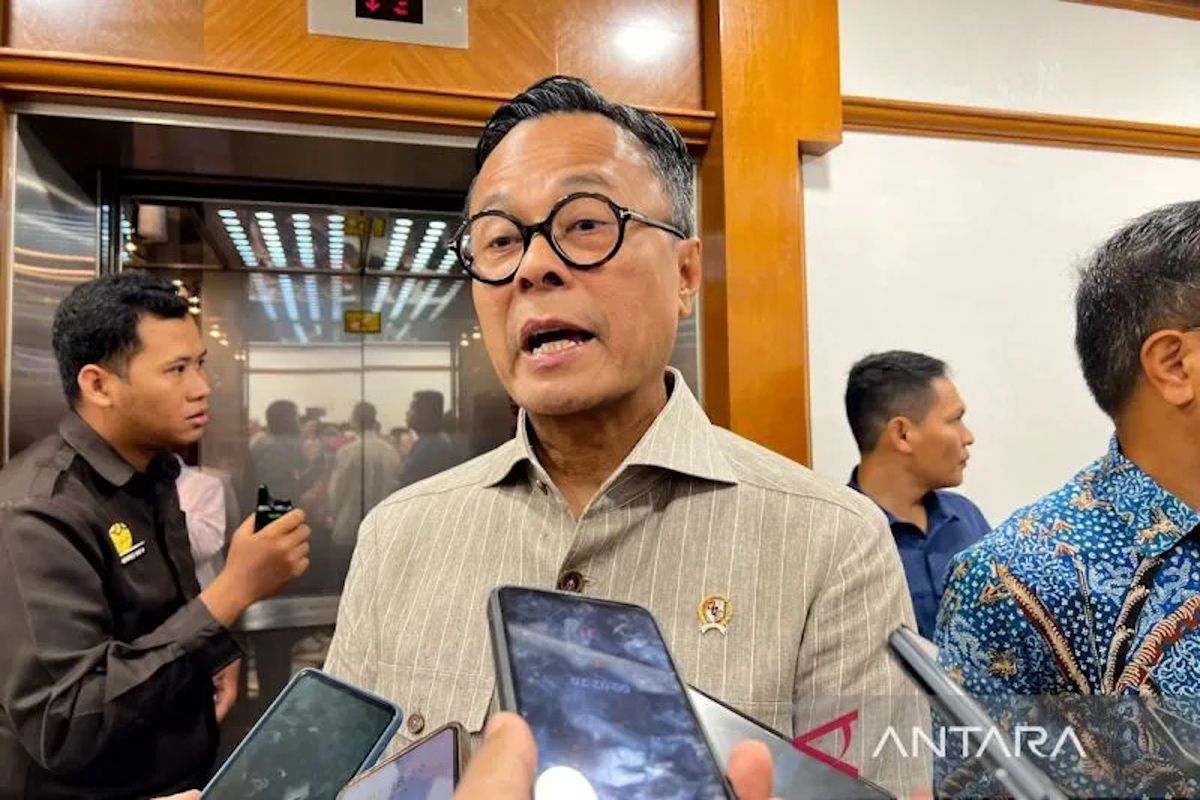
Jakarta (ANTARA) - The Head of the State-Owned Enterprises Regulatory Agency (BP BUMN) and Chief Operating Officer (COO) of Danantara, Dony Oskaria, emphasised that food self-sufficiency is not mere rhetoric, as reflected in the surge in rice production that has left Bulog short of warehouses and requiring expanded storage capacity.
“Many claim that self-sufficiency is a lie. Those saying it’s a lie might be hallucinating. Bulog is under my oversight, and the goods (related to rice self-sufficiency) are truly there,” Dony stated in Jakarta on Tuesday.
Dony stressed that food security is not just talk but proven evidence. He pointed out that certain groups still attempt to undermine food self-sufficiency.
Yet its implementation is already underway in practice and directly executed by state-owned enterprises in the food sector.
“Today, I even have to inject another Rp39 trillion into Bulog because it must purchase the people’s harvest,” Dony asserted firmly.
According to Dony, the massive increase in national rice production is evidently real, with storage capacity becoming increasingly limited.
“We (Bulog) are still building warehouses today. We’re even short of warehouses. Currently, we’re renting warehouses,” he continued.
Dony explained that the government believes a nation’s sovereignty is largely determined by its ability to stand on its own, especially in the food sector.
“Our conviction is that a sovereign nation is one capable of standing independently, particularly in the field of food,” Dony remarked.
Dony described food self-sufficiency as a working process carried out by ministries and agencies under the direct guidance of President Prabowo Subianto.
Several technical ministries, such as the Ministry of Agriculture, and food sector state-owned enterprises are collaborating to implement concrete programmes. One of them is the creation of new paddy fields in various regions.
In addition, Dony said, the government is also improving irrigation systems, lowering fertiliser prices through changes in business models and distribution, and ensuring the sustainability of agricultural land by limiting land conversion.
Dony described these steps as part of a grand strategy to maintain long-term food availability while protecting future generations.
Furthermore, Dony affirmed that all these policies are part of a transformation towards more fundamental and equitable economic growth.
Food security serves as one of the main pillars to ensure that development not only grows in numbers but is truly felt by the wider community, especially farmers as the primary actors in that sector.
He emphasised that understanding the basis of policy thinking is crucial to avoid misunderstandings in the public sphere.
In his view, if the public comprehends the grand objectives of the food security programme, it will become clear that the policies are designed to strengthen national sovereignty while enhancing public welfare.