
Dony Oskaria: Danantara to Make Fundamental Changes to SOE Management
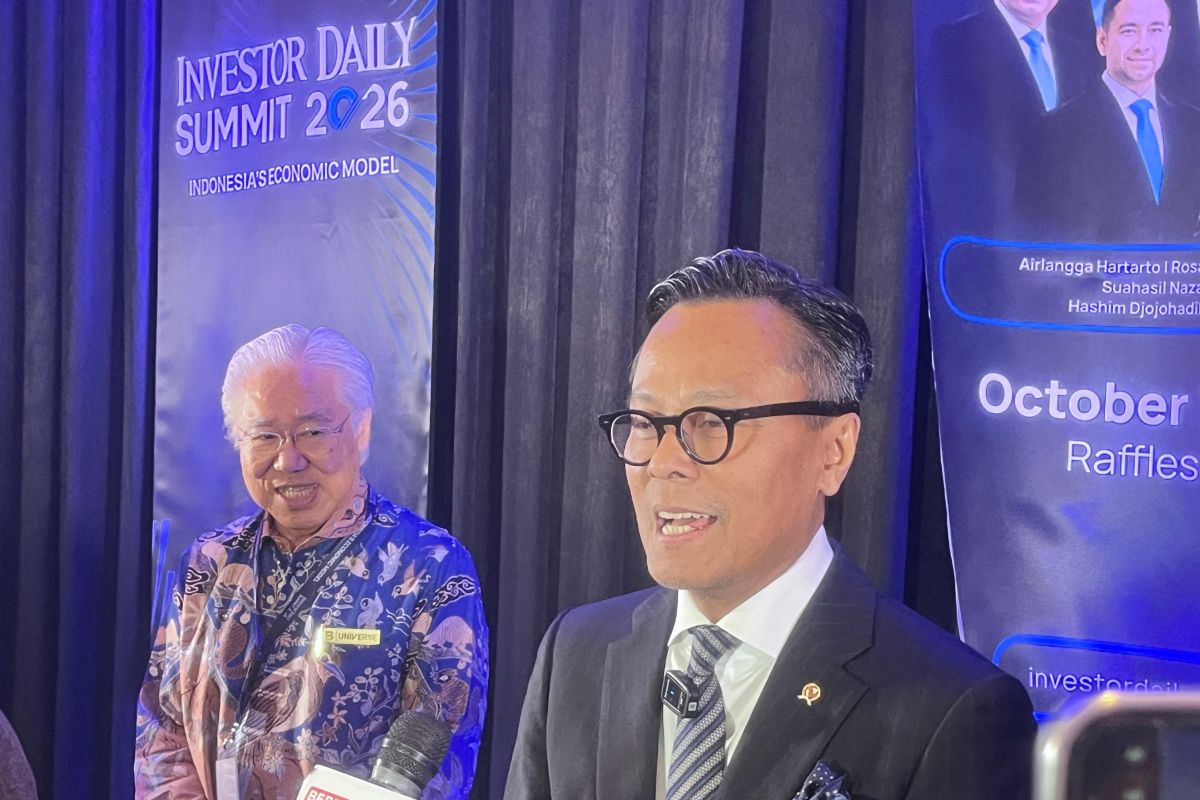
Jakarta (ANTARA) — Danantara Chief Operating Officer (COO) and Head of the State-Owned Enterprises Regulatory Agency (BP BUMN), Dony Oskaria, said the organisation was making fundamental changes to the management of state-owned enterprises (SOEs).
“We want to make the management of our SOEs as transparent and open as possible, and to bring about fundamental changes in how they are managed,” he said at the Investor Daily Summit 2026 in Jakarta on Thursday.
A comprehensive review by Danantara found that the 1,074 companies under the SOE umbrella faced various problems, including overlapping business units, operating losses, inefficiency and unresolved receivables between companies.
To address these issues, Danantara grouped the 1,074 companies by industrial sector and compared them with global benchmarks. It then assessed their business models, cost structures, EBITDA margins and markets, as well as their internal financial, organisational and human-resource capacities.
Based on the analysis, the SOEs were assigned to four main restructuring approaches. The first is liquidation for companies whose financial liabilities exceed the value of their assets. The second is divestment of non-core businesses, including hotels, hospitals, fibre-optic networks and toll roads held across various SOEs.
The next approaches are consolidation and mergers across SOEs. These include combining 23 industrial-estate companies into what would be Southeast Asia’s largest industrial-estate company, managing 35,000 hectares of land; integrating five asset-management companies; and plans to consolidate 16 insurance companies, 60 hospitals and more than 100 hotels.
Danantara is also undertaking internal consolidation, including the closure of 124 companies within state oil and gas firm PT Pertamina (Persero) and 50 subsidiaries of telecommunications company PT Telkom Indonesia (Persero) Tbk.
“Once the streamlining process across the 1,074 companies is complete, there will be only around 200 strong companies. This is what we are doing, and we expect it to be finished by the end of this year,” he said.
Oskaria said governance also needed to be improved, citing financial engineering, inaccurate accounting and asset impairments totalling more than Rp100 trillion.
Another problem was excessive investment without assessing returns on investment, which had left some SOEs trapped in long-term debt they could not repay. He cited PT Krakatau Steel (Persero) Tbk, which has a stalled project carrying Rp26 trillion in debt, and pharmaceutical company PT Kimia Farma Tbk, whose factories operate at only 40 per cent capacity, adding to its debt burden.
“That is why we are establishing investment committees to prevent overinvestment. Every company must submit each investment to a committee, which will check whether it is appropriate and consistent with the company’s purpose and business plan,” said the head of BP BUMN.
The transformation also involves changing business models. PT Pupuk Indonesia (Persero), for example, replaced its traditional cost-plus model—which had driven up production costs and increased the government’s subsidy burden—with a mark-to-market approach. The change has lowered fertiliser prices, increased profits by nearly 300 per cent and funded the revitalisation of eight new fertiliser plants.
Similar efficiency measures are being introduced gradually in the electricity sector at PT PLN (Persero), as well as in the cement industry, Pertamina and PT Danareksa (Persero).
“This is the transformation we are undertaking, and its impact is being felt. It requires strong commitment, especially from all SOE management. It’s now or never. We must change, or things will remain as they are,” Oskaria said.
He said Danantara expected the transformation to help generate profits of at least Rp360 trillion in 2026, which would serve as an engine of growth.