
Dony Oskaria Confirms BUMNs Now Support Each Other, No Longer Working in Isolation
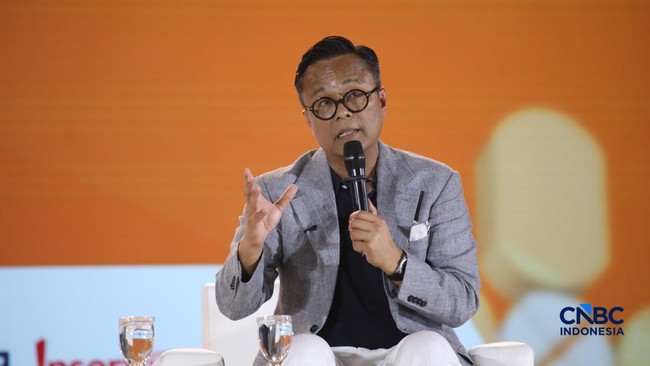
YOGYAKARTA, CNBC Indonesia – Chief Operating Officer (COO) of Badan Pengelola Investasi Daya Anagata Nusantara (Danantara) Dony Oskaria has highlighted significant changes in BUMN governance since Danantara’s establishment.
He explained that prior to consolidation, BUMNs operated independently, making it difficult for them to support each other during financial or operational challenges.
Speaking at the Jogja Financial Festival at Jogja Expo Center, Special Region of Yogyakarta, on Saturday (23 May 2026), Dony stated that many people misunderstand the Ministry of BUMN’s role, clarifying it does not own state enterprises but merely holds management authority.
“Actually, the Ministry of BUMN does not own the state-owned enterprises; it merely has management authority,” Dony said at the event.
He added that the lack of integrated management made many state enterprises struggle to survive under business pressures, leading some once-thriving BUMNs to face serious issues.
Dony cited PT INTI, Jakarta Lloyd, and Krakatau Steel as companies that faced severe difficulties. He explained that the absence of a mechanism for BUMNs to support each other made corporate rescue efforts challenging.
The government established Danantara as a sovereign wealth fund based on BUMN consolidation, or a state-owned enterprise-based sovereign wealth fund. Dony noted that most developed nations have sovereign wealth funds to accelerate national development through investment.
However, he explained that Danantara was built on BUMN consolidation, integrating state assets and enterprises under a single large holding company.
“Now, Bank Mandiri, BRI, Krakatau Steel, Garuda, Pertamina, and PLN are under one holding company. With this structure, it is easier for us to rehabilitate our companies,” he said.
Dony believes the consolidation model will simplify restructuring and strengthen state asset management. He also refuted the notion that BUMNs have not been profitable.
He stated that BUMNs contribute nearly a third of the national budget through dividends and taxes. In Q1 2026 alone, state-owned enterprises paid approximately Rp215 trillion in taxes.
Meanwhile, BUMN profits are projected to reach Rp335 trillion in 2025, targeting Rp360 trillion in 2026. Dony hopes future profits could rise to Rp450 trillion.
He stressed that integrated BUMN management via Danantara aims not only to strengthen state enterprises’ finances but also to drive national economic growth and create new job opportunities for young people.