
Dony Oskaria Asserts Danantara Differs from 1MDB, Investment Risks Separated from SOEs
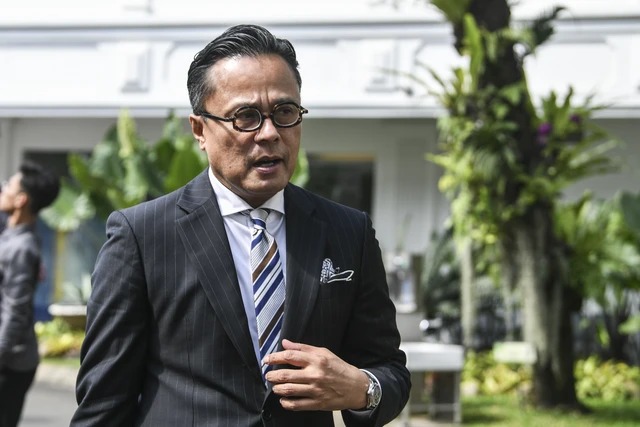
The Chief Operating Officer of the Daya Anagata Nusantara Investment Management Agency (Danantara Indonesia), Dony Oskaria, has asserted that Danantara’s institutional structure is fundamentally different from the investment management scheme of 1Malaysia Development Berhad (1MDB). Since its inception, Danantara has implemented a strict separation between the management of State-Owned Enterprises (SOEs) and investment activities to mitigate various potential risks.
According to Dony, comparisons between Danantara and 1MDB arose due to the consolidation of SOE assets occurring alongside an investment function within a single entity. However, he stressed that Danantara possesses a different governance design because the asset management and investment functions are placed in separate structures.
“From the beginning of designing Danantara, we already thought that there must be a separation of risk between SOE management and investment. Because investment can be successful, but it can also fail,” Dony said in the Bukan Kaleng Kaleng podcast, quoted on Thursday.
He explained that without such separation, an investment failure could directly impact the state-owned companies that have been one of the main pillars of the national economy. “You can imagine if we invest and that investment fails, the impact could drag down the SOEs. That is why from the start we designed it by separating these two functions,” he said.
Dony explained that Danantara has two main pillars performing different yet complementary functions. The first pillar is Danantara Asset Management, tasked as a consolidator and manager of the SOE portfolio. The second pillar is Danantara Investment Management, which functions as the investment arm to place funds in various productive projects.
“Danantara Asset Management functions as a consolidator of SOEs, while Danantara Investment Management becomes the investment arm that manages investment activities,” he clarified.
Furthermore, Dony emphasised that the funds used for investment do not originate from the principal assets of the SOEs. The source of investment funds comes entirely from dividends generated by the state-owned companies under the management of Danantara Asset Management. “What is invested is dividends. So dividends generated by Danantara Asset Management are then invested into various productive sectors to accelerate national economic growth,” he said.
Therefore, he considers the quality of SOE management to be the most decisive factor for Danantara’s future sustainability. The better the performance of the SOEs, the greater the dividends that can be collected and utilised to support strategic investments. “This means that SOE management is the key word for Danantara’s sustainability. If we mismanage SOEs, then Danantara will also be affected. Because what is invested is the result of managing the SOEs themselves,” Dony stressed.
According to him, this model is designed so that the investments made by Danantara still have a healthy source of funding while keeping the state’s strategic assets protected from investment risks that do not meet expectations. With this separation of functions scheme, Danantara is expected to be able to carry out its role as a professional state investment manager while maintaining the sustainability and performance of SOE companies as engines of Indonesian economic growth.