
Don’t Wait for Citizens to Sue: Regents Have Authority to Resolve Land Disputes
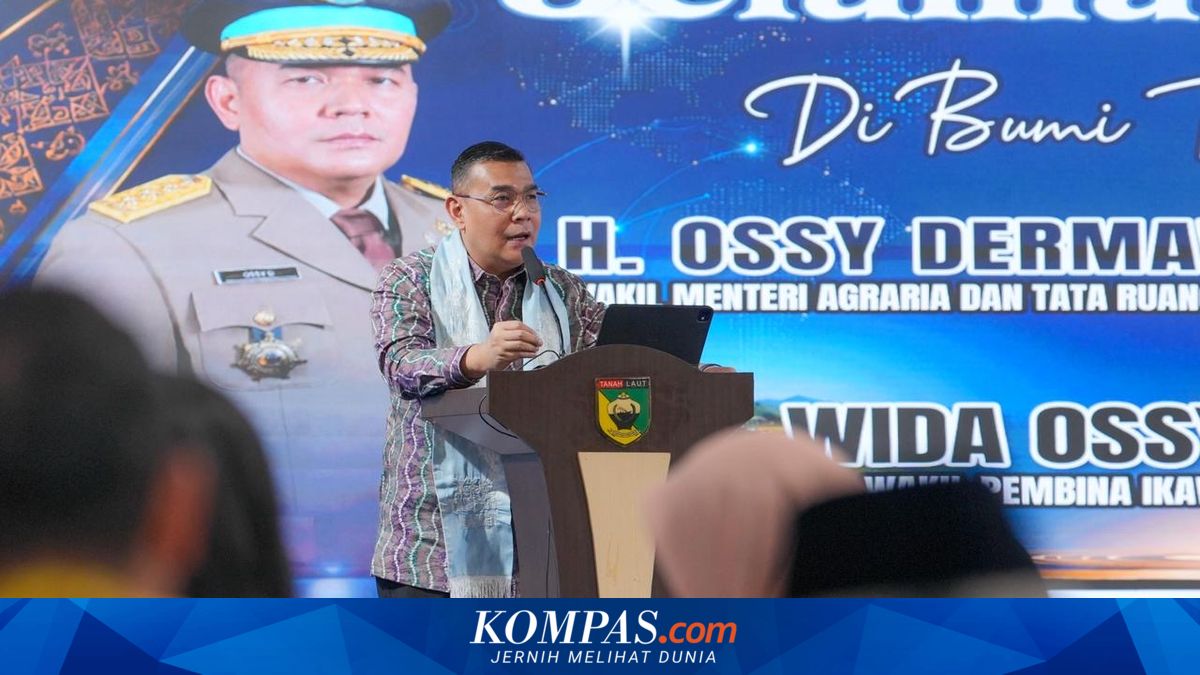
JAKARTA - Deputy Minister of Agrarian Affairs and Spatial Planning/Deputy Head of the National Land Agency (ATR/BPN) Ossy Dermawan has urged local governments to utilise the Agrarian Reform Task Force (GTRA) to resolve land-related issues in their regions.
He said dialogue and consultation through GTRA should be prioritised over taking land disputes to court, which often takes a long time.
Ossy made the remarks during a meeting with the Tanah Laut Regency Government at Balairung Tuntung Pandang in Tanah Laut Regency, South Kalimantan Province, on Sunday (31 May 2026).
According to Ossy, regents have strong authority to assist in resolving land issues through the GTRA forum established under Presidential Regulation No. 62 of 2023 on Accelerating Agrarian Reform Implementation.
He explained that GTRA was created as a collaborative platform bringing together all stakeholders to find solutions for local land disputes.
Through this forum, local governments can work with law enforcement, the military, relevant agencies, and community representatives to find mutually acceptable solutions.
Ossy said the mechanism is particularly important for handling systemic land issues involving multiple parties.
“If it is systemic and structural, the regional government can use the GTRA mechanism to resolve it. Gather all relevant parties and find solutions there. At the very least, the public sees the leader’s good faith in trying to resolve the issue,” he said.
He assessed that dialogue and consultation via GTRA could be a more effective first step before land disputes proceed to litigation.
In addition to speeding up resolution, the forum is expected to strengthen inter-agency coordination and reduce the potential for prolonged community conflicts.
The certificates form part of 111 issued by the ATR/BPN Ministry through the Tanah Laut Regency Land Office.
Of these, 106 are Right to Use certificates in the name of the Tanah Laut Regency Government, while the remaining five are cross-sector land rights certificates.