
Don’t Throw Away Kitchen Waste: How to Make Compost
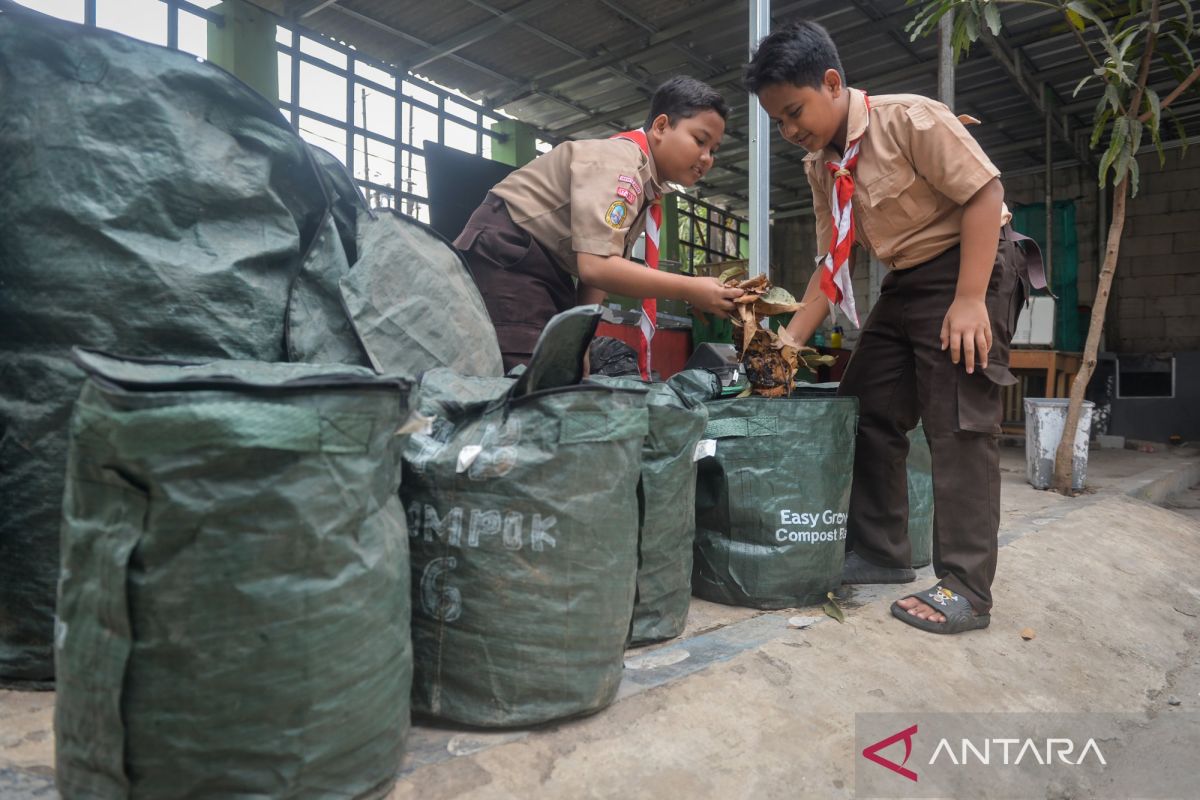
Jakarta (ANTARA) – The build-up of organic waste from daily kitchen activities remains a critical environmental challenge in Indonesia. Data from the National Waste Management Information System (SIPSN) of the Ministry of Environment and Forestry (KLHK) show that food scraps account for 40 per cent of the country’s total daily waste.
When kitchen waste ends up in landfill without being treated, it decomposes anaerobically (without oxygen) and produces methane (CH₄). According to the Intergovernmental Panel on Climate Change (IPCC), methane has a global warming potential 21 to 28 times greater than carbon dioxide (CO₂).
Turning household waste into organic compost at home directly reduces greenhouse gas emissions while gradually improving soil ecosystems. A 2021 study by the National Development Planning Ministry (Bappenas) and WRI Indonesia found that food loss and waste in Indonesia account for 7.29 per cent of annual greenhouse gas emissions.
Meanwhile, research by the National Research and Innovation Agency (BRIN) and agricultural research institutions such as Central Agri Biotech confirms that adding solid compost can significantly improve soil porosity, water retention and microbial activity compared with the continuous use of synthetic chemical fertilisers.
Efficient composting requires an ideal balance between carbon-rich “brown” materials and nitrogen-rich “green” materials:
Green materials (rich in nitrogen): chopped vegetables, fruit peels, coffee grounds, used tea leaves and fresh grass clippings.
Brown materials (rich in carbon): dry leaves, rice husks, sawdust, or pieces of brown paper or cardboard without a plastic coating.
Additional material: crushed eggshells, as a natural source of calcium.
For household-scale composting, the aerobic method (which requires oxygen) is recommended to prevent rotting smells.
Prepare a container: use a recycled plastic bucket, drum or large pot with a tight-fitting lid.
Make air holes: use a drill or heated nail to make 0.5cm holes in the base and around the sides of the container. Air circulation prevents anaerobic conditions that produce methane.
Provide a leachate tray: place the container on a tray to collect liquid produced during decomposition.
Add organic materials to the compost bin in stages:
Base drainage layer: put 5–10cm of small twigs, rice husks or dry leaves at the bottom to maintain airflow.
Green layer (kitchen waste): add kitchen scraps chopped into small pieces, around 2–3cm, so bacteria can break them down more quickly.
Brown layer: cover the kitchen waste with dry leaves or sawdust. Use about two parts brown material to one part green material by volume.
Bioactivator (optional): sprinkle on a bioactivator solution, such as agricultural EM4 or rice-washing water, to speed up the growth of decomposing microbes.
Covering: always finish each new addition with a top layer of brown material to contain odours and keep flies away. Close the container securely.
Turn the compost pile once a week to distribute oxygen throughout the materials. The compost should be as moist as a wrung-out sponge: damp, but not dripping. If it is too dry, spray on a little water; if it is too wet, add dry leaves or sawdust.
The compost will be ready in four to eight weeks. Mature organic compost is dark brown, like humus; loose and crumbly; and has a fresh, earthy smell, with no sour or strong rotting odour. Its temperature should have returned to room temperature, with no residual warmth from active decomposition.
Finished compost can be sifted and mixed directly into growing medium at a ratio of one part compost to three parts soil. It can be used safely and sustainably to nourish ornamental plants, vegetables and fruit trees in home gardens.
Source: jawawa.id (https://jawawa.id/newsitem/dont-throw-away-kitchen-waste-how-to-make-compost-1791942699)
Originally published by Antara (Indonesian) (https://www.antaranews.com/berita/5784805/sampah-dapur-jangan-dibuang-ini-cara-membuat-pupuk-kompos), translated from Indonesian