
Don't Stop, But Fix the Governance and Oversight of the Free Nutritious Meal Programme
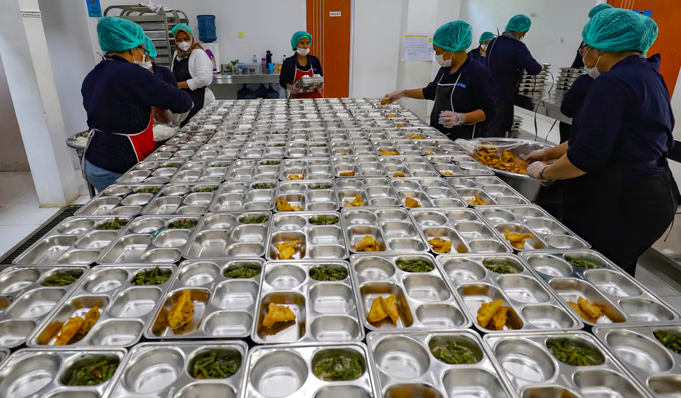
Amid a wave of criticism and calls from some quarters to halt the Free Nutritious Meal (MBG) programme, a number of parties maintain that President Prabowo Subianto’s flagship initiative still holds strategic value for Indonesia’s future. Bendahara Umum Tidar Jakarta Barat and legal observer, Noverizky Tri Putra, believes the debate over MBG should not stop at technical issues and the various cases emerging in the field. He argues the programme’s core substance remains relevant because it addresses the basic needs of the community, especially children and underprivileged families. “If we speak objectively, MBG is a programme born from the real needs of society. Indonesia still faces problems of nutrition, stunting, and unequal access to food. Therefore, I think the basic idea is very good and worth maintaining,” Noverizky said in a written statement on Friday (19/6). He stated that in a country with a large population, government intervention in the nutrition sector is not merely a social policy but a long-term investment to improve the quality of human resources. Noverizky, who completed his master’s degree in law at the Gulf International Institute in the United States and Leiden University in the Netherlands, noted that many developed countries built superior generations through similar programmes ensuring children receive adequate nutrition during their growth period. Consequently, he believes calls to completely stop MBG are not the right solution. “If there is a pothole, you fix the road, not stop all transportation activities. The same logic applies to MBG. What needs to be fixed is the governance, not the noble objective,” he said. However, Noverizky does not turn a blind eye to the various problems that have emerged during the programme’s implementation. Cases of food poisoning in several regions, distribution issues, food quality, and alleged corruption involving several officials are serious notes that cannot be taken lightly. The government itself has acknowledged many shortcomings in MBG’s implementation and has conducted evaluations and taken action against parties deemed to have abused the programme. He believes these cases demonstrate weaknesses in the oversight system and implementation management, not proof that the MBG concept has failed overall. “From a legal and governance perspective, we must be able to distinguish between programme failure and implementation failure. The public should not lose the benefits just because of individuals who abuse their authority,” he said. Noverizky assessed that the alleged corruption implicating several officials should instead be used as momentum to strengthen the programme’s transparency and accountability. Several reports have indeed revealed alleged governance irregularities and corrupt practices in MBG’s implementation, which are currently being processed by law enforcement. He stressed that corruption should not be used as a reason to eliminate a programme that benefits the wider community. “Eradicate the corruption, don’t kill the programme. If every programme that was corrupted was then stopped, the state would never have sustainable public policies,” he asserted. Furthermore, Noverizky sees that MBG has an economic impact that often escapes public attention. The programme creates a new economic chain involving farmers, livestock breeders, MSMEs, food suppliers, and local workers in various regions. He believes this economic multiplier effect means MBG cannot be assessed solely from the budget aspect. “Every egg purchased, every vegetable supplied, every kitchen that operates, all of it drives the community’s economy. This is not just about lunch, but also about the people’s economic turnover,” he said. Nevertheless, he urged the government to be more selective in determining implementing partners, strengthen audit systems, utilise digital monitoring technology, and open up public access to information so that potential irregularities can be suppressed from the outset. Noverizky also believes periodic evaluation must be an inseparable part of MBG’s implementation. According to him, a programme of this magnitude cannot possibly run perfectly from the start, but what is most important is the courage to acknowledge shortcomings and improve them consistently. He appreciated the government’s steps to reorganise MBG’s implementation after various problems arose in the field. “Big programmes always face big challenges. What is needed is the courage to make corrections and firmness in taking action against violations. The state must not be defeated by unscrupulous individuals,” he said. Amid the ongoing debate, Noverizky invited the public to view MBG more clearly and proportionally. He believes criticism remains necessary as a control mechanism, but it should be directed at improving the programme’s implementation, not merely rejecting the entire idea. “Indonesian children need good nutrition. The community needs a state that is present. Therefore, MBG remains relevant. What we must ensure is that every rupiah of the budget truly reaches the beneficiaries and does not leak along the way,” he concluded.