
Don't Panic When a Volcano Erupts: Follow These 7 Life-Saving Steps
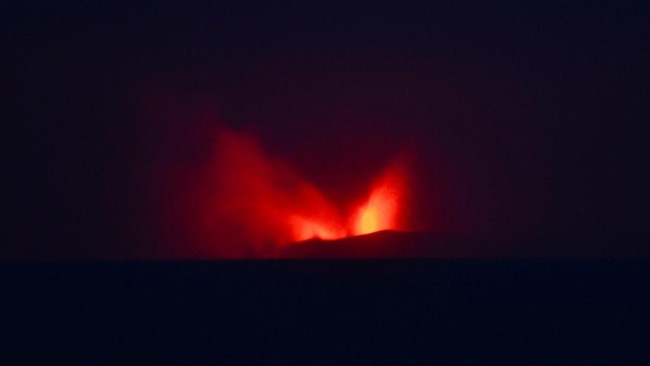
Jakarta, CNBC Indonesia – Volcanic eruptions can pose a range of threats, from lava flows and pyroclastic clouds to lahars, toxic gases and ash fall. Communities living in affected areas must follow the instructions of the government and local officials to reduce the risk of injury or death.
According to the US Centers for Disease Control and Prevention (CDC), following the instructions of local authorities is the most important step in protecting oneself and one’s family during a volcanic eruption. Officials will provide information on eruption preparedness, including orders to evacuate or take shelter in a safe place.
Below is the safety guidance during a volcanic eruption, as issued by the CDC.
- Evacuate immediately if ordered
People must leave the area at once if lava flows, lahars or pyroclastic clouds are moving towards their location. If the government issues an evacuation warning because an eruption is expected imminently, do not delay in evacuating.
If possible, use a vehicle rather than travelling on foot. Keep all car doors and windows closed during the journey.
Drive across the danger zone if conditions permit; otherwise, move away from the source of the threat. Drivers should also be wary of unusual hazards on the roads, including volcanic material and damage caused by the eruption.
- Take shelter inside a building
If evacuation is not required, people are advised to stay indoors. Close all doors, windows and the flues of fireplaces or stoves to prevent ash and gas from entering.
Switch off fans, heaters, air conditioning and any other systems that draw in air from outside. Pets and livestock should also be brought into enclosed shelters.
Anyone caught outside should immediately seek refuge in a building. Anyone trapped in falling rocks is advised to curl up into a ball whilst protecting their head.
- Stay away from rivers and low-lying areas
People near rivers or waterways should be alert to rising water levels and the possibility of lahars in low-lying areas.
Move to higher ground immediately if the water level rises or there are signs of volcanic mudflows.
- Treat burns immediately
Victims suffering burns must receive medical attention without delay. The CDC reminds the public that prompt treatment can save lives.
If the eyes, nose or throat become irritated by volcanic gases and smoke, move away from the affected area immediately. Symptoms usually subside once exposure ceases. However, if complaints persist, victims are advised to consult a medical professional.
- Protect the body from volcanic ash
Volcanic ash can be harmful to health, particularly to respiratory function. During ash fall, people should remain indoors with doors and windows closed.
If going outside is unavoidable, wear long-sleeved clothing and trousers to protect the skin, as well as protective goggles to keep ash out and prevent eye irritation.
People should continue to monitor official instructions if ash fall lasts more than a few hours. Staying indoors for too long is not necessarily safe, as accumulated ash can weigh down and collapse roofs, as well as block air intakes.
- Use an N95 respirator
The CDC recommends the use of an N95 respirator approved by the National Institute for Occupational Safety and Health (NIOSH). These masks should be worn outdoors and when cleaning ash that has entered buildings.
Users must follow the fitting instructions so that the respirator seals properly and provides optimal protection. If an N95 respirator is unavailable, an ordinary dust mask may be used as a last resort.
However, people should only remain outdoors for short periods whilst ash is still falling. Ordinary dust masks do not offer the same level of protection as particulate respirators. In addition, disposable particulate respirators cannot filter toxic gases or fumes.
- Avoid driving during heavy ash fall
People are advised not to drive when ash is falling heavily. Moving vehicles can stir up ash that has already settled.
Ash can also clog engines and cause vehicles to break down. For this reason, car or lorry engines should be switched off if the vehicle is not being used for evacuation.
If driving is unavoidable, make sure the car windows are closed. Do not switch on the air conditioning, as the system can draw air and ash from outside into the cabin.