
Don't forget to wear a mask, Jakarta's air is unhealthy this Friday morning
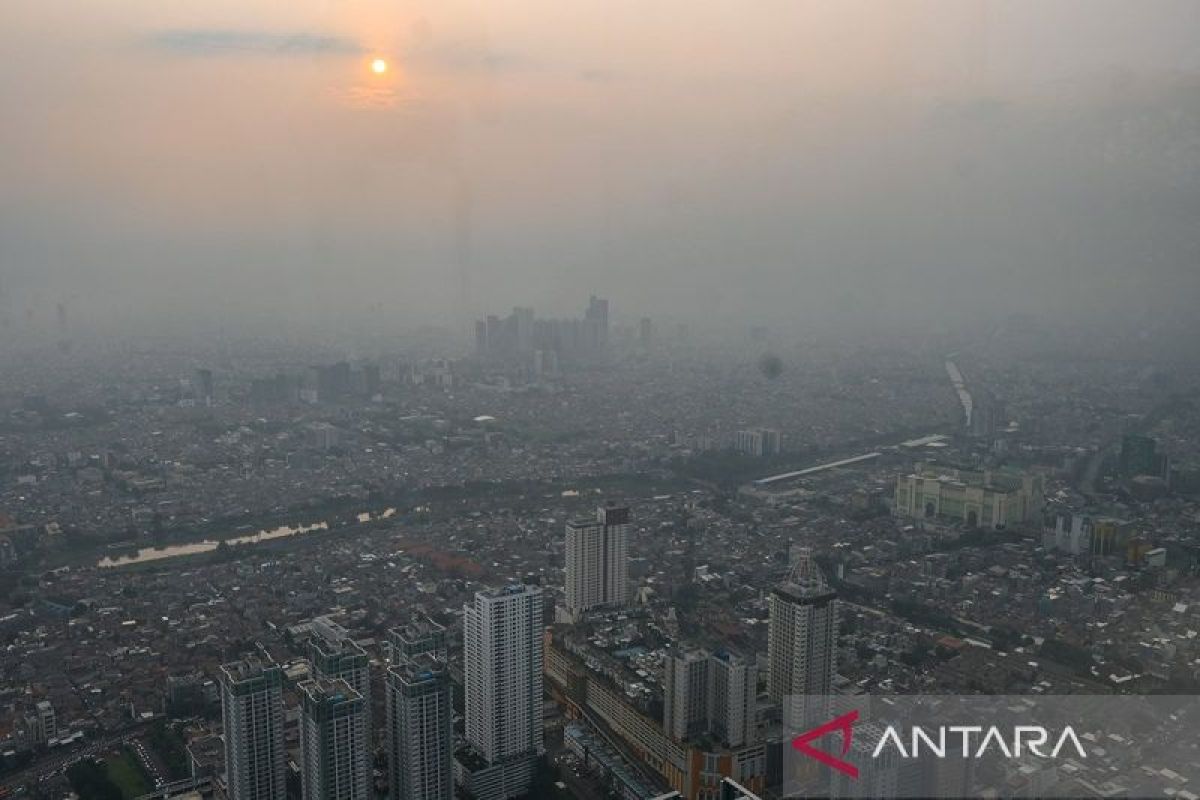
Jakarta (ANTARA) - The air quality in Jakarta has been recorded as unhealthy, so the public is advised to wear masks when outside, according to the IQAir website this Friday morning, updated at 04.00 WIB. IQAir records Jakarta’s air quality at 154 points, with a PM2.5 pollutant concentration level of 60 micrograms per cubic metre, or 12 times higher than the World Health Organization’s (WHO) annual air quality guideline. PM2.5 consists of particles smaller than 2.5 microns (micrometres) found in the air, including dust, smoke, and soot. Long-term exposure to these particles is associated with premature death, especially in people with chronic heart or lung diseases. Health recommendations related to the current air quality, in addition to wearing masks for sensitive groups, also include avoiding outdoor activities, closing windows to prevent dirty outdoor air from entering, and turning on air purifiers. Jakarta’s air quality is ranked fourth among the worst cities/regions in Indonesia, after South Tangerang, Banten with 165 points, Bekasi (161), and Tangerang (155). The DKI Jakarta Provincial Government has prepared various solutions to reduce air pollution levels, including building a waste-to-energy power plant (PLTSa) in Jakarta and transforming the transportation sector to electric. The DKI Provincial Government emphasises that air pollution control cannot be carried out by one region partially, so integrated joint actions are needed between regional device organisations (OPD) and cross-regional collaboration around Jakarta. The DKI Provincial Government has set a commitment for air pollution control for the 2023–2030 period through Governor’s Decree No. 576 of 2023 on the Air Pollution Control Action Plan (SPPU). That strategy covers three main pillars, namely strengthening air pollution control governance, reducing emissions from mobile sources such as transportation, and reducing emissions from stationary sources such as industry and other activities.