
Don't Forget the Disability Community!
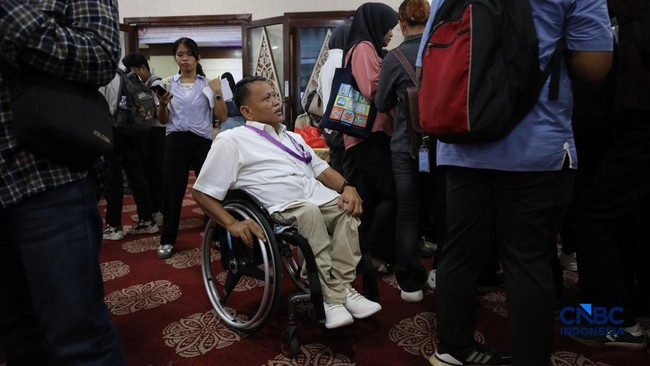
Solira Edu continues to develop its sustainability extracurricular programme at BINUS Simprug. During the activity, I met Yayasan Cheshire Indonesia, an organisation that empowers people with disabilities through various training programmes.
I saw how they are not only given assistance, but also equipped with skills. They learn to grow vegetables hydroponically and to make environmentally friendly products such as eco enzyme soap.
For some reason, that meeting made me think for quite a long time. All this time, when we talk about sustainability, we often immediately think about the environment. About waste, plastic, energy, emissions and climate change.
In fact, sustainability has three interconnected pillars: environmental, social and economic. This means that sustainability is not only about how we look after the planet, but also about how we build an inclusive society and ensure that more people have the opportunity to participate in the economy.
This is where the disability community becomes an important part of the sustainability conversation. We need to start asking: who exactly are we including in the future we are building?
I then spoke with David Soukhasing, a volunteer who has lived close to the world of disability since childhood because his aunt is a person with a disability.
According to David, caring for someone with a disability is a 24-hour responsibility. That experience later led him to become a volunteer at an organisation in France called À Bras Ouverts.
There, children with disabilities take part in various activities with volunteers over the weekend, while their parents get the opportunity to rest.
“Sometimes love needs a little bit of breathing room,” David told me.
That sentence stuck in my head. Because behind a person with a disability, there is a family that can also experience physical, emotional and financial exhaustion. Giving space to breathe does not mean loving less. On the contrary, support like this can help families continue to provide attention and affection in the long term.
However, David’s experience also made me realise that inclusion can take many forms. At À Bras Ouverts, the focus is not on work or training. The programme gives children with disabilities experiences outside the home while giving their families room to breathe.
Meanwhile, at Yayasan Cheshire Indonesia, the approach is different. They provide skills that can help people with disabilities become more independent and participate in society.
What connects the two is something more fundamental: dignity. People with disabilities do not only need sympathy. They need the opportunity to learn, participate, create and build an independent life.
Sometimes that opportunity means giving families space to rest. Sometimes it means giving someone access to skills and work.
Inclusion is not only about asking, “How can we help them?” But also, “How can we create a society that gives them the opportunity to help themselves?”
Unfortunately, those opportunities are not yet evenly available in Indonesia. Our public infrastructure is still not inclusive enough, while many organisations that work directly with the disability community still depend on very limited funding.
For this reason, the government needs to provide subsidies to grassroots organisations that work directly with the disability community. Models such as À Bras Ouverts in France, as well as empowerment programmes like those run by Yayasan Cheshire Indonesia, deserve support so that they can reach more people.
This is not just about charity. This is about justice, as well as empowerment. When someone gains access to education, training, infrastructure and decent work, they are not only beneficiaries. They can also become a productive part of the economy.
We often talk about building a sustainable Indonesia. But what kind of sustainability are we building if there are still so many people who have not had the opportunity to be part of it?
Sustainability is not only about what kind of planet we leave behind. Sustainability is also about what kind of society we build today. In the end, we do not only need a greener world. We need a more humane world.