
Don't Dare Misappropriate Minyakita, These Are the Heavy Penalties
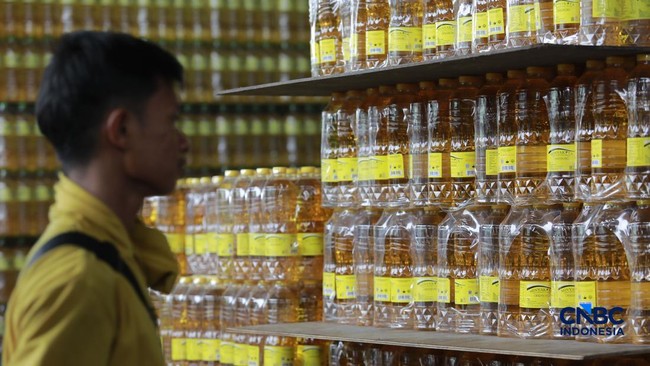
Minister of Trade (Mendag) Budi Santoso has stated that the government is currently prioritising administrative sanctions in handling various cases of misappropriation of the people’s cooking oil brand, Minyakita, discovered in the field. Nevertheless, the government is not solely focused on enforcement but is also continuously improving the distribution system to close loopholes for violations and ensure this subsidised cooking oil is channelled according to regulations. When asked about the possibility of other sanctions beyond administrative ones, including criminal charges, Budi confirmed that all processes are still ongoing. “Yes, everything is in process; all sanctions are procedural in nature,” Budi said when met at the Parliament Complex in Jakarta on Wednesday (10/6/2026).
He explained that enforcement against Minyakita distribution violations involves stages that must be followed. Although the penalties currently imposed for misappropriation are administrative, Budi confirmed the harshest sanction is the revocation of a business licence. “Yes, the process (even for administrative sanctions) goes as far as, for example, the revocation of a company’s permit. That revocation lies with the OSS (Online Single Submission), so in principle, we can recommend it, but we are continuing to make system improvements first,” he explained.
Budi stressed that improving the system is a critical part of supervision efforts. According to him, oversight does not always have to be conducted through field operations or sanctions, but also by creating a better distribution system so violations do not recur. “So, what is meant by administrative sanctions does not necessarily have to be like that, but we must also fix the system,” he said. “So when there is a violation, what can we change, for example the system, so there are no violations? For instance, the 35 per cent mandate for state-owned enterprises is part of the system. If an SOE sells, it must be according to the HET (highest retail price); that is one part. So supervision doesn’t mean we always have to go to the field; no, but the system is made better so the distribution we want is achieved,” Budi continued.
Amid these improvement efforts, the government is still reviewing a plan to adjust the highest retail price of Minyakita, which has recently become a concern for businesses and the public. However, to date, the government has not set a new price cap. When asked about the progress of this policy, Budi replied briefly, “Not yet.”
According to him, the government’s current focus remains on ensuring that the distribution and supply of Minyakita run smoothly across all regions before discussing price changes. “So for now, the HET remains Rp15,700 per litre. What is important now is ensuring distribution is guaranteed first; we are just talking about guaranteed distribution and guaranteed supply,” Budi said.
He revealed that Minyakita distribution had not been running optimally because a large portion of the supply was allocated to the government’s food aid programme. “Previously, the volume was indeed not very maximal because almost… a large percentage was used for food aid,” he clarified. Because of this, the government is now requesting that Minyakita distribution be refocused on public markets, so it is more accessible to the community and sold according to the set price.
“So now it has been agreed that everything must be distributed to public markets. So, the minimum 35 per cent share for state-owned food enterprises must be optimised for public markets, because previously a portion was for food aid. Now it must go to public markets so it is affordable for the community,” he said.
In addition to strengthening distribution via state-owned food enterprises, the Ministry of Trade is also encouraging producers to increase the production of second-brand cooking oil, so that more affordable cooking oil options are available in public markets. “Secondly, we continue to encourage producers to make second-brand cooking oil, so that cooking oils similar to Minyakita become more numerous. Currently, there are many premium oils available, but we are also asking that not only premium oils are produced; second-brand oils must be more abundant, especially in public markets,” Budi stated.
Responding to public complaints that they still struggle to obtain Minyakita and find prices above the official ceiling in several regions, Budi reiterated that the government will optimise the role of state-owned food enterprises in distribution. “Yes, that is why, as I mentioned earlier, one step is that we will optimise the role of state-owned food enterprises so they can enter the public markets,” he concluded.