
Don’t Blindly Trust Eco-Friendly Labels
“We’re not there yet,” Luna Maya said. On a Tuesday morning a few months ago, she was sitting at a table outside a café in Jakarta’s Menteng district. Luna has a keen instinct for spotting what is wrong with branding and marketing.
As we talked about sustainability, however, one question kept coming to mind: why are consumers so quick to believe environmental claims that may not be substantiated?
I met the Indonesian model and actress because of her concern for environmental issues. Luna is an investor and a vocal advocate for tackling the waste crisis.
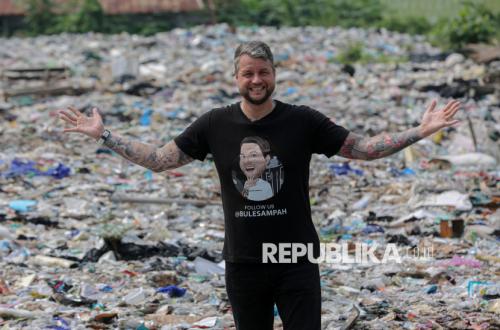
We met to make an episode of RICE, a documentary series on my YouTube channel, BuleSampah. In the episode, I wanted to investigate why consumers across Asia, particularly in Indonesia, are so vulnerable to greenwashing.
Luna pointed to a simple reality: many Indonesian consumers have more pressing needs. When household budgets are tight, price and convenience often take priority over sustainability. A product promising environmental benefits may be appealing, but it still has to be affordable.
Is it really that simple?
I have spent years investigating the plastics industry and its environmental claims. What concerns me is not that consumers prioritise price. That is entirely understandable.
The problem is that companies can exploit those circumstances by marketing their products as sustainable without proving that they deliver genuine environmental benefits.
Greenwashing is not simply a matter of putting a green label on plastic packaging. It shapes how people understand a product, often by highlighting one supposedly positive feature while concealing the bigger picture.
Environmental promises have become a powerful marketing tool for the global fast-moving consumer goods (FMCG) industry. The problem arises when marketing advances faster than real environmental improvements.
In our RICE investigation, we found a striking example: drinking straws marketed as both recyclable and biodegradable. At first glance, the two claims sound like environmental advantages.
But without adequate explanation, consumers may be confused about the product’s properties and how to dispose of it properly.
Recyclability and biodegradability are different properties and processes. Neither necessarily guarantees that a product has a lower environmental impact.
Without clear evidence and information about the conditions required, claims of this kind can mislead consumers and amount to greenwashing.