
Don't Be Surprised! Indonesia Has Massive Gold Reserves Exceeding Freeport's
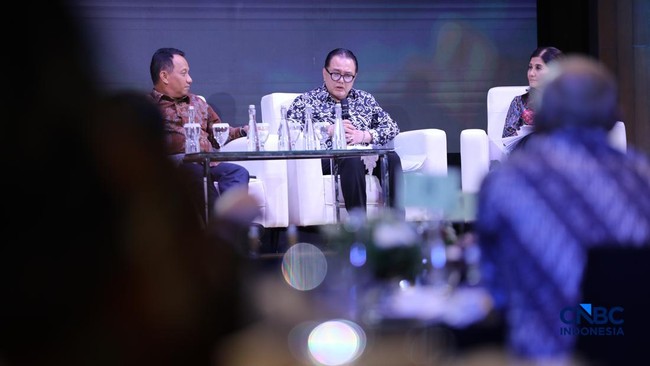
The Indonesian Mining Institute (IMI) has revealed that Indonesia’s gold reserve potential remains substantial and is spread across various regions. One mining company, still in the exploration phase, is touted to have gold reserves larger than those of PT Freeport Indonesia (PTFI) in Central Papua. IMI Chairman Irwandy Arif stated this potential shows Indonesia still has many gold mining areas that can be developed through exploration activities. The company with the large gold reserves is Sumbawa Timur Mining (STM), which manages the Hu’u Project in Hu’u District, Dompu Regency, West Nusa Tenggara. “The potential is still enormous. In West Nusa Tenggara, we know Sumbawa Timur Mining. Its reserves could exceed Freeport’s. And it is on the same belt. We have been able to identify it, even though the belt was already known before,” Irwandy said at the Mindialogue 2026 event in Jakarta, quoted on Thursday (13/8/2026). PT Sumbawa Timur Mining (PT STM), as the holder of the 7th generation Contract of Work (KK) from 1998, is still searching for gold reserves at the Onto mine in Hu’u District, Dompu Regency, West Nusa Tenggara. Having held the Contract of Work since 1998, the company has been conducting exploration activities for 28 years in search of the gold treasure. STM President Director Bede Evans previously explained that the Onto mineral resource potential is part of PT STM’s Hu’u Project, under the 7th generation Contract of Work signed by the Indonesian Government on 19 February 1998. STM’s shares are majority-owned by Vale S.A. (80%), through Eastern Star Resources Pty Ltd, with the remainder held by PT Aneka Tambang Tbk (20%). Based on company data from the last public announcement in 2022 regarding the Onto deposit: Indicated mineral resources total 1.1 billion tonnes, containing 0.93% copper and 0.56 grams of gold per tonne. Inferred mineral resources total 0.96 billion tonnes, containing 0.87% copper and 0.44 grams of gold per tonne. Since exploration began in 2010, the project has cost at least US$200 million up to 2021.