
Don’t Be Surprised: A Socialist Bank Was Founded in America
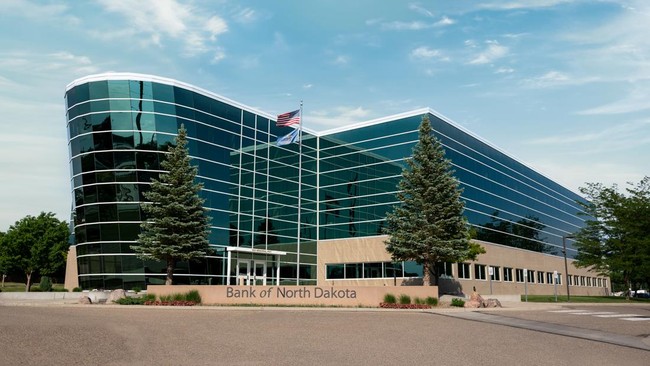
Jakarta, CNBC Indonesia — The United States has a government-owned bank whose roots lie in a socialist-populist movement more than a century ago, yet which now enjoys broad support from the Republican Party. It is the Bank of North Dakota.
According to CNBC International on Friday (30 October 2026), the bank is the only state-owned bank still operating in the US and manages around US$11 billion in assets, equivalent to Rp199.1 trillion.
The Bank of North Dakota was established in 1919 after the Nonpartisan League gained power in North Dakota and advocated public ownership of key sectors, including banking.
More than 100 years later, the institution remains in a state known for its conservative politics, where Donald Trump won by a margin of more than 36 percentage points in the 2024 presidential election.
From a Socialist Movement
North Dakota’s Republican Governor, Kelly Armstrong, acknowledges that the bank is unusual given the political character of his state.
“We are one of the most conservative states in the United States, yet we have a state-run bank,” Armstrong said.
He said he was grateful that the bank was still operating, although he doubted that a similar institution could easily be established if it were proposed today.
US Senators Kevin Cramer and John Hoeven, as well as former North Dakota Governor Doug Burgum, who is now the US Secretary of the Interior, have also voiced support. Cramer said the bank was once derided as a socialist experiment, but is now attracting interest from other political groups.
“We are living in an era of populism,” he said.
Supporting the Regional Economy
The Bank of North Dakota does not operate like a conventional retail bank. It holds state government funds and works with community banks to provide financing, including loans for agriculture, commercial property, education and economic development projects.
Its profits can be returned to the state treasury or used to support economic programmes.
The bank’s president and chief executive, Don Morgan, described it as a financial tool that can deliver significant benefits if managed properly.
“If used in the wrong way, this concept can be somewhat dangerous. But if used properly, it can be a very powerful financial tool,” he said.
Morgan said one important principle was that the bank must not compete directly with local financial institutions.
Saving Coal
The bank’s role was evident when it helped finance the rescue of Coal Creek Station, a coal-fired power plant in North Dakota. In 2020, its previous owner, Great River Energy, said the plant was losing money and planned to close it.
The state government then sought a buyer to preserve the facility, which supports jobs and electricity supplies.
The Bank of North Dakota helped arrange financing for the sale of the power station and its transmission line.
Through the North Dakota Transmission Authority, US$150 million in bonds—around Rp2.715 trillion—was issued to support the purchase of the transmission line, with the Bank of North Dakota buying the bonds.
Rainbow Energy Center chief executive Stacy Tschider said the company could not have completed the transaction without the bank’s help.
A Source of Inspiration
The success of North Dakota’s model has prompted politicians, particularly Democrats and progressives, to propose establishing public banks elsewhere.
New York, Washington, Massachusetts, New Mexico and California are among the places that have pursued or explored similar policies. Supporters argue that public banks can help governments finance infrastructure, housing and local economic needs.
The idea has also faced opposition from the banking industry. The American Bankers Association argues that public banks could burden taxpayers and create scope for political interference in lending decisions.
“Misguided political intervention would only harm consumers and the economy,” said the association’s spokesman, Josh Britton.
Morgan believes the model could be adopted by other states, provided it is well governed and the bank’s financial health remains a priority.
“Your bank can do whatever your state wants, as long as it does not compromise the bank’s own health,” he said.
For North Dakota, more than a century of experience suggests that a government-owned bank can endure in an economy dominated by the private sector, provided its mandate and operating limits are clearly defined.
Source: jawawa.id (https://jawawa.id/newsitem/dont-be-surprised-a-socialist-bank-was-founded-in-america-1793375525)
Originally published by CNBC Indonesia (https://www.cnbcindonesia.com/news/20261028142911-4-780229/jangan-kaget-bank-sosialis-ternyata-berdiri-di-amerika), translated from Indonesian