
Don’t Be Afraid to Go Global: Students Must Dare to Compete
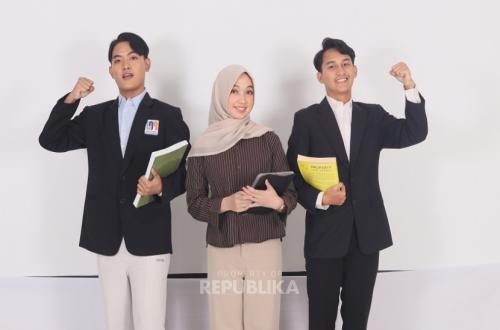
By Tati Mardiana (Head of the Data Science Study Programme at Universitas Nusa Mandiri)
Amid increasingly open global competition, students cannot rely solely on academic marks and qualifications. The professional world needs young people who can think critically, collaborate across cultures, communicate ideas and create innovations that address society’s needs. The courage to enter international competitions should therefore be part of students’ personal development.
International competitions are not merely stages on which to vie for titles. They are also learning environments in which students can test ideas, receive criticism, encounter different perspectives and understand global standards for developing innovation. Such experience can help students become more open-minded and confident, and better prepared to face challenges in the workplace.
As Head of the Data Science Study Programme at Universitas Nusa Mandiri (UNM), I believe students need learning experiences that extend beyond the classroom. Academic knowledge is an important foundation, but the ability to apply it to real-world problems is what makes the difference. Students must be bold enough to take their ideas to a wider stage, meet people with different perspectives and demonstrate that their innovations have value.
These challenges are particularly relevant in data science and technology. The ability to process data, develop algorithms and use artificial intelligence (AI) is not enough if it remains purely technical. Technology must address problems, understand users’ needs and provide benefits that people can experience.
International competitions give students the opportunity to put this thinking to the test. When presenting projects to judges and participants from different countries, they learn to explain the problem they want to solve, justify their chosen approach and take on feedback to improve their products. The process sharpens critical thinking while fostering an innovator’s mindset.
The experience also teaches students that good ideas do not emerge from individual ability alone. Innovation requires collaboration, a clear division of responsibilities, effective communication and a willingness to accept criticism. In a diverse global environment, respecting differences is essential to producing more creative and relevant solutions.
One inspiring example is the journey of Team Hello World from UNM’s Data Science Study Programme, which reached the grand final of IEEE YESIST12 2026. The team developed iMosque, an AI-powered companion app for Muslim worship, designed to bring together services including location-based prayer times, access to the Qur’an and mosque searches.
For me, this achievement is about more than reaching the final. It shows how academic knowledge can be developed into a technological idea rooted in society’s needs. Innovation becomes more meaningful when students connect the skills they have learned with problems users genuinely face.
Of course, reaching the final is not the end of the journey. A technology product still needs to be developed, tested and evaluated to ensure it better meets users’ needs. Feedback received during a competition should be used to refine the product, strengthen the quality of the innovation and create opportunities for further collaboration.
Alongside developing their skills, international competitions also provide opportunities to build global networks. Interacting with participants, mentors, researchers and practitioners from different countries can pave the way for knowledge exchange, research partnerships and joint product development. But networks will not deliver their full value if they are built only during the event. Students need to maintain contact, act professionally and follow up consistently on opportunities to collaborate.
Universities have a strategic role to play here. Campuses should do more than encourage students to achieve academically: they should also provide an environment that supports exploration, experimentation and innovation. Team coaching, product development guidance, presentation skills training, and access to competitions and professional networks can help students prepare for international forums.
In keeping with UNM’s role as a Digital Business Campus, students’ skills should be developed through an integration of data science, technology, creativity and an understanding of society’s needs. Students should be encouraged not merely to master digital tools, but to use them critically and responsibly to create value.
I would also emphasise that students need not wait until they feel perfect before entering a competition. Preparation matters, but the courage to try is part of the learning process. Failure, criticism and results that fall short of expectations are no reason to stop. They can all serve as material for reflection, skill-building and improving the quality of students’ work.
In global competition, Indonesian students have an opportunity to show that ideas and innovations developed at the country’s universities can contribute to wider challenges. The keys are a willingness to keep learning, commitment to developing one’s abilities and the courage to take one’s work onto the international stage.
Ultimately, achievement should not be measured solely by trophies or rankings. The ability to develop ideas, build collaborations, broaden perspectives and produce useful work is also an important accomplishment. International competitions have a greater impact when the experience gained is followed up with innovations that continue to develop.
Do not be afraid to compete on the world stage. Students must be bold enough to share their ideas, test their abilities and demonstrate that their work can make a difference. The future belongs not only to those who possess knowledge, but also to those who dare to turn knowledge into solutions.
Source: jawawa.id (https://jawawa.id/newsitem/dont-be-afraid-to-go-global-students-must-dare-to-compete-1793530304)
Originally published by Republika (https://news.republika.co.id/berita/tntjiz416/jangan-takut-mendunia-mahasiswa-harus-berani-bersaing), translated from Indonesian