
Done! DPR Approves Domestic Workers Protection Bill into Law
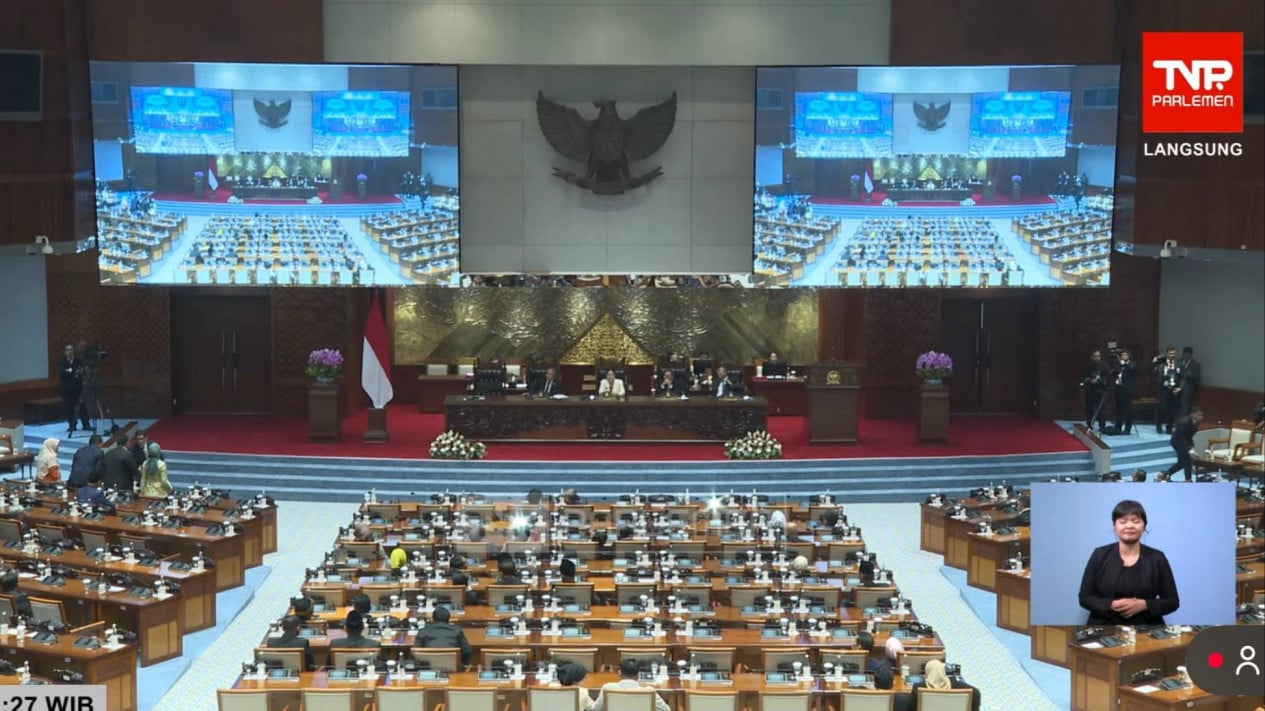
Indonesia’s House of Representatives (DPR) has officially approved the Domestic Workers Protection Bill (RUU PPRT) into law. The approval was determined through a plenary meeting held at the Parliamentary Complex in Senayan, Central Jakarta, on Tuesday, 21 April 2026. Initially, the Chairman of the Legislation Body (Baleg) of DPR RI, Bob Hasan, reported on the discussions of the RUU PPRT to date. Bob then submitted the report to DPR RI Chairwoman Puan Maharani, who was leading the meeting, and Minister of Law Supratman Andi Agtas. Subsequently, Puan sought approval from the factions on whether the Domestic Workers Protection Bill could be approved into law. “The time has come for us to seek approval from the factions regarding the Bill on the Protection of Domestic Workers, whether it can be approved to be enacted as a law?” Puan asked. “Agreed,” responded the DPR members. “Agreed. Thank you,” said Puan while banging the gavel and clapping. Previously, Baleg Chairman of DPR RI Bob Hasan stated that there are 12 substantive points regulated in the Domestic Workers Protection Bill (RUU PPRT). Bob mentioned that the 12 points agreed upon in the RUU PPRT serve as answers to various issues faced by domestic workers in the field. “Several important and strategic materials in addressing the protection of domestic workers have been agreed upon by the Working Committee in the RUU PPRT,” said Bob during a meeting at the Parliamentary Complex in Senayan, Central Jakarta, on Tuesday, 21 April 2026. Here are the 12 substantive points contained in the RUU PPRT: 1. Regulations on the protection of workers based on family principles, respect for human rights, justice, welfare, and legal certainty; 2. Recruitment of domestic workers (PRT) can be done directly or indirectly; 3. Every person who assists with household work based on customs, kinship, family, education, or religion is not considered as PRT under this law; 4. Indirect recruitment of PRT carried out by P3RT (Domestic Workers Placement Company) can be done offline or online; 5. One of the rights of PRT regulated in this bill is that PRT are entitled to social security for health and social security for employment; 6. Prospective PRT receive vocational education and training, either from the central government, regional government, or from PRT placement companies;