
Donald Trump Leaves China, Limited Progress in Stabilising Relations
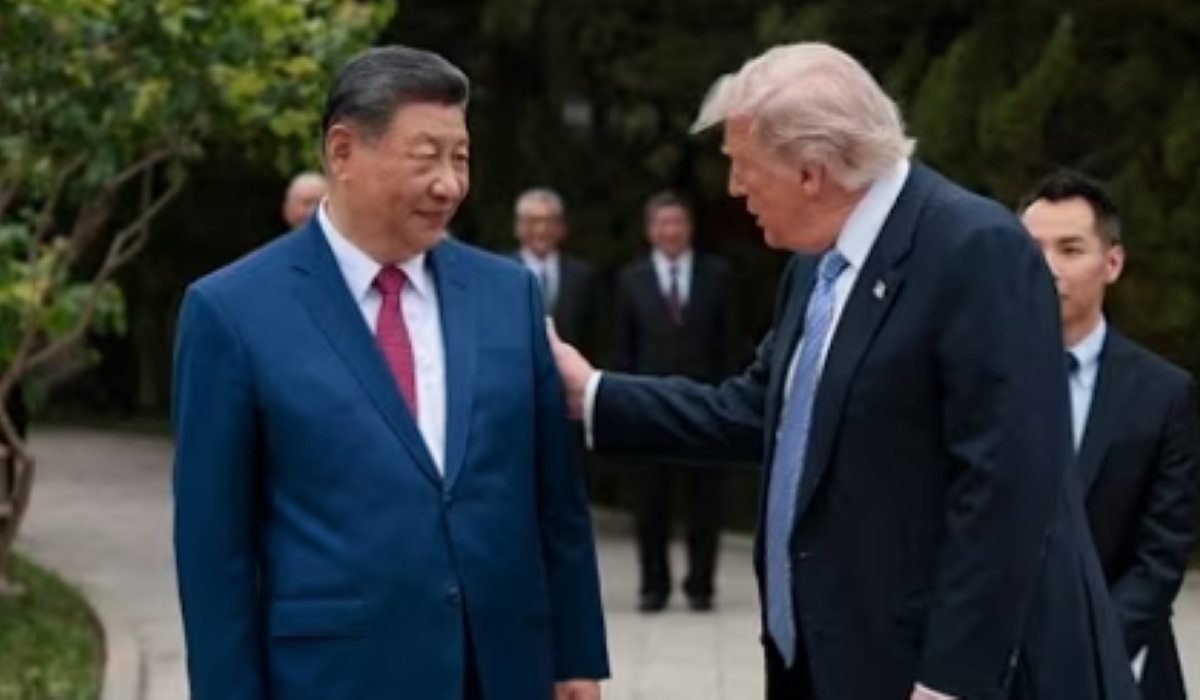
High volatility is likely to continue until the end of May.
US President Donald Trump officially left Beijing on Friday (15/5) afternoon local time, marking the end of a crucial two-day summit with Chinese President Xi Jinping. Although there are no signs of concrete resolution to the complex challenges facing the two countries, this visit has succeeded in creating a new stability, at least for now.
This meeting covered a range of strategic issues, from the Iran conflict and the status of Taiwan to trade agreements. Behind the intense negotiations, China presented a grand display of soft diplomacy, welcoming Trump with a red carpet and military honours at the Great Hall of the People, a gesture that Trump called an extraordinary moment of respect.
The conflict between the US-Israel and Iran became the dominant issue on the agenda. The international community has high hopes that China, as a major diplomatic partner and the largest buyer of Iranian oil, can pressure Tehran to end the conflict that has disrupted the global economy.
Although there was no explicit commitment from Beijing to pressure Iran as demanded by the US, the two countries reached an agreement on key points:
In an atmosphere that appeared warm, Xi Jinping gave the most explicit warning about the issue of Taiwan, which he called the most important red line in bilateral relations. “If handled properly, bilateral relations will enjoy stability. If not, the two countries will face clashes and conflict,” Xi said, according to official Chinese reports.
Trump, speaking on Air Force One, acknowledged that he had discussed the issue of Taiwan and US arms sales to the island in depth. However, he declined to answer directly whether the US would defend Taiwan militarily.
From an economic perspective, the Trump administration claims a number of successes that are expected to strengthen its domestic position, although the details have not been fully confirmed by the Chinese side:
The visit concluded with a positive impression from both sides. Trump praised Xi as a leader who is focused on business and does not play games.
Xi emphasised the importance of strategic stability between the two major world powers. Although the fundamental challenges remain, this meeting in Beijing has at least provided a respite for a world plagued by geopolitical anxiety. (CNN/I-2)
President Donald Trump called the US-China relationship a G-2 during his visit to Beijing, marking a recognition of China as an equal superpower.
US Foreign Minister Marco Rubio revealed the contents of the meeting between Donald Trump and Xi Jinping in Beijing, ranging from the Iranian crisis, the status of Taiwan, to the fate of Jimmy Lai.
Donald Trump revealed China’s plan to buy energy from Texas to Alaska to meet their needs, while also discussing Xi Jinping’s influence over Iran.
Xi Jinping warned Donald Trump about the ‘Thucydides Trap’ and the issue of Taiwan during the meeting in Beijing. See here for an analysis of US-China rivalry.
Trump also claimed that Xi had given assurances that Beijing would not send military equipment to help Iran in the conflict involving the US and Israel.
President Donald Trump called the US-China relationship a G-2 during his visit to Beijing, marking a recognition of China as an equal superpower.
Donald Trump revealed China’s plan to buy energy from Texas to Alaska to meet their needs, while also discussing Xi Jinping’s influence over Iran.
Xi Jinping warned Donald Trump about the ‘Thucydides Trap’ and the issue of Taiwan during the meeting in Beijing. See here for an analysis of US-China rivalry.
A secret report reveals that China is filling the weapons gap in the Middle East as the US runs out of missiles due to the Iran war. A threat to Washington’s hegemony.
China changed the spelling of Marco Rubio’s name to avoid sanctions in 2020, allowing the US Foreign Minister to meet Xi Jinping in Beijing.
Copyright @ 2026 Media Group - mediaindonesia. All Rights Reserved