
Donald Trump Claims Iran Wants to Negotiate but Is Afraid to Admit It
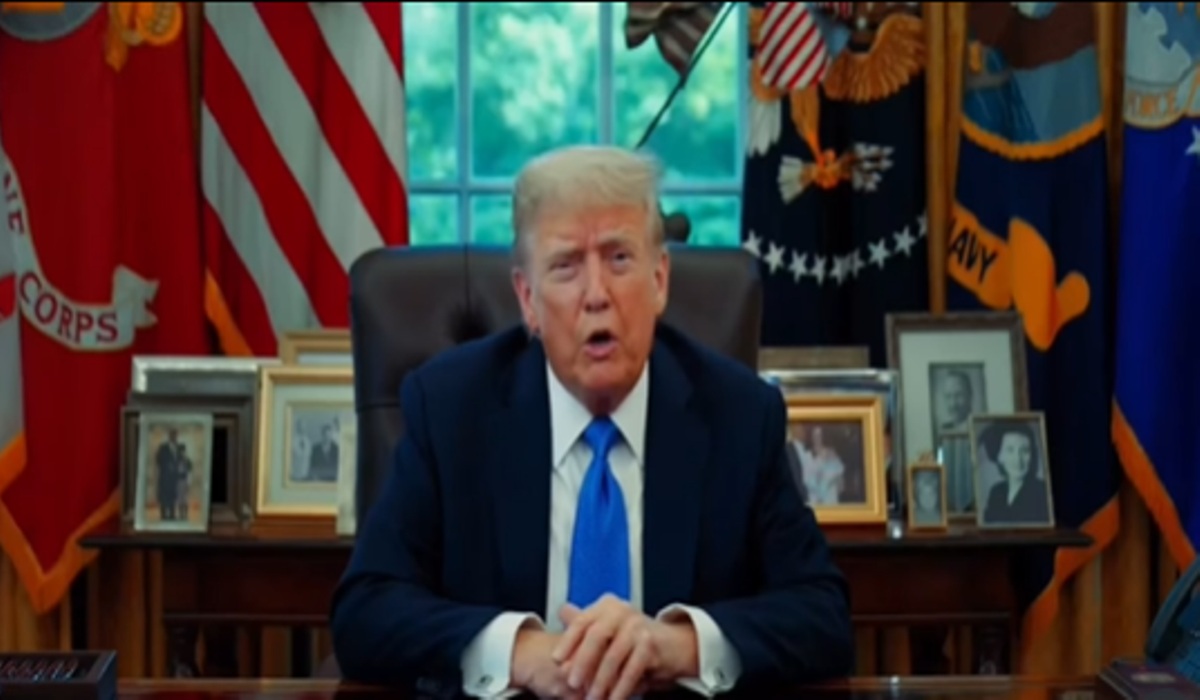
US President Donald Trump has stated that Iran actually wants to negotiate, even though it is not brave enough to admit it openly amid the ongoing US military operations.
“By the way, they are negotiating, and they really want to reach a deal, but they are afraid to say it, because they think they will be killed by their own people,” Trump said at a fundraising dinner for the National Republican Congressional Committee on Wednesday (25/3).
“They are also afraid of being killed by us,” he continued.
Trump even described the leadership position in Iran as something he does not want.
“I don’t want it. We want to make you the next Supreme Leader. No, thank you. I don’t want it,” he clarified.
In his speech, Trump emphasised that US actions against Iran are more appropriately called a military operation.
“I won’t use the word war. So I will use the word military operation, which is exactly what it is. It’s called military destruction,” he continued.
He also described the operation as an excursion to hell.
“An excursion to a terrible place,” he said.
Regarding economic impacts, Trump assessed that the rise in energy prices is only temporary and not the main concern.
“What we have to do is get rid of that cancer. We have to eradicate that cancer. That cancer is Iran with nuclear weapons, and we have eradicated it. Now we will finish it off,” he added.
Trump also praised the capabilities of the United States military in facing Iran’s counterattacks. He claimed that US forces successfully thwarted a major attack.
“We experienced an attack. 100 missiles were fired by Iran and of the 100 missiles heading towards us, all 100 missiles were shot down immediately,” he stated.
“We have the greatest military. We make the greatest military equipment,” he explained.
Escalation of Conflict Continues
Tensions in the region have increased since 28 February, when the United States and Israel launched a joint attack on Iran that killed more than 1,340 people, including the Supreme Leader at the time, Ali Khamenei.
In response, Iran launched drone and missile attacks targeting Israel and Gulf countries that host US military assets.
Since the operation began, 13 US military personnel have been reported killed and about 290 others injured, marking an escalation of the conflict that is increasingly spreading in the Middle East region.
Iranian Foreign Minister Abbas Araghchi has emphasised that Tehran will not come to the negotiating table and chooses to continue resistance against the United States and Israel amid the conflict.
Trump’s foreign policy advisor stated that the US has no interest in prolonging the conflict with Iran for more than three months.
White House Press Secretary Karoline Leavitt urged Iran to immediately accept a deal to end the conflict that continues to heat up in the Middle East.
Saudi Crown Prince MBS is reported to have lobbied Donald Trump to continue the war and overthrow the Iranian regime amid the heating Middle East conflict in 2026.
The Saudi Arabian government expressed its support for the UN Human Rights Council’s decision, which unanimously adopted a resolution regarding the impact of the Iranian attacks.
Western intelligence revealed that Russia sent drones and logistics to Iran.
Expert analysis states that the US-Israel war failed to trigger a revolution in Iran. Military aggression instead strengthened military loyalty and silenced moderate groups within Tehran.