
Dompet Dhuafa Builds Healthy Toilets for Jakarta’s Coastal Residents
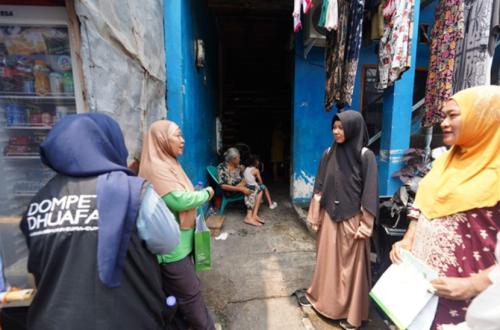
JAKARTA — In a corner of the densely populated Teluk Gong neighbourhood in Penjaringan, North Jakarta, 43-year-old Indrawati lives in a 15-square-metre home. The tiny dwelling must accommodate five family members: her husband, who works as a porter at a market; their two children; and her mother, who is nearly 80. Space is a luxury they have never had.
For decades, Indrawati’s family had to use a makeshift cubicle built from wood, plywood and scrap metal sheeting at the roadside outside their home to relieve themselves and bathe, relying on water drawn from a well. Whenever floods struck, the wooden structure was often damaged or swept away.
“When there was flooding, it often got damaged and swept away. We had to wait until we had the money to fix it. In the meantime, we would use someone else’s toilet, relieve ourselves by the river embankment, or pay to use a public toilet. But my mother has always taught us not to complain,” Indrawati said.
Her difficult experience reflects the reality faced by thousands of people in parts of the capital. Behind Jakarta’s modern lifestyle and high-rise buildings, open defecation and the lack of healthy toilets remain challenges in densely populated neighbourhoods and areas along riverbanks.
Of Jakarta’s six administrative areas, only the Thousand Islands Administrative Regency has officially achieved 100 per cent Open Defecation Free (ODF) status. The five administrative cities on the mainland — North Jakarta, West Jakarta, Central Jakarta, South Jakarta and East Jakarta — are still working to address neighbourhoods where open defecation persists.
North Jakarta is a particularly difficult area because of three main obstacles: limited land, economic hardship, and geographical conditions and groundwater levels. Following a field assessment in Teluk Gong, the Free Healthcare Service (LKC) team from Dompet Dhuafa identified eight households without healthy toilets and prioritised sanitation infrastructure assistance for low-income families.
“We prayed so much that we would have a bathroom. Then, in 2024, the LKC Dompet Dhuafa health programme came to conduct a survey. Thank God, our prayer was answered: we received a toilet and a septic tank. I’m very grateful. I then tried to borrow some money to cover the additional costs and build the bathroom,” Indrawati said, her eyes lighting up.
“This is not simply about distributing entrusted donations. The programme also seeks to change sanitation practices, moving people from open defecation towards regular use of healthy toilets. We want communities to become self-reliant in addressing their own health problems, so that optimal health can be achieved collectively and by individuals within their families,” said Rima, a member of the LKC Dompet Dhuafa team.
There is now no longer a metal-sheet cubicle at the 15-square-metre home to be swept away by floods. The healthy toilet and septic tank, funded through donations of zakat to Dompet Dhuafa, have not only made daily life more comfortable for Indrawati’s family but also restored the dignity of living healthily in Jakarta’s coastal neighbourhoods.
Source: jawawa.id (https://jawawa.id/newsitem/dompet-dhuafa-builds-healthy-toilets-for-jakartas-coastal-residents-1794315061)
Originally published by Republika (https://ekonomi.republika.co.id/berita/toab4m423/dompet-dhuafa-bangun-jamban-sehat-untuk-warga-pesisir-jakarta), translated from Indonesian