
Dompet Dhuafa and Bank Jago Introduce Technology-Based Tilapia Farming
TASIKMALAYA – Dompet Dhuafa is focusing on appropriate technology to boost business productivity and improve the welfare of mustahik (zakat beneficiaries) through its economic empowerment programmes. Under the Madaya Sustainable Fund programme run by Indonesia Berdaya and supported by Bank Jago, the DESUKA tilapia-farming group has adopted waterwheels. The technology helped produce a bumper harvest at a harvest event held on 23 November 2026 in Sukarame village, Tasikmalaya, bringing joy and renewed motivation to the farmers.
Since it was established in 2022, the Sukarame Tasikmalaya Fish Farming Group, known as DESUKA, had used traditional tilapia-farming methods. A mortality rate of up to 40 per cent and limited capital were major obstacles to productivity. Support from Dompet Dhuafa and Bank Jago, including waterwheel technology, has helped address these problems. The group’s harvest, which had previously stood at around 90kg, has now risen to 307kg, giving the beneficiaries greater confidence that their business can continue to grow.
DESUKA chairman Bayu Abimanyu said technology was essential to maximising the results of tilapia farming. Waterwheels circulate pond water and increase its oxygen supply, helping fish breathe, keeping the water clean and cool, and ensuring the fish remain healthy, feed well and grow quickly. As a result, harvests have risen sharply: whereas farmers previously produced only tens of kilogrammes, they can now exceed 300kg.
“Support from Dompet Dhuafa and Bank Jago through Indonesia Berdaya has been very appropriate and has improved the welfare of DESUKA’s fish-farming beneficiaries. They have provided a great deal of support across the production chain, including waterwheels, quality fingerlings, feed, a freezer for processing products, a water tank for delivery, and assistance through to harvest. Our group members have felt the benefits of all this support. For the first time, this harvest has reached 307kg,” Bayu said.
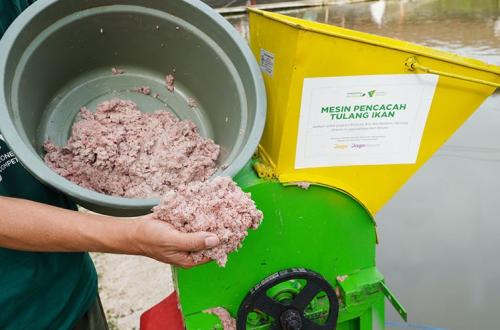
DESUKA is now able to develop a wider range of products, including tilapia fillets and cleaned frozen fish, as well as other value-added products. Waste from processing can also be reused as catfish feed with the help of a fish-bone chopping machine.
The programme’s impact has also been felt by beneficiary fish farmer Aceng Juwanda. He said the waterwheel technology installed in his pond had delivered outstanding productivity compared with traditional farming methods.
“I am happy and proud. The waterwheel assistance from Dompet Dhuafa and Bank Jago has produced excellent results. Today’s harvest from my pond proves it: with 50kg of fingerlings, I have obtained more than 200kg of fish. I would like to thank Dompet Dhuafa’s donors; thanks to their support, the farmers are even more motivated,” Aceng said.
The Madaya Sustainable Fund, initiated by Indonesia Berdaya, marks the start of Dompet Dhuafa’s support for DESUKA. The programme backs local organisations, community groups and local leaders with economic empowerment initiatives based on local potential. Through this scheme, economic empowerment programmes provide not only funding but also promote measurable, sustainable impact in communities across Indonesia.
Source: jawawa.id (https://jawawa.id/newsitem/dompet-dhuafa-and-bank-jago-introduce-technology-based-tilapia-farming-1795701064)
Originally published by Republika (https://halalhub.republika.co.id/berita/tp416p430/dompet-dhuafa-bersama-bank-jago-terapkan-budidaya-ikan-nila-berbasis-teknologi), translated from Indonesian