
Dominating the World for 5,000 Years: Salt Was Once a Political Weapon
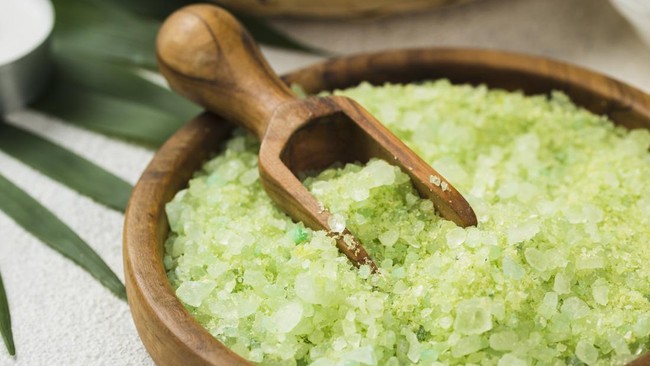
Salt is one of the world’s oldest essential commodities. For 5,000 years, salt has influenced how various civilisations preserve food, build trade networks, drive industries, and manage public infrastructure.
The history of salt begins with the world’s oldest civilisations. Around 3,000 BC, salt began to be harvested in China and Egypt. Its development continued to advance; by 252 BC, workers in China were drilling brine wells to depths of over 300 feet, or approximately 91 metres. By 200 AD, China even began using natural gas to assist in the salt production process.
The influence of salt is even reflected in language. Several English words such as salary, salad, sausage, and sauce have roots related to salt, demonstrating how vital this mineral has been in daily life since ancient times.
From Preservation to Infrastructure
For centuries, the primary role of salt was food preservation. Salted meat and fish helped meet the food requirements of military forces, supported long-distance sea voyages, and encouraged cross-regional trade.
The role of salt subsequently changed with technological advancements. Canning and refrigeration reduced the reliance on salt as a preservative, while progress in chemistry, energy, and infrastructure opened up various new uses. Today, salt is used for a wide range of needs, from industrial processes to infrastructure maintenance in countries with winter seasons.
Persistent Demand
Although its uses continue to evolve, the demand for salt has endured for approximately 5,000 years. Currently, there are more than 14,000 documented uses for salt. In North America, one of the primary sources of demand comes from the need for road de-icing. This market is recurring, largely government-funded, and to this day, has few large-scale alternatives.
What about Indonesia?
In Indonesia, salt is not only used for household consumption. Most of the demand actually originates from the industrial sector, particularly the Chlor-Alkali Plant (CAP) industry, which uses high-quality salt as a raw material to produce caustic soda and chlorine. Both substances are then used in various manufacturing activities, ranging from the chemical, pulp and paper, textile, petrochemical, and pharmaceutical industries to food processing. Thus, the role of salt in Indonesia is closer to industrial needs than the road de-icing function that serves as a primary market in winter-season countries.
On the production side, the national salt supply remains quite volatile. Data from the Ministry of Marine Affairs and Fisheries (KKP) shows that domestic production has not been able to grow consistently, with sharp fluctuations in recent years. This production volatility poses a challenge because industrial needs are relatively large and require salt with specific specifications. This means that for Indonesia, salt is not merely a food commodity, but also a vital raw material that supports industrial activities.
Source: jawawa.id (https://jawawa.id/newsitem/dominating-the-world-for-5-000-years-salt-was-once-a-political-weapon-1789656577)
Originally published by CNBC Indonesia (https://www.cnbcindonesia.com/research/20260911104958-128-767153/5000-tahun-menguasai-dunia-garam-ternyata-pernah-jadi-senjata-politik), translated from Indonesian