
Domestic Workers Protection Act Becomes a Milestone for Workers' Independence
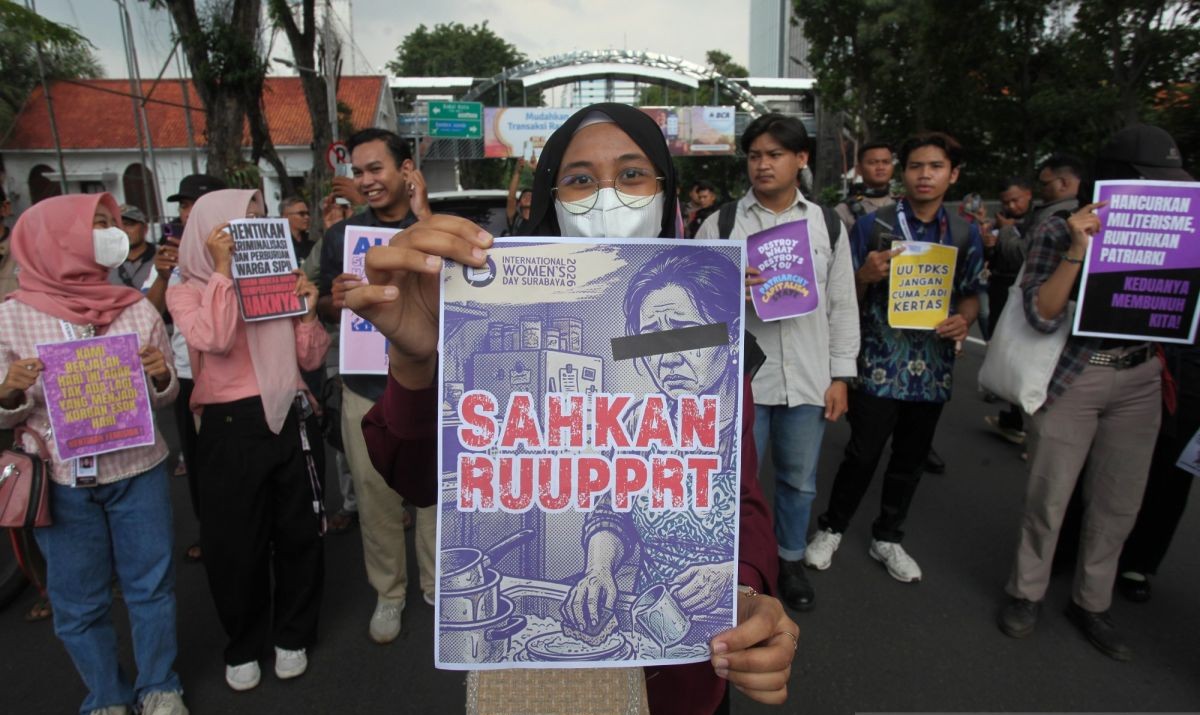
The National Commission on Violence Against Women (Komnas Perempuan) applauds the long-standing efforts of domestic workers (PRT), civil society networks (JMS), academics, and women’s advocates who have pushed for PRT protection for over two decades.
Appreciation goes to the concrete step by the Indonesian Government and the House of Representatives (DPR RI) in enacting the Domestic Workers Protection Act (UU PPRT) on 21 April 2026. The enactment of UU PPRT represents the state’s official recognition of domestic workers (PRT) as workers entitled to legal protection, social security, and humane working conditions.
“Indonesia has recorded a new history in fulfilling human rights with the enactment of UU PPRT; this is an important milestone for fulfilling citizens’ constitutional rights to decent work befitting humanity. After more than 20 years of waiting, today the state is finally present to provide clear legal recognition and protection for those who have worked in private spaces and are highly vulnerable to violence and exploitation,” said Chair of Komnas Perempuan, Maria Ulfa Anshor, on Wednesday (22/4).
Komnas Perempuan highly appreciates domestic workers, PRT unions, women’s organisations, labour unions, and other civil society organisations, as well as the Government and DPR RI, which have consistently championed this struggle for 22 years. This enactment is the fruit of collective cross-sectoral efforts and transcends formal legislative success.
Through this policy, the state begins to heed the experiences of millions of Indonesian women who have worked in the shadow of lacking legal recognition as workers, while being vulnerable to violence.
Komnas Perempuan notes how the domestic sphere often becomes a grey area that closely conceals physical, psychological, economic, and even sexual violence against PRT. Yet, domestic workers’ labour has been a crucial pillar of the national economy.
The absence of legal protection has perpetuated exploitative working conditions, such as unlimited working hours, lack of days off, and unworthy wages, which in many cases resemble modern slavery practices.
The enactment of UU PPRT is an important step for recognising care work and shifting the view that domestic labour is “natural women’s work” towards recognition as work with high economic and social value.
The presence of UU PPRT is a step to dismantle the walls of discrimination and provide normative recognition that domestic work is “decent work”. The act guarantees transparent employment contracts, certainty of social security through BPJS, rights to leave, and protection from all forms of violent acts.
“This is a deconstruction of patriarchal culture that has long domesticated women and considered household work to have no economic value equal to other formal sectors,” said Komnas Perempuan Commissioner, Devi Rahayu.
The enactment of UU PPRT on Kartini Day becomes the starting point of a long struggle to ensure justice is truly felt in every household. Komnas Perempuan urges the Government to immediately prepare and enact all implementing regulations of UU PPRT at the latest within one year as mandated, and to ensure meaningful involvement of PRT, PRT organisations or unions, women’s organisations, and human rights institutions in the process.
“The major challenge now lies in how these rules are translated into inclusive and accessible technical policies, and how supervision is carried out down to the smallest community level. A massive cultural transformation in society is needed so that employers can position PRT as equal human workers,” said Chair of the Women’s Workers Working Group of Komnas Perempuan, Irwan Setiawan.
Furthermore, it is important for all parties to monitor all challenges to ensure the norms in UU PPRT are truly brought to life in practice. Legal and policy reform does not end merely with a policy for PRT but must reach changes in the demeaning view of PRT work, mechanisms for supervising policy implementation, and ensuring full rights and access to justice for PRT.
With the enactment of UU PPRT, we are all invited to end the normalisation of violence in the domestic realm and ensure that the home becomes a safe place for anyone, including those who dedicate their lives to caring for life within the home.
Komnas Perempuan also emphasises that with the enactment of UU PPRT, it has the potential to strengthen the bargaining position for protecting Indonesian migrant PRT abroad. Let us collectively monitor the implementation of this act for the realisation of safe workspaces free from discrimination and violence against women.
The enactment of the Domestic Workers Protection Act is positively welcomed, but the government is urged to immediately issue technical regulations so that protection can be directly felt by workers.
Enactment of the Domestic Workers Protection Bill on Kartini Day 2026: This is the Beginning of Great Responsibility
Member of Commission IX of DPR RI, Neng Eem Marhamah Zulfa Hiz, emphasised that the enactment of the Domestic Workers Protection Bill is only the initial step. She urged the government to immediately prepare a socialisation scheme.
Indeed, their 22-year struggle has borne sweet fruit, albeit after a long wait.
The presence of an employment agreement that clearly outlines duties, rights, obligations, and working conditions for both PRT and employers.