
Domestic Workers Protection Act: A Gift to the Nation on Kartini Day
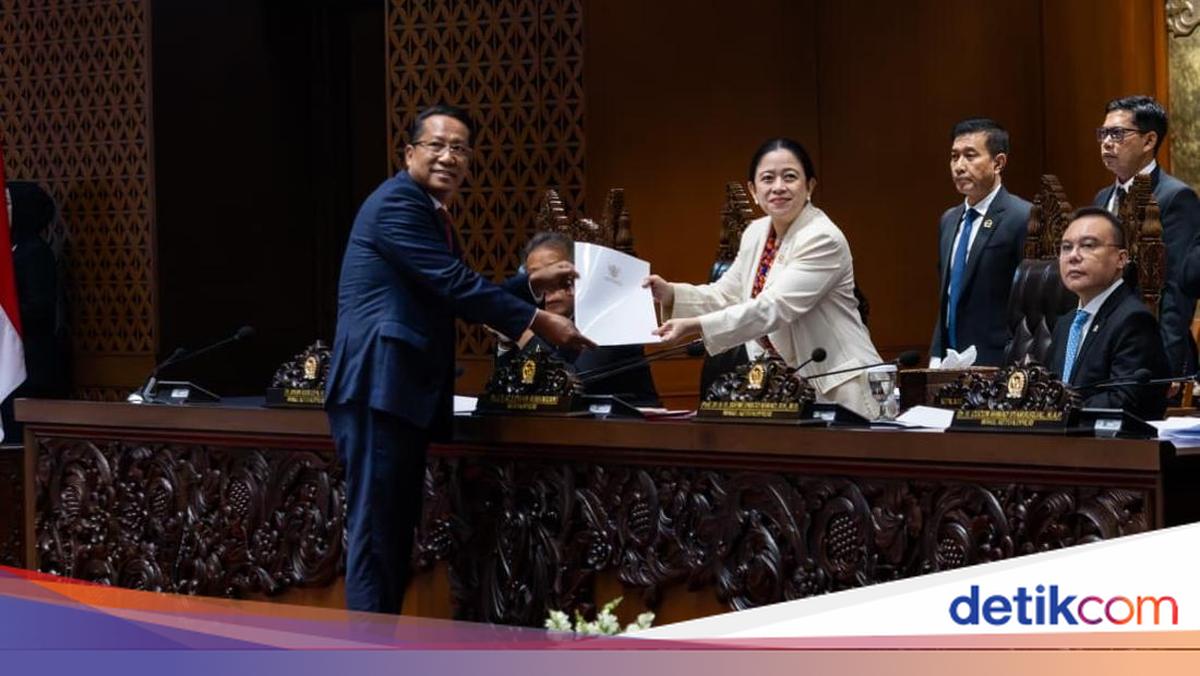
On Kartini Day, 21 April 2026, the House of Representatives of the Republic of Indonesia finally approved the Domestic Workers Protection Bill (RUU PPRT) as a legislative initiative that has endured a long journey spanning more than two decades. This moment is not merely a calendar coincidence—it is a symbolic and substantive confirmation that recognition of women’s workers’ rights is no longer mere discourse, but a constitutional necessity.
Kartini, in her famous letters, wrote about the darkness enveloping the lives of Javanese women and the call for the light of knowledge and justice. More than a century later, millions of Indonesian women still work in a different kind of darkness: without written contracts, without social security, without adequate legal protection. They are domestic workers—the backbone of the care economy that has long been invisible.
Two Decades in the Prolegnas Loop
The history of the RUU PPRT is a blurred mirror of Indonesia’s legislative process. The bill was first submitted in 2004 and has since entered the National Legislation Programme (Prolegnas) in nearly every DPR period. During the 2009–2014 period, it even became an annual priority for four consecutive years and was discussed in the DPR’s Commission IX. However, every time it approached the finish line, the bill stumbled over unspoken interests.
In the 2019–2024 period, the drafting and harmonisation in the Legislation Body (Baleg) had been completed, and the factions’ mini-opinion decision-making had even been conducted since 1 July 2020. However, the DPR waited a full three years—until 21 March 2023—to designate it as a DPR initiative.
More surprisingly, until the end of that period’s term, Commission IX never discussed it with the government. As a result, the bill failed to carry over to the next period.
The question that should concern us is not just why it took 22 years, but: what exactly was preserved by this delay? From an economic-political perspective, legislative slowness almost always correlates with interest groups that feel advantaged by the status quo.
In the context of the RUU PPRT, that group is none other than the segment of employers who desire employment relations to remain in the informal realm—unbound, unmeasured, and ungovernable.
The Face of Vulnerability
Based on an ILO survey in 2015, there were 4.2 million domestic workers in Indonesia—a figure estimated to have swelled to 5 million people by 2022 according to records from the National Network for Domestic Workers Advocacy (JALA PRT). Behind these numbers lies a concerning socio-demographic profile: 84 percent are women, and 14 percent are children—two groups most vulnerable to exploitation and human trafficking.
JALA PRT recorded 3,308 cases of violence against domestic workers in the 2021–2024 period. However, experts warn that this figure is almost certainly far below reality, given the high under-reporting due to economic dependence, social stigma, and legal ignorance. The violence experienced is not only physical but also includes psychological, economic violence, and even cross-border human trafficking.
The absence of a written employment agreement obligation is the structural root of this vulnerability. Without a contract, domestic workers have no juridical proof of their rights. When disputes arise—over unpaid wages, excessive working hours, or abuse—they stand in court empty-handed. This is not merely individual injustice, but injustice codified by the absence of law.
Anatomy of the RUU PPRT
The RUU PPRT contains twelve protection points that overall form a comprehensive human rights framework for domestic workers. Among the most crucial are: recognition of domestic workers as entitled to health and employment social security; the obligation of a written employment agreement between worker and employer; guarantees of fair wages, measured working hours and rest; protection from sexual violence and discrimination; and access to education and vocational training.
From a comparative labour law perspective, this bill aligns with the spirit of ILO Convention 189 on Domestic Workers—an international instrument that Indonesia itself has not yet ratified to this day. Substantively, this alignment is real progress. However, several gaps still need scrutiny: is there a specific minimum wage provision for domestic workers? How about an effective monitoring mechanism in private spaces? These questions will determine whether this bill becomes a milestone or merely a patch.
In terms of dispute resolution, the bill prioritises a deliberative approach involving RT and RW heads as initial mediators. This choice reflects realistic contextual considerations, given that most worker-employer conflicts occur at the community level. However, it also carries risks: informal mediators without capacity and clear standards can become instruments of pressure against the weaker party.
The Swift April 2026 Process
The greatest irony of the RUU PPRT’s approval is the staggering temporal contrast: 22 years delayed, then completed in one day. The DPR Legislation Body Chair confirmed that the Working Committee for discussing the RUU PPRT was formed on 20 April 2026 and immediately discussed it intensively on the same day. The government submitted a total of 409 Problem Inventory Lists (DIM)—and all of them, in principle, were resolved before approval the next day.
From the perspective of legislative process theory, this phenomenon can be read through Kingdon’s Multiple Streams Framework: problem stream (critical conditions of domestic workers), policy stream (a mature draft over the years), and politics stream (Kartini Day momentum and pressure from civil society coalitions