
Domestic Workers are More Than Just Employees
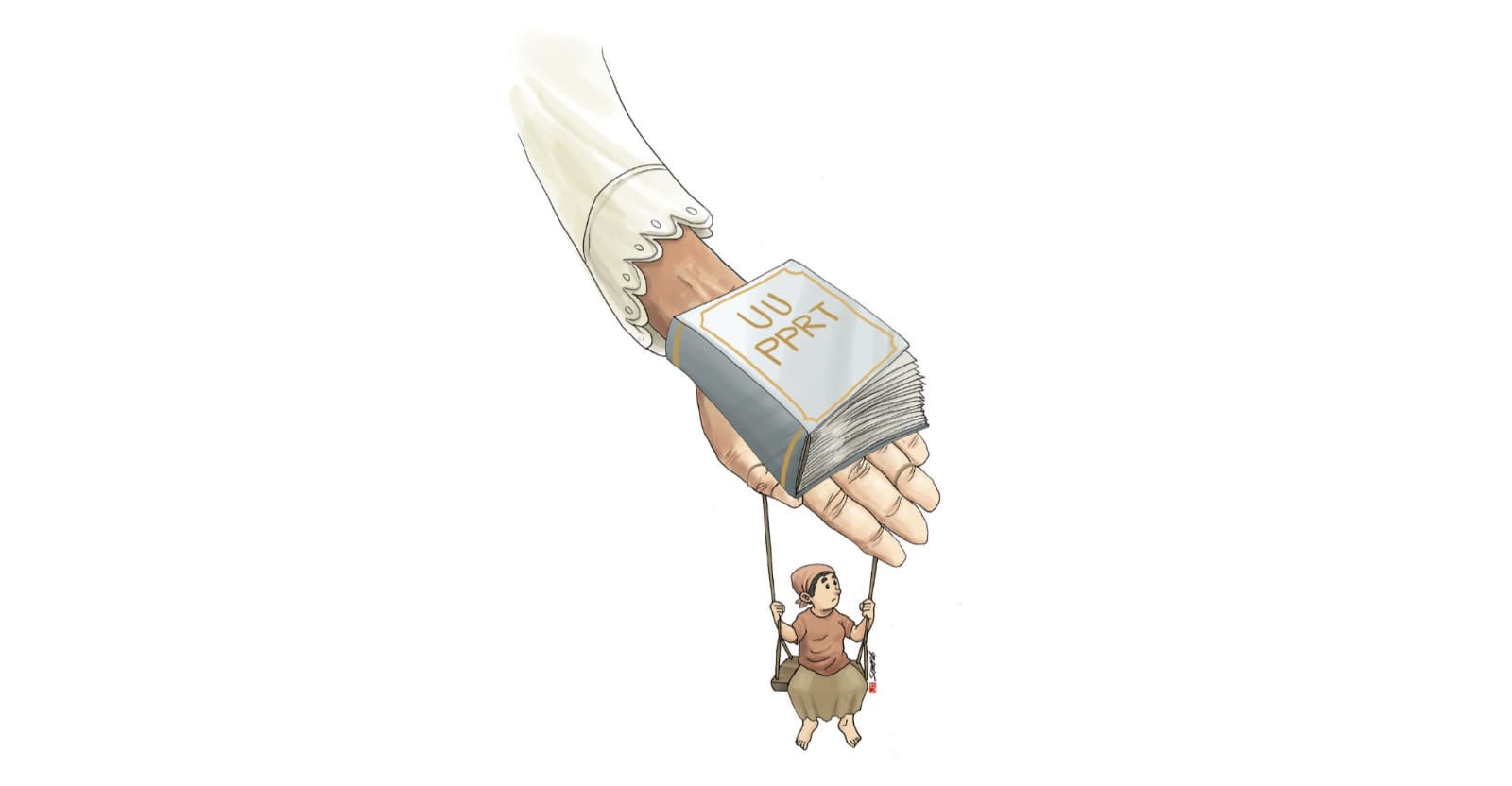
Domestic workers (PRT) are more than just employees. This statement must be reaffirmed as the Draft Government Regulation (RPP) on the Protection of Domestic Workers is being formulated. Domestic workers do indeed work because there is a job, an employer, wages, working hours, rights, and obligations; therefore, protecting their labour rights is an absolute necessity.
However, can the relationship between domestic workers and employers be understood solely as a business transaction? No. As part of the care economy, domestic workers are expected to help address poverty and gender inequality, serving as part of human development investment to achieve inclusive and sustainable development goals.
The Home is Not a Factory
The employment relationship of domestic workers has a different character from the logic of the industrial sector. The workplace is the home, a private space that is simultaneously the living space for a family. The tasks performed are not merely about producing goods or services, but also include cleaning the house, cooking, childcare, assisting the elderly, and caring for family members.
Within this, there is an economic dimension, but also social, cultural, gender, power relation, and even personal dimensions. Therefore, using business logic (profit and loss) as the sole way to interpret the relationship of domestic workers will only create many problems. While domestic work does have economic value, the humans performing it must not be reduced to mere commodities.
Interestingly, the Domestic Worker Protection Law (UU PPRRT) provides significant room for flexibility. Agreements regarding wages, working hours, rest periods, holidays, and leave are built through consensus and formalised in employment agreements. This choice is not without reason.
Every household has different needs. There are families with small children, families caring for the elderly, families with members with disabilities, or families with specific activity patterns. Consequently, the work patterns of domestic workers cannot be standardised like in the industrial sector.
This flexibility is, in fact, an acknowledgement that the domestic worker relationship has a unique social and cultural context. Flexibility must not be misinterpreted as a lack of protection. The principle is simple: flexible in arrangement, firm in protection.
The right to be free from violence, discrimination, and exploitation; the right to wages, rest, safety, and health; dignity; and social protection must not be subject to negotiation. What can be deliberated is how those rights are fulfilled according to the household context, not whether those rights are granted.
This is where the principles of ‘gotong royong’ (mutual cooperation) and kinship in the Domestic Worker Protection Law become important. Kinship should not be used to obscure the status of domestic workers as employees. On the contrary, the principle of kinship should encourage a more humane quality of relationship.
In Javanese wisdom, such a relationship can be summarised in three words: ngayemke, nguwongke, and ngemong. Ngayemke: creating a sense of safety and peace. Nguwongke: humanising and respecting dignity. Ngemong: nurturing with care, understanding, and responsibility.
That is the meaning of kinship that should be translated into the relationship between core family members, which should also apply to the relationship between domestic workers and employers. It is not about saying ‘you are already like family’ and then forgetting worker rights, but about building a work relationship that is safe, fair, and dignified.
Within the principle of gotong royong, which is the core of Pancasila, the five principles of Pancasila must serve as the corridor for drafting the Government Regulation, especially the principles of humanity and social justice. Therefore, the exploitation of domestic workers must be avoided. The flexibility of work arrangements must be linked to decency and appropriateness, guided by the conscience of social solidarity—essentially treating domestic workers as one would wish to be treated.
A Regulation that Sees the Whole Human
Domestic work should not be viewed merely as a household expense. It is part of the social infrastructure that supports life and human development. The role of domestic workers in the domestic sector is not limited to household management, but also includes roles as babysitters, caregivers for the sick or elderly, gardeners, drivers, and even specialised pet carers.
In the care sector, one thing is often forgotten: the quality of service is heavily influenced by the wellbeing of the caregiver. Domestic workers who work in safe, healthy conditions, are respected, and have adequate rest periods will naturally have a better capacity to provide care.
Conversely, exhaustion, fear, pressure, uncertainty, and degrading treatment do not only affect the domestic worker. Ultimately, these conditions can affect the quality of work and the quality of care received by the family. In the end, the wellbeing of domestic workers is not just an issue of worker welfare; it is a component of the quality of care and productivity.
In various countries, including Japan, labour policies increasingly account for the link between work, family, wellbeing, and productivity. The state does not merely leave the consequences of work arrangements to short-term economic calculations, but also creates policies and incentives so that work-life balance can be maintained. Thus, investing in worker wellbeing is an investment in economic sustainability and quality of life.
Therefore, the Draft Government Regulation on Domestic Workers requires a broader perspective than just an economic relationship based on industrial demand and supply. The regulation needs to view domestic workers simultaneously as workers, women and/or family members, caregivers, and holders of human rights.