
Domestic Gas Optimisation Hampered by Infrastructure and Market Certainty
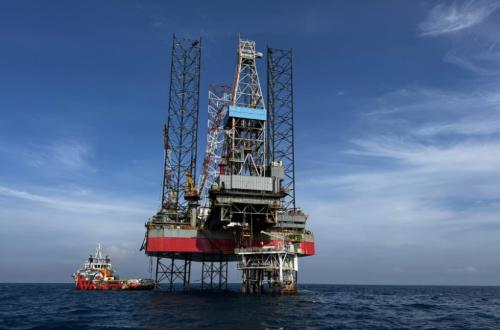
Indonesia’s substantial gas resources and reserves have not been fully matched by their utilisation for domestic needs. The geographical gap between gas sources and demand centres, limited infrastructure, price structures, and uncertainty over absorption remain challenges that determine the economic viability of gas project development.
Oil and gas practitioner Benny Lubiantara said that optimising domestic gas cannot rely solely on the availability of reserves. Field development requires infrastructure support and market certainty so that gas can be produced, distributed, and absorbed sustainably.
“The drivers are the availability of infrastructure and the market, which will ultimately determine the economics of the project,” Benny said on Tuesday (25/8/2026).
According to him, this condition also influences the direction of global oil and gas exploration. Gas prospect development increasingly considers proximity to existing infrastructure or infrastructure that can be built economically.
Therefore, Benny said, an Infrastructure-Led Exploration approach could be one strategy to accelerate the monetisation of gas discoveries. This strategy is considered increasingly relevant for regions that have gas potential but are not yet supported by adequate infrastructure.
“To encourage massive exploration, particularly in unexplored basins, fiscal breakthroughs and policies capable of improving project economics are needed,” he said.
Benny assessed that the fiscal aspect is not the only factor determining investment decisions. Ease of doing business, regulatory certainty, infrastructure availability, and market prospects must also be ensured simultaneously.
On the other hand, domestic gas policy needs to maintain a balance between the interests of consumers and producers. Gas prices must be competitive for industrial users while still providing an adequate rate of return for producers and investors.
“Without that balance, the development of new fields and infrastructure investment risks being delayed,” Benny said.
Oil and gas practitioner and former Secretary General of the Indonesian Association of Petroleum Engineers (IATMI), Hadi Ismoyo, said another issue that needs to be addressed promptly is the connectivity between production centres and demand centres.
According to Hadi, gas infrastructure development must be designed as a single supply chain that takes into account both supply availability and end-user needs.
“Pipeline networks remain the backbone of gas distribution, but for areas where pipeline construction is not yet geographically or economically feasible, CNG, mini LNG, LNG, and regasification facilities can serve as alternatives,” Hadi said.
He stressed that these various infrastructure options cannot be developed in isolation. Infrastructure must be integrated with gas sources and user markets to deliver optimal economic benefits.
Beyond infrastructure, market certainty is also a critical factor. Certainty of buyers, absorption volumes, price formulas, and long-term contracts are needed to provide a stronger basis for businesses and financing institutions in making investment decisions.
“Gas is not enough just to be discovered and produced. Gas must be monetised and reach users at a competitive cost,” Hadi said.
According to him, strengthening domestic gas utilisation needs to be driven from the downstream side, particularly through infrastructure development and increased gas use by industry.
With markets and infrastructure prepared in an integrated manner, gas from production areas can be channelled to demand centres and provide greater added value domestically.
“Synergy between upstream and downstream is a necessity. When infrastructure and the domestic market are prepared in an integrated manner, more gas can be utilised domestically,” he said.
Hadi assessed that going forward, efforts should be made to direct 80–90 percent of technically and economically viable gas potential towards meeting domestic needs.
Issues of pricing, infrastructure readiness, absorption certainty, and the economic sustainability of gas field development will be key topics at the 2026 Upstream Oil and Gas Economic Forum (FOREK).
FOREK 2026 is expected to bring together the government, upstream businesses, infrastructure and midstream providers, gas buyers, end users, and other stakeholders to build a common perspective and formulate applicable solutions.
One of its focuses is integrating supply sources with demand centres, both through pipeline network optimisation and the use of LNG infrastructure, including regasification facilities, storage, and small-scale LNG distribution.
Ultimately, the domestic gas challenge is not merely about the size of available reserves, but how that gas can be allocated, distributed, absorbed, and commercialised optimally. These efforts must proceed while maintaining energy security, project economics, and the sustainability of upstream oil and gas investment.