
Domestic Economic Resilience
Approximately 100 economists gathered at the Grand Ballroom Kempinski Hotel Jakarta on Thursday, 3 September 2026, to discuss the various economic challenges facing Indonesia and to formulate ideas and strategies to strengthen national economic resilience. The event, organised by Metro TV in collaboration with the Institute for Development of Economics and Finance (INDEF), carried the theme ‘Sailing Amidst Global Waves, Maintaining National Economic Resilience’. Numerous economic figures and policymakers were present at the forum.
The chosen theme for this gathering of 100 economists is highly appropriate. Amidst the uncertainty of global geopolitics and an unstable global economy, the issue of strategies and efforts to maintain national economic resilience is extremely relevant. Despite various government efforts, such as maintaining benchmark interest rates and expanding global funding sources, global uncertainty continues to shadow economic stability. Indonesia currently faces various pressures due to geopolitical dynamics, volatility in energy and commodity prices, changes in global monetary policy, and trade fragmentation.
Economic Resilience
Looking at the various achievements in economic development, at first glance, there seems to be no issue with Indonesia’s economic future. The government often takes pride in claims of stable economic growth around 5 per cent. On paper, this figure is an encouraging achievement, especially when advanced nations in Europe and the United States are struggling with inflation and the threat of recession. However, for critical economists, the 5 per cent figure is actually a hidden danger alarm.
To allow Indonesia to escape the middle-income trap, we require a consistent growth rate of at least 6 to 7 per cent over the next two decades. The problem is, what growth engine do we currently possess? By 2027, the government has targeted economic growth to rise to 6 per cent. However, behind Indonesia’s success in achieving growth above 5 per cent, what is actually occurring is an anomaly or a paradoxical situation.
Experience has shown that Indonesia’s current growth is still too dependent on domestic consumption and raw commodities. When the prices of coal or palm oil surge in the global market, our economy appears strong at first glance. However, as soon as the commodity cycle reverses, our economic foundation will inevitably falter. Economists generally agree that we can no longer rely on natural luck. We need a radical structural transformation so that Indonesia’s economic future is truly more secure.
To ensure that Indonesia’s future economy does not decline further but instead develops, the key undoubtedly lies in economic resilience. Theoretically, economic resilience refers to the ability of an economic system to absorb shocks, adapt to change, and transform towards better pathways. Learning from past crises, from the 1998 monetary crisis to the Covid-19 pandemic, economic structures that rely too heavily on a single raw commodity or are highly dependent on short-term foreign capital have proven to be very vulnerable. Broadly speaking, there are three areas that require attention in the effort to strengthen domestic resilience.
First, a crucial step to bolster domestic economic resilience is the acceleration of industrial downstreaming based on high added value. It is acknowledged that Indonesia is trapped in the ‘commodity curse’, where we export raw materials such as palm oil, nickel, or coal, only to import finished products at many times the price. The transformation from an extractive economy to a productive manufacturing-based economy is non-negotiable. Downstreaming must not stop at semi-finished processing. The downstreaming developed must reach the deepest industrial levels capable of absorbing local labour on a large scale, transferring technology, and creating an integrated domestic industrial ecosystem. Thus, when global commodity prices collapse, our state revenue structure and exchange rate stability will not falter.
Second, it must be realised that industrialisation will not run optimally without robust food and energy sovereignty. Food and energy are the two most sensitive sectors that directly affect inflation and the purchasing power of the lower class. Dependence on imports of staple foods such as wheat, soybeans, or even rice at certain times places Indonesia in a vulnerable position regarding imported inflation. In the energy sector, for example, the transition to new and renewable energy (EBT) is no longer merely an act of solidarity towards global environmental issues, but a national security strategy to reduce the burden of state budget (APBN) subsidies on fossil fuels, which are subject to price fluctuations and international political pressures.
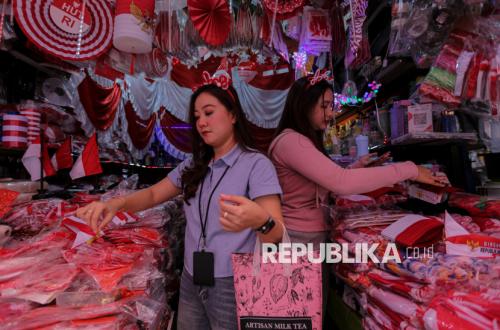
Third, in addition to building physical and industrial infrastructure, we must not forget the true engine of the national economy, namely the Micro, Small, and Medium Enterprises (MSME) sector. MSMEs serve as the economic safety valve during every crisis. When large corporations collapse due to foreign debt exposure, millions of small shops, artisans, and small traders continue to operate, maintaining the pulse of domestic consumption. Nevertheless, the resilience of our MSMEs is currently fragile because…