
Dollar Under Pressure Across Asia: Yen and Won-Rupiah Strengthen, Yuan Weakens
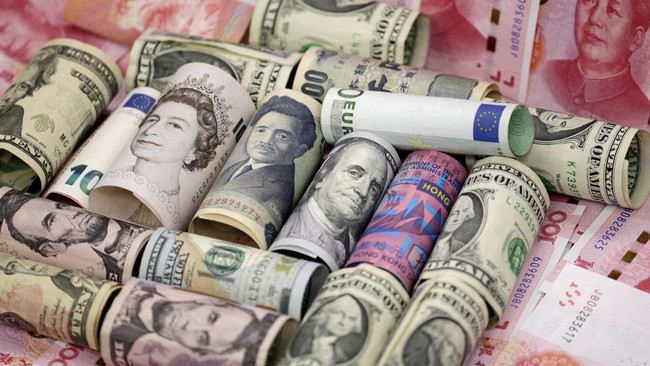
Jakarta, CNBC Indonesia — Most Asian currencies strengthened against the US dollar on Wednesday (4 November 2026), as the dollar weakened while votes were being counted in the US midterm elections.
Refinitiv data at 9.22am Jakarta time showed that eight of the 10 Asian currencies tracked had risen against the US dollar, while the other two had weakened.
The Japanese yen posted the sharpest gain, rising 0.59% to JPY157.71 per US dollar.
The South Korean won followed with a 0.52% rise, while the Thai baht gained 0.21% and the Malaysian ringgit appreciated 0.15%.
The Singapore dollar also rose, gaining 0.12%. The rupiah strengthened 0.11% to Rp18,115 per US dollar.
The Vietnamese dong and Philippine peso gained 0.08% and 0.03%, respectively.
The Chinese yuan, meanwhile, came under the greatest pressure, falling 0.16%. The Taiwan dollar was the only other currency in negative territory, declining 0.08%.
The US dollar was under pressure as investors began focusing on the results of the ongoing midterm elections. The US dollar index (DXY) was down 0.42% at 101.446 in morning trading.
The decline came as markets increasingly focused on the possibility of a shift in the balance of political power in the US Congress.
Early results showed Democratic Senator Jon Ossoff retaining his seat in Georgia. However, counting was continuing nationwide to determine whether the Democrats could take control of Congress from the Republicans, led by President Donald Trump.
A change in the make-up of Congress could affect the direction of US fiscal policy, particularly government spending, the budget and Trump’s economic policies.
Carol Kong, a currency strategist at the Commonwealth Bank of Australia, said the dollar could face further pressure if the Democrats secured control of both chambers of Congress.
“If that happens, the US dollar could weaken further because a Democratic victory in both chambers of Congress would constrain government spending during Trump’s term,” Kong said, as quoted by Reuters.
Markets believe a shift in the balance of power in Congress could narrow the US government’s scope to pursue certain fiscal policies, particularly if the administration and Congress are no longer controlled by the same party.
The dollar’s decline coincided with a fall in US government bond yields. The yield on 10-year Treasuries fell by about four basis points to 4.919%.
The drop in yields also reduced the appeal of dollar-denominated assets.
Even so, the dollar’s subsequent direction will depend heavily on the final election results, particularly which party gains control of the House of Representatives and the Senate.
Developments in the Middle East conflict also remain in focus.
Kong warned that rising tensions between the US and Iran after the election could drive global oil prices higher again.
“If aggression in the conflict escalates, oil prices could surge sharply, which would support the US dollar,” she said.
Brent crude traded at around US$103.85 a barrel in Asian trading, broadly steady after falling about 1% in the previous session to its lowest level in nearly four weeks.
Markets are weighing developments in peace negotiations involving Iran and Ukraine, alongside the risk of energy supply disruptions from ongoing attacks.
The Chinese yuan weakened after recording its largest daily fall since 15 May on Tuesday.
Pressure on the yuan followed the People’s Bank of China (PBoC) raising the foreign-exchange reserve requirement ratio for financial institutions from 4% to 6%. The move was intended to slow the yuan’s previous appreciation.
Source: jawawa.id (https://jawawa.id/newsitem/dollar-under-pressure-across-asia-yen-and-won-rupiah-strengthen-yuan-weakens-1793764263)
Originally published by CNBC Indonesia (https://www.cnbcindonesia.com/research/20261104092535-128-782141/dolar-ditendang-di-mana-mana-yen-won-rupiah-perkasa-yuan-malah-loyo), translated from Indonesian