
Dollar Hits Rp17,600: Examining Indonesia's Fuel and LPG Import Figures
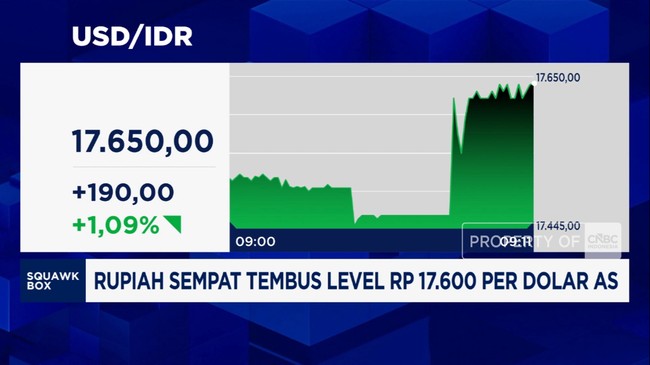
The Indonesian Rupiah has continued to weaken against the US Dollar. According to Refinitiv data, the national currency opened in the red during trading on Monday (18/05/2026), depreciating sharply by 0.97% to the level of Rp17,630/US.Previously, onWednesday(13/05/2026), theRupiahhadclosedstrongeratRp17, 460/US prior to the long holiday period.
One of the primary sectors affected by the Rupiah’s weakness is Indonesia’s import requirements. Currently, Indonesia remains dependent on energy imports, specifically in the sectors of crude oil, refined petroleum products (BBM), and liquefied petroleum gas (LPG). The high exchange rate of the US Dollar against the Rupiah triggers import inflation, potential trade balance deficits, and a decline in purchasing power.
Regarding oil imports, according to the Handbook of Energy and Economic Statistics of Indonesia 2024, domestic crude oil production has shown a declining trend in recent years. In 2024, production was recorded at 212.33 million barrels, or approximately 581,000 barrels per day, which is lower than previous years. Conversely, Indonesia’s crude oil exports remain relatively small, reaching only 27.2 million barrels throughout 2024. Meanwhile, crude oil imports reached 127.79 million barrels, significantly higher than exports. Data indicates an increasing trend in imports over the last five years: from 79.68 million barrels in 2020, rising to 104.40 million barrels in 2021, 114.52 million barrels in 2022, and reaching 132.38 million barrels in 2023.
In terms of petrol and diesel imports, according to Ministry of Energy and Mineral Resources (ESDM) data as of 1 April 2026, Indonesia’s largest source of petrol imports is Singapore at 64.23%, followed by Malaysia at 27.18%. Other contributors include Oman (5.55%) and the United Arab Emirates (3.03%). For diesel, the three main sources as of April 2026 are Singapore (58.56%), Malaysia (36.56%), and Taiwan (4.88%).
For LPG imports, the largest volume as of April 2026 comes from the United States (68.91%), followed by the United Arab Emirates (11.83%) and Saudi Arabia (7.36%). The remainder is sourced from Qatar, Australia, Kuwait, and China.
“As seen in the charts presented, domestic production remains far below requirements, meaning LPG imports continue to dominate the national supply,” explained Muhammad Rizwi Jilanisaf Hisjam, Secretary of the Directorate General of Oil and Gas, during a meeting with Commission XII of the House of Representatives (DPR) on Thursday (09/04/2026). To reduce the import share, the government is implementing shifts in naphtha feedstock at domestic refineries, such as the Balikpapan RDMP, to enrich LPG production. “With all the strategic mitigation steps we have taken, we can affirm that the national supply of fuel and LPG is currently in a secure condition,” he concluded.