
Does Staying Up Late Really Stunt Teenagers' Growth?
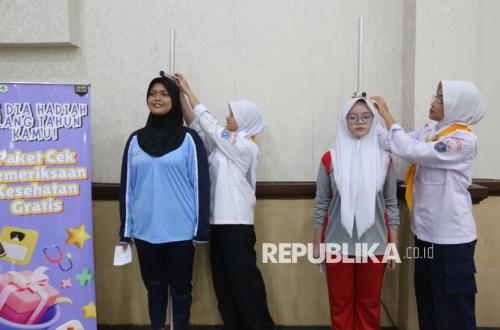
JAKARTA – Teenagers’ dependence on gadgets continues to rise. Beyond spending hours scrolling through social media, many teenagers play online games late into the night. This habit is considered to affect adolescent growth.
Paediatric endocrinology specialist Prof Dr Aman Bhakti Pulungan explained that sleep has a direct influence on a child’s growth. According to him, growth hormones and several other important hormones, particularly during puberty, are produced optimally when a child enters the deep sleep phase and the rapid eye movement (REM) phase.
“Sleep has a direct effect on growth, because growth hormone and certain other hormones, especially during puberty, are released during deep sleep and the rapid eye movement phase. Sleep really matters,” said Prof Aman during a virtual discussion monitored in Jakarta on Wednesday (22/7/2026).
For this reason, Prof Aman stressed that a child’s sleep time must not be reduced. Teenagers aged 12 to 18 need eight to nine hours of sleep, and they should also avoid staying up late.
According to Prof Aman, teenagers should ideally be asleep by 21:00 at the latest so that the body’s natural cycle, or circadian rhythm, works optimally. It is at this time that the body releases growth hormone at its maximum to support bone and muscle development.
“Deep sleep cannot be discounted. I have teenage patients who say that at the weekend they sleep from midnight until nine in the morning. That is not allowed, because growth hormones have their working hours, their own schedule,” said Prof Aman.
In his view, teenagers living in Indonesia have an advantage because the cycle of light and darkness is relatively regular throughout the year. This condition should be exploited so that teenagers get sufficient sleep.
He gave the example that in Japan the sun can rise at around 04:00, making the diurnal rhythm more easily disrupted. Meanwhile, in Finland there are periods when the sun sets at around 23:00. Even so, people in those countries try to create a dark atmosphere indoors, for instance by closing the curtains, so that children can still sleep at the proper time.
“In Indonesia we should be grateful, because our dark skies are regular and long. This condition should be optimised so that Indonesian children grow well physically, tall and strong,” he said.