
Does PTDI’s Future Depend on the KF-21 Programme?
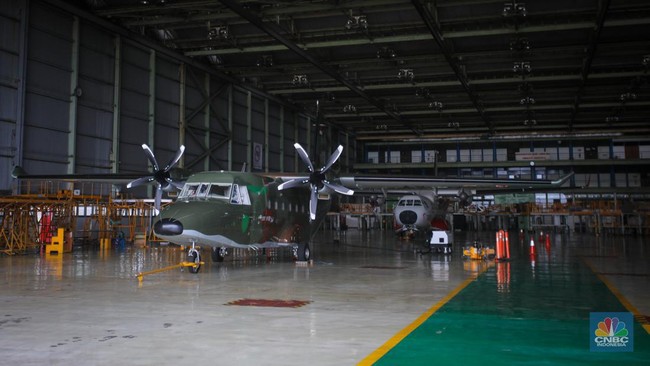
PT Industri Pesawat Terbang Nurtanio (IPTN), established on 23 August 1976 to develop advanced technology in the aerospace industry, evolved from Pertamina’s Advance Technology and Aviation Technology Division (ATTP).
In recent years, the company—which was renamed PT Industri Pesawat Terbang Nusantara (IPTN) before becoming PT Dirgantara Indonesia (PTDI)—has appeared to struggle in the global aerospace business, both in aircraft manufacturing and aerostructures.
After the 1998 crisis, political support for IPTN/PTDI fell sharply. Repeated changes in the company’s management have failed to restore its performance to the level achieved under B.J. Habibie, particularly in aircraft manufacturing.
The only new aircraft programme since the IPTN era is still struggling to enter the commercial market, despite receiving a Type Certificate from the Directorate General of Civil Aviation at the Ministry of Transportation on 18 December 2020 and awaiting the N219-100 Type Certificate.
As noted previously, PTDI’s sales performance for the fixed-wing aircraft inherited from IPTN has been far from impressive, for both the NC212i and CN235-220. The production capacity for these two aircraft, which are closely linked to CASA, has not been fully utilised for a number of internal and external reasons.
Meanwhile, the company’s aircraft maintenance and servicing business has also performed poorly, despite hundreds of C212/NC212 and CN235 aircraft operating across the Asia-Pacific, Southwest Asia and Africa.
Its aerostructures manufacturing record has likewise fallen short, with many business opportunities lost. These include a planned aerostructures partnership with Airbus that could have generated US$500 million in revenue over the coming decade.
Several problems have hindered the state-owned aircraft manufacturer’s progress since 2000, beyond the decline in political support compared with the New Order era. They include issues involving capital, finances, human resources, engineering, production and marketing.
For the past 25 years, PTDI’s problems have revolved around these issues in a vicious circle. Meanwhile, partnerships with global aircraft manufacturers have continued to weaken, despite new collaborations with airframers that had not previously worked with PTDI.
Some consider the NC212i and CN235-220 to be sunset aircraft: planes nearing the end of their market life because of low customer demand or the closure of their production lines.
Sales of the N219 have also been slow, as no domestic scheduled airline—particularly one operating pioneer routes—has ordered the fixed-wing aircraft, which is powered by two Pratt & Whitney Canada turboprop engines.
The government market, particularly the Ministry of Defence, appears to remain PTDI’s mainstay, even though the N219 was designed for pioneer routes. Without a sizeable customer base among scheduled commercial airlines, it will be difficult for PTDI to break even on the N219 within five years, let alone make a profit from its sales.
Given this situation, where does a brighter future lie for the state-owned company, and what could lift PTDI out of its precarious position? Could its participation in the KF-21 programme improve the company’s financial performance, workforce capabilities, engineering and production?
Broadly, the involvement of the manufacturer of the CN235-220 in the KF-21 programme depends on a decision by the Indonesian government: will Jakarta acquire 16 KF-21 Block II aircraft or not? It remains unclear whether Indonesia will buy the fighter, jointly developed by Korea Aerospace Industries (KAI) and PTDI, as decision-makers in Jakarta appear to favour procuring combat aircraft through brokers rather than making direct purchases.
Under the earlier agreement between KAI and PTDI, the Bandung aircraft manufacturer would produce the left and right wing components, vertical and horizontal tails, and pylons. These components would be intended not only for KF-21 aircraft purchased by Indonesia, but also for orders from South Korea and other countries.
Under the Industrial Collaboration Agreement (ICA) between the two parties, 15 per cent of the KF-21’s aerostructures would be manufactured in Bandung, which is expected to help build the company’s capabilities in composite technology. Under the latest understanding between the South Korean and Indonesian airframers, the Indonesian company would be the sole supplier of three types of adapters associated with weapons pylons and electro-optical equipment.
On paper, PTDI could secure stable long-term revenue from manufacturing KF-21 aerostructures if it can maintain the quality of its composite products. However, to the author’s understanding, the 15 per cent share under the ICA applies to the first contract tranche; that proportion could change in the second and third phases, depending on the value of the contracts.
There is also the question of whether PTDI’s management can turn these aerostructures opportunities into concrete business. If it can, would the resulting revenue help improve the company’s financial performance?
Another Indonesian ambition related to the KF-21 programme is to establish a Final Assembly and Check-Out (FACO) facility in Bandung for all KF-21 aircraft ordered by Southeast Asian countries. If realised, this would generate substantially more revenue for PTDI from KF-21-related business.
However, Indonesia would have to meet several conditions to secure a FACO facility, including investment by the Indonesian government or Danantara to establish it. To the author’s knowledge, a FACO facility in Indonesia could be established if the country fulfils an agreement to acquire 48 KF-21s through three contract tranches.
Returning to the central question: will the Indonesian airframer’s participation in the KF-21 programme improve PTDI’s prospects? The answer will depend in part on the Ministry of Defence’s long-term commitment to procuring the aircraft.
That commitment will also be affected by presidential changes in 2029 or 2034; past successions have demonstrably influenced Indonesia’s involvement in the KF-21 programme. Another factor is PTDI management’s own commitment to the aerostructures business, bearing in mind that the company’s management is regularly replaced.
Source: jawawa.id (https://jawawa.id/newsitem/does-ptdis-future-depend-on-the-kf-21-programme-1795589529)
Originally published by CNBC Indonesia (https://www.cnbcindonesia.com/opini/20261125125827-14-788309/apakah-masa-depan-ptdi-tergantung-pada-program-kf-21), translated from Indonesian