
Does Owning a Motorcycle Really Disqualify You from Social Assistance? Here's BPS's Explanation
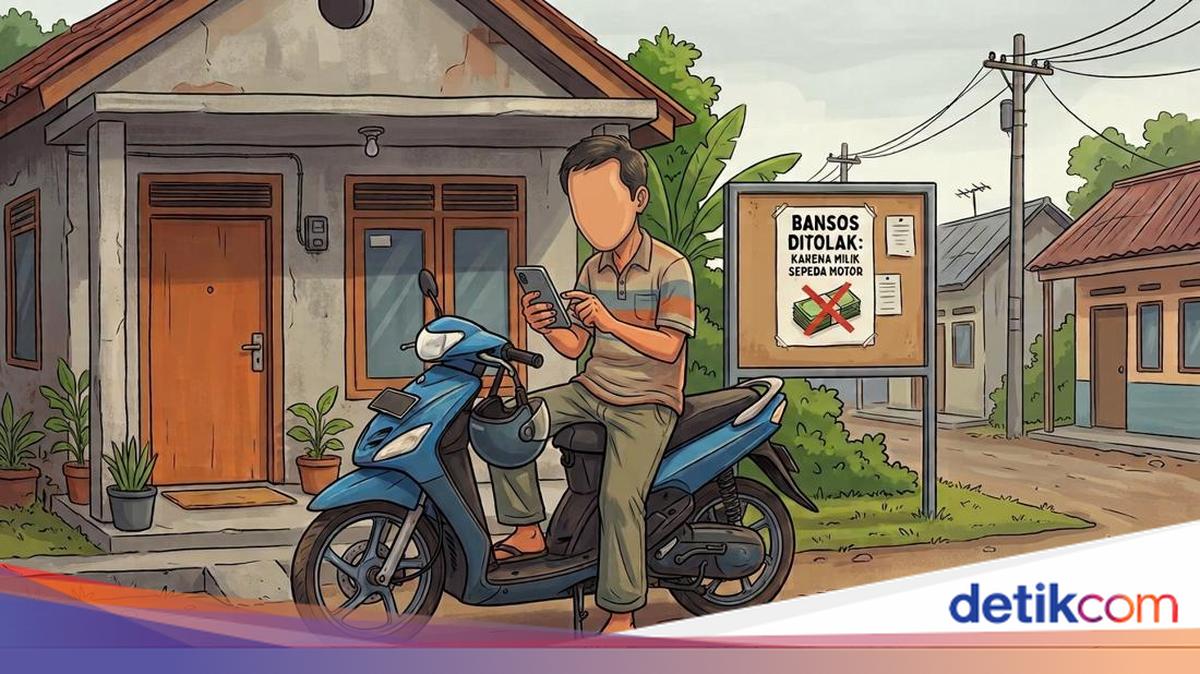
Recently, the decile system of the National Socio-Economic Single Data (DTSEN) has become a topic of public discussion. The DTSEN decile serves as a reference for the government, particularly the Ministry of Social Affairs, in distributing social assistance (bansos).
Besides the issue of sudden decile increases, another topic circulating relates to motorcycles. It has been claimed that people who own a motorcycle automatically have a high decile and therefore cannot receive social assistance.
Is that true? Here is the explanation from the Central Statistics Agency (BPS) that readers need to understand to avoid confusion.
Quoted from BPS’s official Instagram account, @bps_statistics, owning a motorcycle does not automatically prevent someone from receiving social assistance. This is because many welfare factors are taken into consideration.
“Vehicle ownership is not the sole determinant. Welfare assessment considers various family conditions,” BPS wrote in a post dated 13 August 2026.
Thus, it can be concluded that owning a motorcycle does not necessarily exclude someone from social assistance. If a motorcycle owner is deemed eligible, they still have the opportunity to receive social assistance.
Does owning a motorcycle place someone directly into a particular decile? The answer is no.
There are a number of criteria used by BPS in decile ranking. According to the official BPS website, decile determination uses indicators such as income, ownership of certain goods, electricity capacity, and occupation.
In addition, a person’s socio-economic characteristics are also assessed. These include housing conditions, cooking fuel and energy, asset ownership, family composition, and drinking water sources.
These various aspects are then considered using the Proxy Means Test (PMT) statistical method. The test is useful for estimating a family’s level of welfare.
“Because it uses a combination of various characteristics, a single condition or indicator does not by itself determine a family’s decile position,” BPS wrote in Press Release Number 32/02500/HM.240/2026 dated 21 August 2026.
So, which deciles are eligible for social assistance?
First, it is important to know that a decile is a grouping of families based on their relative welfare position. In total, there are 10 deciles in DTSEN, with decile 10 being the group with the highest level of welfare.
According to information on the official Cek Bansos website of the Ministry of Social Affairs, deciles 1-4 are the priority recipients of social assistance under the Family Hope Programme (PKH) and the Sembako Programme, formerly known as Non-Cash Food Assistance (BPNT). Families in decile 5 can be proposed as participants of the Health Insurance Contribution Assistance (PBI-JK).
Furthermore, according to the official website of the Education Financing Service Centre (Puslapdik) of the Ministry of Primary and Secondary Education (Kemendikdasmen), deciles 1-4 are also entitled to receive assistance under the Indonesia Smart Programme (PIP). Likewise, the Indonesia Smart College Card (KIP Kuliah) is prioritised for prospective students from deciles 1-4.
There are three ways to check one’s DTSEN decile.
First, readers can check through the Cek Bansos Kemensos website. Besides the decile, other information displayed includes the disbursement status of PKH, the Sembako Programme/BPNT, and PBI-JK. The steps are: open the Cek Bansos Kemensos website, enter the Population Identification Number (NIK) in the provided field, fill in the required captcha code, ensure the NIK and captcha code are correct, then click ‘CARI DATA’. The website will display the name, decile, and status of three types of social assistance.
Second, the DTSEN BPS website can be used to check the decile as well as to submit a data update request. The steps are: open the DTSEN BPS page at https://dtsen-form.bps.go.id/, click the red button labelled ‘Lainnya’, enter the NIK and code, then click ‘Cek Data’. If the NIK is found in DTSEN, a pop-up will appear stating ‘NIK ditemukan pada basis data DTSEN’. Click ‘Tutup’, then press ‘Cek Desil’. Verify the NIK, enter the date of birth, complete the captcha code, and click ‘Cek Data’ or press enter. The website will display the decile information for the relevant NIK along with its period.
Third, readers can find out their decile through the Cek Bansos Kemensos application. In addition to the decile, checking via this application will also show the status of six types of social assistance. The steps are: download the Cek Bansos application from the Play Store or App Store, open the application, go to the ‘Cek Bansos’ menu, enter the 16-digit NIK in the provided field, ensure the NIK is correct, then press ‘Cari Data’. The application will display the data period, name, decile, KPD status, and a list of six social assistance programmes.
For readers who feel their decile is inaccurate, they can submit a data update request. Updates can be made via the Cek Bansos application or by visiting the village office, sub-district office, or local social service office directly.
Source: jawawa.id (https://jawawa.id/newsitem/does-owning-a-motorcycle-really-disqualify-you-from-social-assistance-heres-bpss-explanation-1787799064)
Originally published by detikJogja (https://www.detik.com/jogja/bisnis/d-8636060/benarkah-punya-motor-tidak-bisa-dapat-bansos-begini-penjelasan-bps), translated from Indonesian