
Dody Hanggodo Reveals 5 Government Infrastructure Priorities Through 2029
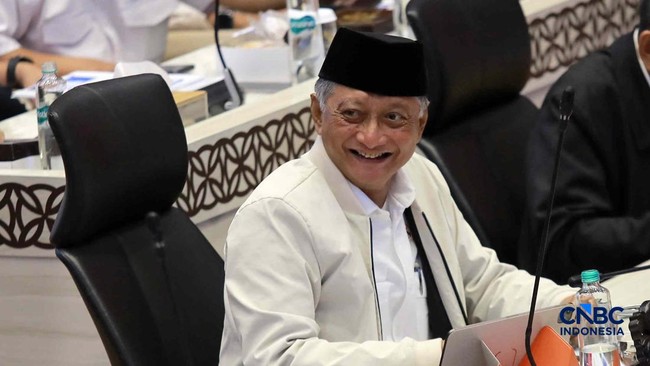
The Ministry of Public Works (PU) has prepared five main focuses for infrastructure development as its policy direction through 2029. These five priorities are intended to support economic growth targets, equitable development, and the eradication of extreme poverty. Minister of Public Works Dody Hanggodo stated that infrastructure development is no longer solely oriented towards completing physical projects, but must be capable of generating greater economic benefits. Consequently, every programme is now designed to be interconnected to deliver maximum impact. “If we read and observe the government’s targets from the President through 2029, there are actually five infrastructure programmes that will serve as the primary levers for economic growth and equitable development. First, water resource resilience through dams, irrigation, and raw water supply to support food self-sufficiency. Second, connectivity infrastructure through the construction of roads, bridges, including toll roads to facilitate smoother public mobility and logistics,” Dody said during CNBC Indonesia’s Economic Update on Friday (3/7/2026). In addition to these two sectors, the government is also prioritising the development of basic settlement infrastructure, such as the provision of drinking water, sanitation, and waste management. This sector is a focus because it directly relates to the quality of life of the community while supporting the development of healthier cities. “The third is basic infrastructure for settlements, such as drinking water, sanitation, and waste management. The fourth is strategic facilities, ranging from Sekolah Rakyat (People’s Schools), educational and health facilities, to religious facilities, focusing on building human resources towards a Golden Indonesia 2045. The fifth is financing innovation, as it is impossible for all development to be fully supported by the state budget (APBN), so we are inviting investment through the Public-Private Partnership (KPBU) scheme,” he said. The Ministry of Public Works subsequently designed ‘Infracraft’, an approach to infrastructure development that is effective, efficient, and simultaneously impactful on economic growth. This concept was then simplified into the PU 608 programme, which serves as the ministry’s working guidelines. Through this concept, the Ministry of Public Works targets increased efficiency in infrastructure investment by lowering the Incremental Capital Output Ratio (ICOR). “We translated statecraft into infracraft, which is how to build infrastructure effectively, efficiently, and with impact for the community. We then simplified this into PU 608. The number six represents the target of lowering the infrastructure ICOR to below six, then pushing extreme poverty down to zero per cent, and from an infrastructure perspective, we aim to help drive national economic growth to reach at least eight per cent by 2029,” he explained. All projects undertaken must now be interconnected so that their benefits do not stop at mere physical construction. He cited the example that the construction of a drinking water supply system would not be optimal without the support of adequate roads, dams, or irrigation networks. “I believe infrastructure development must indeed be interconnected. If I build something worth one rupiah, the output should ideally not be just one rupiah, but ten rupiah through economic growth, poverty reduction, and other benefits. Therefore, starting in 2025, all our infrastructure development programmes are connected to one another so that the benefits are truly maximised for the community,” Dody concluded.