
Doctors must consider practice ratios when starting aesthetic careers
The growth of the medical aesthetics market in Indonesia is opening opportunities for general practitioners to develop careers in the field. However, before choosing training, doctors need to consider the practical experience gained, including the ratio of participants to cases handled directly.
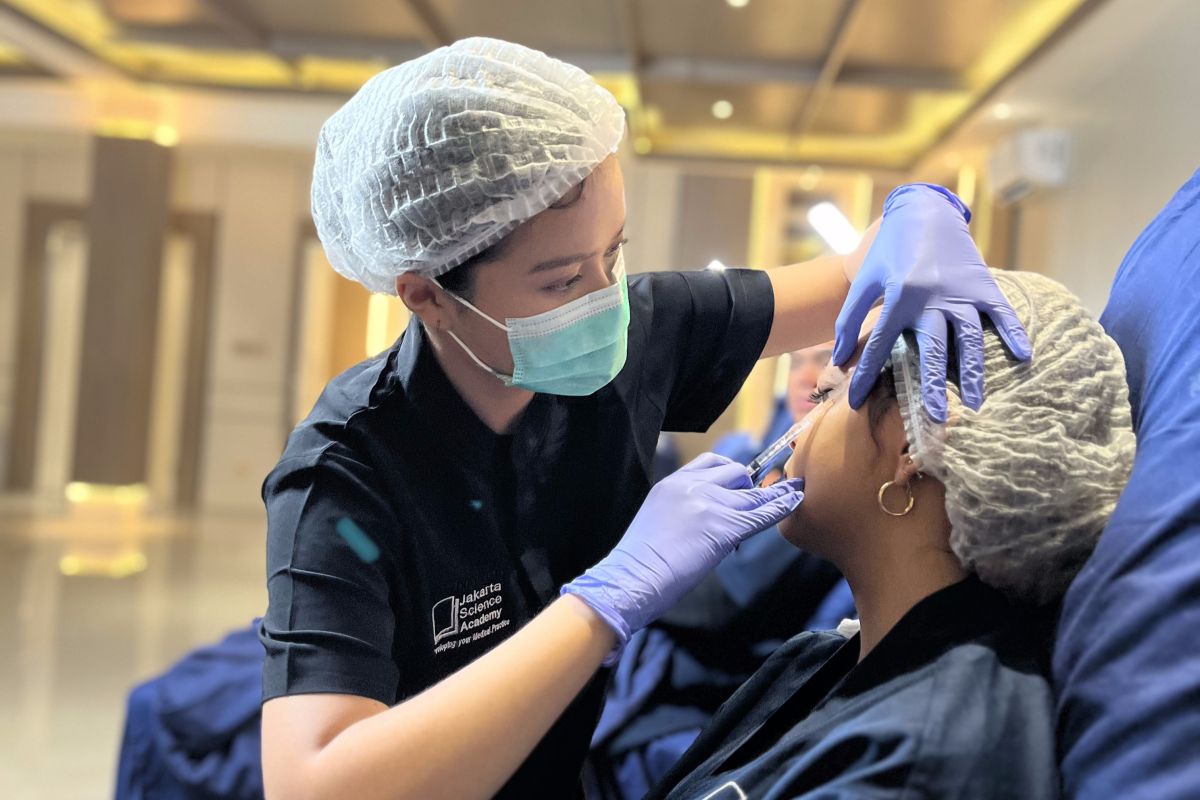
“Our participants do not take turns or merely watch. Every individual manages their own case from assessment to evaluation, with instructors providing one-on-one guidance. That is why we are confident in disclosing our ratios openly,” said dr. Danu Mahandaru, a practitioner and medical aesthetics instructor at Jakarta Science Academy, in an official statement in Jakarta on Tuesday.
Based on data from the Indonesia Medical Aesthetics Market, the Indonesian medical aesthetics market was valued at US$234.11 million in 2022 and is projected to reach US$450.23 million by 2028, with a compound annual growth rate of 11.52 per cent.
Amidst this development, doctors intending to enter the aesthetics field need to be careful in selecting training institutions. According to the material presented, certificates are not the only factor to consider, as almost all institutions offer certificates to participants.
Two aspects deemed more decisive are the learning environment and the experience gained in understanding procedures. The practical environment, for instance, needs to provide opportunities for participants to try, ask questions, and receive corrections before facing cases independently.
This experience is closely related to the ratio of participants to cases. Skills such as assessing anatomy, determining points and depth, feeling tissue resistance, and making decisions when conditions do not go according to plan require direct involvement from the participant.
In a model of one case for four participants, for example, each participant only gains partial experience from a single case because they must take turns with others. Conversely, in a one-participant-to-one-case model, participants have the opportunity to manage a case in its entirety.
In addition to the number of cases, prospective participants also need to look at the learning environment, including the availability of tools and practical materials, group size, and the evaluation mechanisms provided during training. This is necessary to ensure that the experience gained does not stop at theoretical mastery.
For doctors wishing to start a career in aesthetics, these factors can serve as important considerations before choosing training. Doctors should also consider the compatibility of training schedules with their current practices and whether there is support available after the training is completed.
Thus, the decision to choose training should not be based solely on certificates, but also on how much practical experience is truly acquired during the learning process.