
Doctors and Patients Require a Space for Peace
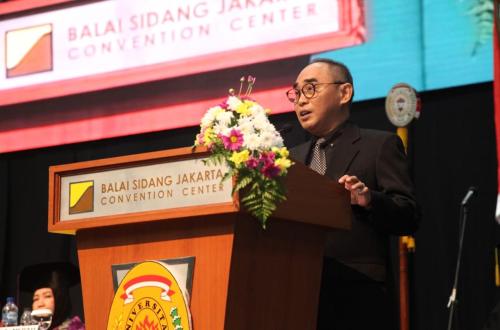
The Chairman of the Jayabaya University Foundation, Dr Moestar Putrajaya, MH, has expressed appreciation for the views of Professor Dr Abdul Latif, Head of the Doctoral Programme in Legal Science at Jayabaya University, who emphasised that mediation must be the primary pathway for resolving medical disputes in Indonesia.
According to Moestar, this perspective is not only legally grounded but also reflects visionary academic thinking aimed at building a more equitable Indonesian health law system. “I appreciate Prof. Abdul Latif’s view. The relationship between doctors and patients is essentially built on trust. When disputes arise, what is needed is not the sharpening of conflict, but the opening of a space for honest, objective, and dignified dialogue,” he stated in a written release on Saturday (1/8/2026).
Mediation serves as a means for both parties to understand each other, explain the facts of the matter, and seek a fair resolution without immediately facing one another in a courtroom. In healthcare practice, not every treatment outcome that falls short of expectations constitutes negligence, as the medical field possesses scientific complexities that must be assessed professionally.
“Professional disciplinary examinations and mediation processes are essential stages to ensure every issue is assessed based on facts, science, and professional standards, rather than solely by the pressure of public opinion or momentary emotion,” he added.
Moestar believes that legal protection must be provided in a balanced manner. While a patient’s right to justice must not be diminished, medical personnel working in good faith also deserve legal certainty and a sense of security in performing their profession. A robust legal system must protect both parties proportionally.
Moestar noted that the idea of establishing an integrated medical dispute resolution system deserves the attention of policymakers. The presence of independent mediation institutions, competent mediators, and clear mechanisms would strengthen public trust in the national healthcare system. “The goal of health law is not to determine a winner or a loser, but to restore trust, maintain the dignity of all parties, protect the professionalism of medical personnel, and ensure that healthcare services continue to develop with increasing quality,” Moestar concluded.
Previously, Professor Dr Abdul Latif shared these views while presiding over the dissertation proposal examination of Raymond Nadeak, a Doctoral Programme candidate at Jayabaya University, titled “A Model for Resolving Medical Disputes Through Out-of-Court Mediation to Achieve Legal Certainty and Utility for Patients and Medical Personnel.”
He argued that medical dispute resolution should prioritise out-of-court mediation, in line with the spirit of Law Number 17 of 2023 concerning Health. Professor Abdul Latif explained that allegations of negligence by healthcare workers must first undergo examination by the Professional Discipline Council to ensure whether there has been a violation of professional standards and standard operating procedures. The results of such examinations should serve as the foundation for the mediation process, which must be led by mediators competent in health law and medical ethics, while maintaining the confidentiality of the entire process.
He also supported the formation of an Integrated Medical Dispute Resolution System, which involves the reconstruction of institutional, procedural, substantive, and executory frameworks. According to him, such a model would strengthen legal certainty, protect patient rights, provide security for medical personnel, and realise a dispute resolution process that is faster, fairer, and oriented towards restoration.