
Doctor Outlines Key Factors in Choosing Prosthetic Limbs
The development of prosthetic technology has expanded the options available to people who have undergone amputation. However, choosing a device involves more than considering how advanced the technology is; patients’ clinical condition, functional abilities, rehabilitation goals and everyday activities must also be taken into account.
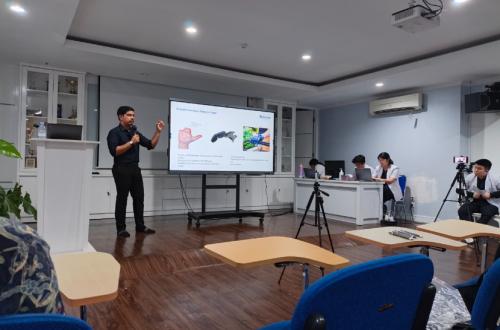
These points were raised at a guest lecture entitled “Clinical Prospective in Upper and Lower Limb Prosthesis Rehabilitation” at the Department of Physical Medicine and Rehabilitation, Faculty of Medicine, University of Indonesia, in Jakarta on Monday (12 October 2026).
The event was organised by the Specialist Medical Education Programme in Physical Medicine and Rehabilitation (Sp.KFR) at the faculty, with support from Össur and PT Asa Solusi Aktif (ASATIF). It discussed developments in prosthetic technology and clinical considerations in selecting suitable devices for patients.
Physical medicine and rehabilitation specialist Rizky Kusuma Wardhani said prosthetic rehabilitation went beyond providing a replacement limb. Its aims also included restoring independence, supporting daily activities and improving patients’ quality of life.
“Advanced technology alone does not guarantee successful rehabilitation. Optimal outcomes require accurate patient assessment, careful prosthesis selection, a personalised rehabilitation programme and effective collaboration among healthcare professionals,” she said.
Rizky said physical medicine and rehabilitation specialists played an important role in connecting technological developments with patients’ functional needs. Understanding prosthesis options and the relevant clinical considerations should therefore be part of the rehabilitation process.
Ahmad Risaldi of ASATIF said introducing prosthetic technology to medical professionals could broaden treatment options. Collaboration with health education institutions and device manufacturers could help doctors understand the available technological alternatives before deciding on a rehabilitation solution.
“We believe learning about the latest technology in prosthetic legs and arms will benefit not only Sp.KFR doctors, but also their patients,” he said.
Össur South-east Asia prosthetist and orthotist Zulfaqar Omar stressed that doctors did not need to master every technical specification or manufacturing process. More important was understanding clinical indications, patients’ capabilities, and the benefits and limitations of each technology.
“What matters more is understanding the clinical indications, patients’ functional abilities, and the potential benefits and limitations of the available technologies,” he said.
Zulfaqar noted, for example, that not every patient with an above-knee amputation needed a microprocessor knee. Likewise, a myoelectric prosthesis, which uses electrical signals from muscles to control the device’s movements, was not suitable for every patient with an arm amputation.
The selection of prosthetic components should also take account of muscle strength, balance, mobility, rehabilitation goals, and the patient’s environment and activities. Someone who works with a motorbike, for instance, may have different needs from a patient who is mainly active indoors or has to travel over uneven surfaces.
Rehabilitation does not end once a patient receives a prosthesis. Clinical evaluations, practice using the device, and regular checks and adjustments remain necessary to ensure it supports the patient’s function as effectively as possible.
Successful prosthetic rehabilitation therefore requires collaboration among rehabilitation doctors, prosthetists and orthotists, physiotherapists and other healthcare professionals. Advanced technology must remain a tool tailored to each patient’s clinical needs and abilities.
Source: jawawa.id (https://jawawa.id/newsitem/doctor-outlines-key-factors-in-choosing-prosthetic-limbs-1791910282)
Originally published by Republika (https://ameera.republika.co.id/berita/tmun9d416/dokter-ungkap-faktor-penting-dalam-memilih-kaki-dan-tangan-palsu), translated from Indonesian