
Doctor Explains Use of Imaging Technology in Heart Procedures
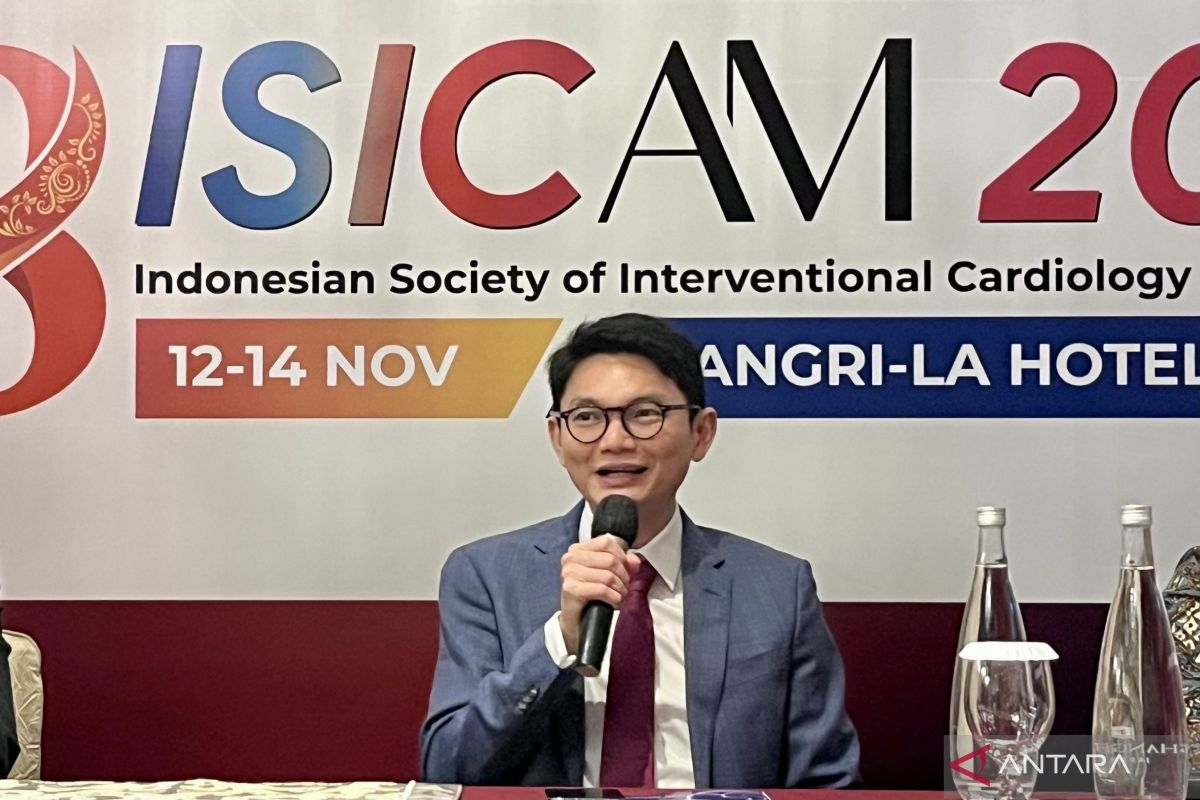
Jakarta (ANTARA) - Indonesian Society of Interventional Cardiology Annual Meeting (ISICAM) 2026 organising committee chairman Dr Dasdo Antonius Sinaga, Sp.JP(K), FIHA, has explained how blood-vessel imaging technology helps determine whether an intervention is needed and how accurately it should be performed for patients with coronary heart disease.
Dasdo spoke at a press conference for ISICAM 2026, organised by the Indonesian Interventional Cardiology Association (PIKI) in Jakarta on Thursday.
“IVUS and OCT show exactly what the vessel’s size is. The blood vessels of patients A, B and C are different sizes,” Dasdo said.
He explained that intravascular ultrasound (IVUS) and optical coherence tomography (OCT) are imaging methods used inside the coronary arteries, enabling doctors to examine the vessels’ structure and size in greater detail.
This information is needed for percutaneous coronary intervention (PCI), including when doctors determine the size and position of the stent to be inserted into a patient’s blood vessel.
The use of intracoronary imaging technology is also included in the European Society of Cardiology’s (ESC) 2024 guidelines on chronic coronary syndromes. The guidelines recommend IVUS or OCT to guide PCI in cases of narrowing with complex anatomy, such as narrowing in the left main artery, at arterial branches, or in long lesions.
The recommendation is Class I, Level of Evidence A, indicating strong support based on the available scientific evidence.
Meanwhile, the American College of Cardiology (ACC) and American Heart Association (AHA) 2025 guidelines on acute coronary syndromes also recommend intravascular imaging to guide stent placement in patients with complex narrowing or narrowing involving the left main artery.
At the same event, cardiologist Dr Achmad Fauzi Yahya, Sp.JP(K), FIHA, said advances in diagnostic technology also influence doctors’ decisions on how to treat patients.
More detailed examinations allow doctors to assess whether narrowed blood vessels can still be treated with medication or whether an intervention is needed, he said.
“In the past, we would see a narrowing and immediately put in a stent. Now, with various technologies, we can determine that it can still be treated with medication, and then, once a certain threshold is reached, an intervention is required,” Fauzi said.
He added that advances in medical technology must be accompanied by improvements in doctors’ knowledge and skills so that treatment is appropriate to each patient’s condition.
Source: jawawa.id (https://jawawa.id/newsitem/doctor-explains-use-of-imaging-technology-in-heart-procedures-1794491667)
Originally published by Antara (Indonesian) (https://www.antaranews.com/berita/5850067/dokter-jelaskan-penggunaan-teknologi-pencitraan-pada-tindakan-jantung), translated from Indonesian