
Doctor: Beware the effects of volcanic ash even after an eruption has ended
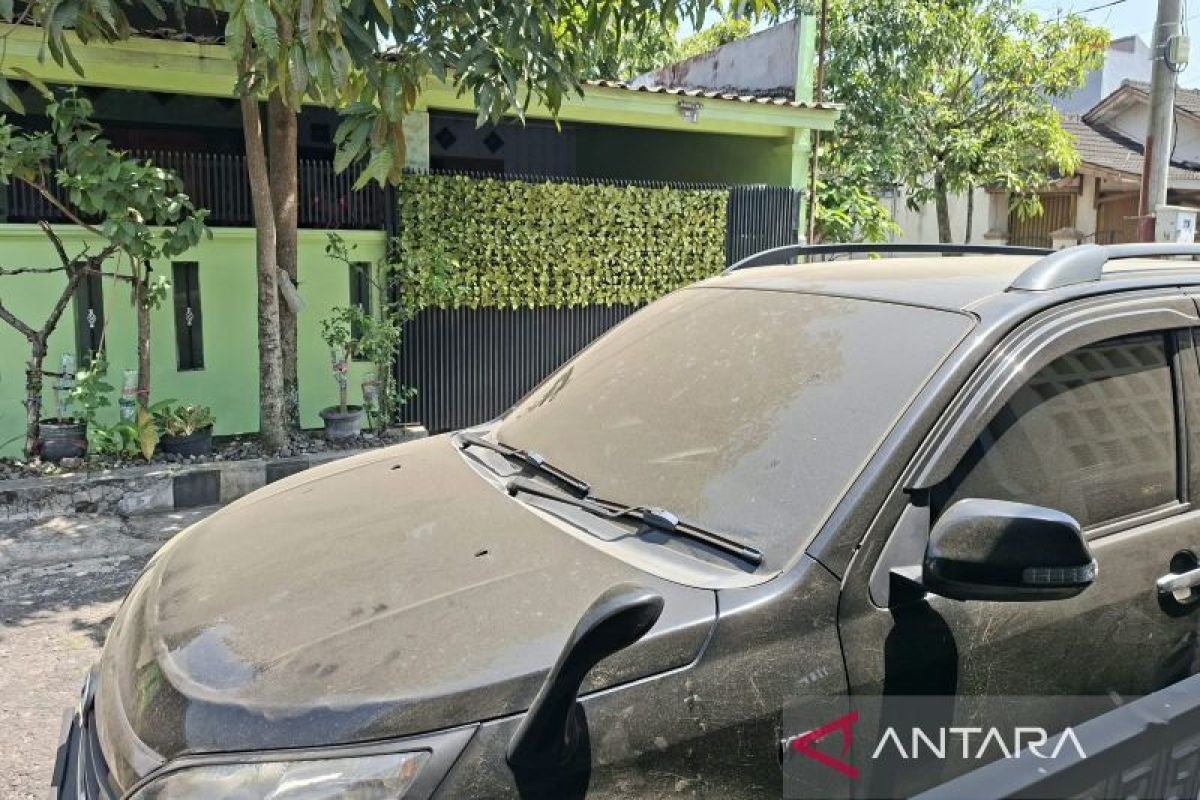
Jakarta (ANTARA) - Dr dr Sukamto Koesnoe, Sp.PD, K-A.I, FINASIM, First Vice Chairman of the Central Board of the Indonesian Society of Internal Medicine Physicians (PAPDI), has stated that vigilance against volcanic ash does not end once an eruption is over, particularly regarding its impact on health.
Caution about volcanic ash remains necessary as long as it is still present in the environment. As long as ash remains piled on the ground, rooftops and roads, Sukamto said, its particles will be lifted back into the air by wind, vehicle traffic and cleaning activities, all of which continue to pose risks, especially to health.
“So the risk continues for days to weeks, until the ash is thoroughly cleaned up or washed away by rain,” Sukamto told ANTARA in Jakarta on Tuesday.
Sukamto explained that volcanic ash is not ordinary dust, as its particles are sharp and angular, contain silica, and some are extremely fine (PM10 and PM2.5), meaning they can be inhaled deep into the lower airways and even the alveoli.
Volcanic ash particles, he continued, warrant particular caution for people with chronic illnesses such as asthma, chronic obstructive pulmonary disease (COPD), chronic bronchitis and allergic rhinitis, because inhalation frequently triggers attacks or exacerbations.
In addition, irritation of the respiratory mucosa can weaken local airway defences, thereby increasing the risk of acute respiratory infections.
“That is why, for patients with chronic lung disease and the elderly, influenza and pneumococcal vaccination status should ideally be updated — this is part of protection that is often overlooked,” said the permanent lecturer in the Clinical Allergy and Immunology Division of the Department of Internal Medicine at the Faculty of Medicine, University of Indonesia (FKUI).
The health effects of volcanic ash are not limited to the respiratory system. Sukamto said the risks extend to the eyes, including irritation, redness, conjunctivitis and even corneal abrasions caused by the sharp ash particles.
“Contact lens users are most at risk and should temporarily switch to glasses,” he said.
For the skin, the effects can include irritation, itching and dermatitis, especially if the ash is acidic or mixed with sweat. A further risk arises when ash contaminates unprotected food and drinking water, potentially affecting the digestive tract.
Meanwhile, PM2.5 particles from volcanic ash pose cardiovascular risks and can trigger deterioration in patients with heart disease.
Furthermore, Sukamto advised that people with asthma and COPD must ensure they always have their controller and reliever medication available and carry them when travelling.
“Go to a health facility immediately if you develop worsening breathlessness or wheezing that does not subside with an inhaler, chest pain, fever with persistent productive cough, or eye pain and blurred vision,” said the senior clinical educator in the Endocrinology, Immunology and Infection Division of the Department of Internal Medicine at RSCM.
To guard against exposure to volcanic ash particles, Sukamto recommended N95, KN95 or FFP2 masks as the best options, provided they are fitted snugly with no gaps around the nose and cheeks. With masks, he said, the key is not only the filtering material but also how tightly the mask seals against the face.
Several volcanoes in Indonesia have recently erupted within a short period, including Mount Anak Krakatau, Ibu, Semeru, Lewotobi Laki-laki, Ili Lewotolok and Sinabung.
According to information shared via the official social media account of the Meteorology, Climatology and Geophysics Agency (BMKG), the spread of volcanic ash from the eruption of Mount Anak Krakatau in the Sunda Strait waters on 7 September 2026 at 15.00 WIB was identified as heading towards parts of Banten, West Java, Lampung and Bengkulu.