
Do the Demolished Historic Houses in Lempuyangan Meet Heritage Criteria?
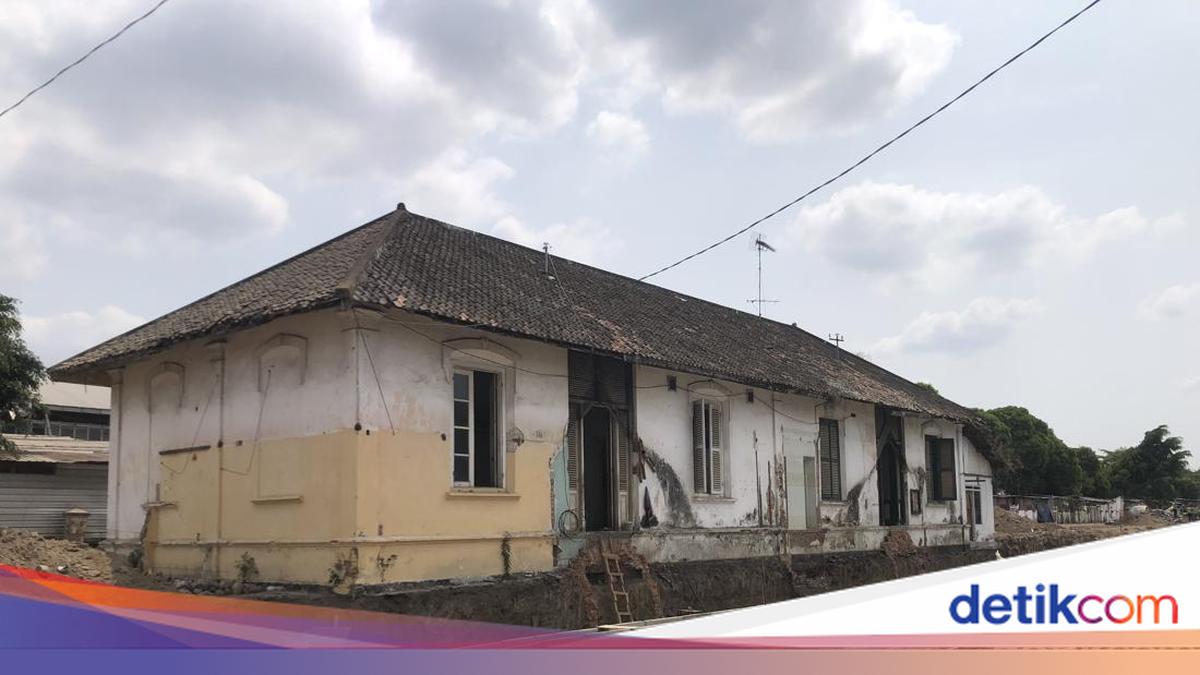
Yogyakarta City’s Cultural Affairs Office (Disbud) has confirmed that 11 historic houses south of Lempuyangan Station, demolished by state railway company PT KAI, were not cultural heritage buildings because they were not listed in an official decree. But do they meet the criteria?
“Because we understand this could become a public discussion, many people have said that, in terms of the criteria, they qualify as potential cultural heritage,” Susilo Munandar, head of the Cultural Heritage Division at the city’s Cultural Affairs Office, told detikJogja at the office on Wednesday (14 October 2026).
He said cultural heritage status also involves administrative requirements. Under the law, an old building must first be registered by its owner or the person or institution managing the building or land before its status can be changed to cultural heritage.
“For the registration process for a cultural heritage assessment, the owner or manager of the object must be informed. An application has to be submitted using the relevant form. That is provided for in the Cultural Heritage Law and Government Regulation No. 1 of 2022,” Susilo said.
The dozen or so historic houses at Lempuyangan Station that have been demolished were not designated cultural heritage because they had not been registered.
“Cultural heritage status has to be evidenced by an official decision. We confirm that the 13 houses south of Lempuyangan Station do not have cultural heritage decrees. The Lempuyangan Station building itself is designated cultural heritage by the ministry,” he said.
Susilo said regulations do not restrict who can register a building for cultural heritage status: it may be privately or institutionally owned. However, the application requires information that only the land or building owner may have.
“The law says anyone can register, but the application form requires information, including who owns the land,” he said.
“So if the applicant is neither the manager nor the owner, they must be able to provide that information. We also have to verify it, and if it is incorrect, we have to check it. That is the procedure. Even if a building meets the criteria, if it has not been registered, we cannot process it,” he added.
Susilo said the government, in this case the Cultural Affairs Office, could not simply apply to change a building’s status to cultural heritage. Any assessment must also follow the owner’s registration.
“If the parties concerned do not submit a formal application, we cannot proceed. There has to be a registration, which is assigned a reference number,” he said.
Four cultural heritage criteria
Buildings proposed for cultural heritage status must meet four criteria. They must be at least 50 years old and reflect an architectural style from the period in which they were built.
“In Yogyakarta, particularly the city, there are four architectural styles: traditional Javanese, Chinese, colonial and Indische. Indische is a blend of European and Chinese styles with local influences,” Susilo said.
The third criterion is that a building must be capable of enhancing national awareness. Finally, it must have historical significance for education, religion or society.
“These four criteria are assessed through a study by the Cultural Heritage Expert Team (TACB). All of them must be met,” Susilo said.
“A building may meet three criteria, but if it does not meet the criterion of significance, it cannot qualify. An old building does not automatically become cultural heritage,” he added.
Susilo said a change in status would not affect ownership. Owners would remain free to use the building for any purpose, provided they did not alter its original form.
“Use is not restricted; it can serve any function. The rules apply to changes that affect its form. Those cannot be made arbitrarily, and, as far as possible, the façade’s original character must be preserved,” he said.
“Interior adjustments are possible through a process. If the space no longer meets current needs, changes may be allowed. The process for such alterations is also governed by Yogyakarta Special Region Governor Regulation No. 76 of 2019, which covers permits for restoration,” he added.
Owners seeking to adjust interiors or carry out restoration must apply for permission from the government. The Yogyakarta Cultural Heritage Council will then assess the proposal and make a recommendation.
“For example, if a bathroom or something similar is needed, plans have to be prepared. The Yogyakarta Cultural Heritage Council will provide a recommendation based on the technical documents submitted, so it can review the proposed work,” Susilo said.
Source: jawawa.id (https://jawawa.id/newsitem/do-the-demolished-historic-houses-in-lempuyangan-meet-heritage-criteria-1791989444)
Originally published by detikJogja (https://www.detik.com/jogja/berita/d-8707394/rumah-kuno-yang-dirobohkan-di-lempuyangan-masuk-kriteria-cagar-budaya), translated from Indonesian