
Do Not Tire of Defending Smallholder Farmers
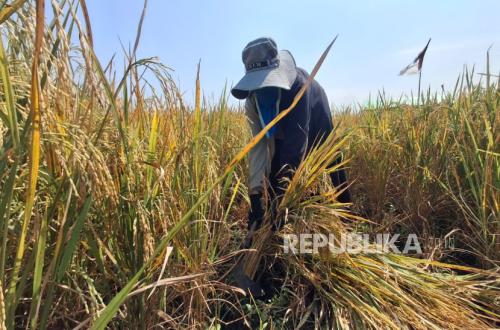
Smallholder farmers, also known as marginal farmers, are those who control or cultivate very narrow agricultural land, specifically less than 0.5 hectares (5,000 square metres). This land may be owned or rented. Their numbers are substantial, and they are generally trapped in a cycle of poverty and deprivation.
Based on this definition, here are several key characteristics and facts about smallholder farmers. First, their economic condition and income. Due to extremely limited land, their harvests are usually only sufficient to meet their own household consumption needs, a state known as subsistence farming.
Second, to make ends meet, they often have to seek additional income outside the agricultural sector, such as working as construction labourers or doing odd jobs.
Third, this group is highly vulnerable to economic shocks, such as rising fertiliser prices, and climate change, which can trigger crop failure. Smallholder farmers live a life full of challenges. Observations suggest their main struggle is limited capital to purchase fertiliser or modern agricultural technology. To avoid the risk of hunger or total loss, smallholder farmers tend to avoid innovation and stick to safe, traditional planting patterns.
According to data from the Central Statistics Agency (BPS), smallholder farmers overwhelmingly dominate Indonesia’s agricultural sector. Their numbers continue to grow annually due to the conversion of agricultural land and the division of inheritance, which further fragments land holdings. To support the welfare of this group, the government often provides various assistance programmes such as fertiliser subsidies, irrigation improvements, capital assistance, and agricultural insurance to prevent losses from crop failure.
The 2023 Agricultural Census results released by BPS show a significant increasing trend in the number of smallholder farmers in Indonesia. This phenomenon indicates that agricultural land ownership at the household level is shrinking and becoming more fragmented. Key points from the 2023 Agricultural Census regarding smallholder farmers include: First, a surge in numbers. The number of individual smallholder farmers in Indonesia reached 17,251,432 out of a total of 27,802,434 land-using farmers. Second, this means approximately 62 percent of all land-using farmers in Indonesia are categorised as smallholders. Third, at the household level, the number of smallholder Agricultural Business Households reached 16.89 million. This figure jumped by 18.54 percent compared to the 2013 Agricultural Census, which recorded 14.25 million households.
Furthermore, the highest concentration of smallholder farmers is on Java Island, due to high population density and massive land conversion. According to BPS data, the three provinces with the largest numbers of smallholder farmers are East Java with 4,479,526 farmers, Central Java with 3,466,042 farmers, and West Java with 2,551,419 farmers. The main causes of this increase include overpopulation and inheritance practices. The division of inherited land among generations continuously reduces the size of land plots controlled by farming families. Additionally, the conversion of productive agricultural land into industrial zones, housing, and infrastructure forces farmers to survive on their remaining land.
Efforts to defend and improve the welfare of smallholder farmers require a systematic approach, as their core problems are limited land, lack of capital, and weak bargaining power in the market. Five concrete strategies are outlined below to defend smallholder farmers, involving both government policy and community movements. The primary strategy is accelerating agrarian reform and land redistribution. The government must expedite the distribution of Agrarian Reform Object Land to increase the area of land cultivated by smallholder farmers until it reaches an economically viable scale. Furthermore, legal certainty over land ownership must be provided through free certification programmes to prevent their land from being easily seized by corporations.
Next, land consolidation through farmer corporations is needed. The narrow plots owned by smallholder farmers should be merged into a single, large-scale management area, known as a corporate farming model, without revoking individual land rights. This consolidation reduces production costs because the purchase of fertiliser, seeds, and the use of agricultural machinery can be done collectively.
Strengthening agricultural cooperative institutions is also crucial. Cooperatives can act as buyers of harvests at fair prices, preventing smallholder farmers from being exploited by speculators or local middlemen. Cooperatives can also distribute agricultural production inputs, such as subsidised fertilisers and superior seeds, directly to farmers in a targeted manner.
Developing specialised agricultural financing is essential. This involves opening access to formal financial institutions that provide capital with very low interest rates and flexible repayment schemes, such as payment after harvest. Expanding the coverage of government-subsidised Rice Farming Business Insurance is also necessary to protect smallholder farmers from total loss due to crop failure or climate change.
Finally, promoting integrated business diversification is important. Farmers should be trained to maximise the use of their narrow land, for example by combining rice cultivation with fish farming or poultry rearing. Providing post-harvest processing skills training, such as making crisps, jams, or modern packaging, can also offer farming families alternative sources of income while waiting for the next harvest season.